Showing posts with label Neuropsychoanalysis. Show all posts
The Unconscious: A bridge between psychoanalysis and cognitive neuroscience
The Unconscious explores the critical interdisciplinary dialogue between psychoanalysis and contemporary cognitive neuroscience. Characterised by Freud as ‘the science of the unconscious mind’, psychoanalysis has traditionally been viewed as a solely psychological discipline. However recent developments in neuroscience, such as the use of neuroimaging techniques to investigate the working brain, have stimulated and intensified the dialogue between psychoanalysis and these related mental sciences. This book explores the relevance of these discussions for our understanding of unconscious mental processes.
Chapters present clinical case studies of unconscious dynamics, alongside theoretical and scientific papers in key areas of current debate and development. These include discussions of the differences between conceptualisations of ‘the unconscious’ in psychoanalysis and cognitive science, whether the core concepts of psychoanalysis are still plausible in light of recent findings, and how such understandings of the unconscious are still relevant to treating patients in psychotherapy today. These questions are explored by leading interdisciplinary researchers as well as practising psychoanalysts and psychotherapists.
This book aims to bridge the gap between psychoanalysis and cognitive neuroscience, to enable a better understanding of researchers’ and clinicians’ engagements with the key topic of the unconscious. It will be of key interest to researchers, academics and postgraduate students in the fields of psychoanalysis, cognitive science, neuroscience and traumatology. It will also appeal to practising psychoanalysts, psychotherapists and clinicians.
The Wisdom of Lived Experience: Views from Psychoanalysis, Neuroscience, Philosophy and Metaphysics
In our quest toward truth we often rely on the guidance and clarity of conscious thought, but in doing so we may bypass awareness of a more deeply informing resource, which is embodied in lived experience. This book highlights aspects of this deeper dialogue where neuroscience (McGilchrist's work on right- and left-brain dynamics) and psychoanalysis (Freud, Klein, Winnicott, Bion, and others) verify the Hegelian dialectics that seem to underlie all living processes and perhaps all of Nature. Hegel's concept of Aufhebung embraces the creative negating transformations that carry forward what has gone before in new and evolving forms and structures.
Becoming, as on-going lived experience, exemplifies this dialectic as it embodies the cycle in which the emergence of unconscious (implicit) intuition is externalized and clarified (made explicit) via conscious notation and thought to then be enfolded back (made implicit once again) into the newly enriched unconscious matrix that becomes the root for the next intuition. While it is often difficult to surrender the clarified products of conscious thought, the deepest sources of wisdom in Becoming are those that involve the implicit and the bodily because the deepest reaches of Reality are those that resonate with somato-sensory experience.
Neuro-Philosophy and the Healthy Mind: Learning from the Unwell Brain
Applying insights from neuroscience to philosophical questions about the self, consciousness, and the healthy mind.
Can we “see” or “find” consciousness in the brain? How can we create working definitions of consciousness and subjectivity, informed by what contemporary research and technology have taught us about how the brain works? How do neuronal processes in the brain relate to our experience of a personal identity? Where does the brain end and the mind begin?
To explore these and other questions, esteemed philosopher and neuroscientist Georg Northoff turns to examples of unhealthy minds. By investigating consciousness through its absence—in people in vegetative states, for example—we can develop a model for understanding its presence in an active, healthy person. By examining instances of distorted self-recognition in people with psychiatric disorders, like schizophrenia, we can begin to understand how the experience of “self” is established in a stable brain.
Taking an integrative approach to understanding the self, consciousness, and what it means to be mentally healthy, this book brings insights from neuroscience to bear on philosophical questions. Readers will find a science-grounded examination of the human condition with far-reaching implications for psychology, medicine, our daily lives, and beyond.
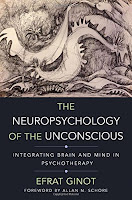
The Neuropsychology of the Unconscious: Integrating Brain and Mind in Psychotherapy
More than one hundred years after Freud began publishing some of his seminal theories, the concept of the unconscious still occupies a central position in many theoretical frameworks and clinical approaches. When trying to understand clients internal and interpersonal struggles it is almost inconceivable not to look for unconscious motivation, conflicts, and relational patterns. Clinicians also consider it a breakthrough to recognize how our own unconscious patterns have interacted with those of our clients. Although clinicians use concepts such as the unconscious and dissociation, in actuality many do not take into account the newly emerging neuropsychological attributes of nonconscious processes. As a result, assumptions and lack of clarity overtake information that can become central in our clinical work.
This revolutionary book presents a new model of the unconscious, one that is continuing to emerge from the integration of neuropsychological research with clinical experience. Drawing from clinical observations of specific therapeutic cases, affect theory, research into cognitive neuroscience and neuropsychological findings, the book presents an expanded picture of nonconscious processes. The model moves from a focus on dissociated affects, behaviors, memories, and the fantasies that are unconsciously created, to viewing unconscious as giving expression to whole patterns of feeling, thinking and behaving, patterns that are so integrated and entrenched as to make them our personality traits.
Topics covered include: the centrality of subcortical regions, automaticity, repetition, and biased memory systems; role of the amygdala and its sensitivity to fears in shaping and coloring unconscious self-systems; self-narratives; therapeutic enactments; therapeutic resistance; defensive systems and narcissism; therapeutic approaches designed to utilize some of the new understandings regarding unconscious processes and their interaction with higher level conscious ones embedded in the prefrontal cortex.
The Psychomatrix: A Deeper Understanding of Our Relationship with Pain
Buy The Psychomatrix here. - Free delivery worldwide
What is pain? What does it mean to have a relationship with it and how does this affect your identity and existence? Doreen Francis' definition of pain is derived from that proposed by scientists, such as Melzack, Wall and Freud. Pain is a dynamic, multi-layered, diverse collection of experiences, which impacts and influences us throughout life. Pain is a kind of conglomerate of past, traumatic, neurobiological, psychological and emotional imprints - pain as in suffering or being in pain. The author's aim here is to argue that it is not pain, as such, but our relationship with pain, which is most significant to the processes of our lives.
In examining the combination of Freud's psychosexual theory of development and Melzack's theory of the neuromatrix, Francis endeavours to evidence her theory that there is the distinct possibility for the existence of what she has named a Psychomatrix - patterns of pain (loss, abandonment, grief, rejection, desire) imprinted from infancy, that are specifically translated by their own 'psychological and emotional neural loops' and therefore, congruent with the neuromatrix concept. She concludes that pain becomes an object that compels us to respond accordingly, thus defining our identity and existence.
Psychoanalysis and Neuroscience
Recent scientific studies have brought significant advances in the understanding of basic mental functions such as memory, dreams, identification, repression, which constitute the basis of the psychoanalytical theory. This book focuses on the possibility of interactions between psychoanalysis and neuroscience: emotions and the right hemisphere, serotonin and depression. It is a unique tool for professionals and students in these fields, and for operators of allied disciplines, such as psychology and psychotherapy.
Neuropsychoanalysis in practice: Brain, Self and Objects
Is the Ego nothing but our brain? Are our mental and psychological states nothing but neuronal states of our brain? Though Sigmund Freud rejected a neuroscientific foundation for psychoanalysis, recent knowledge in neuroscience has provided novel insights into the brain and its neuronal mechanisms. This has also shed light on how the brain itself contributes to the differentiation between neuronal and psychological states.
In Neuropsychoanalysis in Practice , Georg Northoff discusses the various neuronal mechanisms that may enable the transformation of neuronal into psychological states, looking at how these processes are altered in psychiatric disorders like depression and schizophrenia. He focuses specifically on how the brain is organized and how this organization enables the brain to differentiate between neuronal and psychodynamic states, that is, the brain and the psyche. This leads him to discuss not only empirical issues but also conceptual problems, for instance, the concept of the brain. Neuropsychoanalysis in Practice applies these concepts and mechanisms to explain the various symptoms observed in psychiatric disorders such as depression and schizophrenia. In addition to the empirical issues, he also discusses various conceptual and methodological issues that are relevant in linking neuroscience and psychoanalysis, developing a novel transdisciplinary framework for linking neuroscience, psychoanalysis and philosophy.
This highly original new book will help foster new dialogues between neuroscience, psychoanalysis, and philosophy, and will be fascinating reading for anyone in these disciplines.
The Neuropsychology of the Unconscious: Integrating Brain and Mind in Psychotherapy
More than one hundred years after Freud began publishing some of his seminal theories, the concept of the unconscious still occupies a central position in many theoretical frameworks and clinical approaches. When trying to understand clients' internal and interpersonal struggles it is almost inconceivable not to look for unconscious motivation, conflicts, and relational patterns. Clinicians also consider it a breakthrough to recognize how our own unconscious patterns have interacted with those of our clients. Although clinicians use concepts such as the unconscious and dissociation, in actuality many do not take into account the newly emerging neuropsychological attributes of nonconscious processes. As a result, assumptions and lack of clarity overtake information that can become central in our clinical work.
This revolutionary book presents a new model of the unconscious, one that is continuing to emerge from the integration of neuropsychological research with clinical experience. Drawing from clinical observations of specific therapeutic cases, affect theory, research into cognitive neuroscience and neuropsychological findings, the book presents an expanded picture of nonconscious processes. The model moves from a focus on dissociated affects, behaviors, memories, and the fantasies that are unconsciously created, to viewing unconscious as giving expression to whole patterns of feeling, thinking and behaving, patterns that are so integrated and entrenched as to make them our personality traits. Topics covered include: the centrality of subcortical regions, automaticity, repetition, and biased memory systems; role of the amygdala and its sensitivity to fears in shaping and coloring unconscious self-systems; self-narratives; therapeutic enactments; therapeutic resistance; defensive systems and narcissism; therapeutic approaches designed to utilize some of the new understandings regarding unconscious processes and their interaction with higher level conscious ones embedded in the prefrontal cortex.
Freudian Unconscious and Cognitive Neuroscience: From Unconscious Fantasies to Neural Algorithms
'The topic of this book is in the middle of a hundred years old battlefield. Psychoanalysisis an essential part of the self-understanding of a western man, but it has also beenheavily criticized from its beginnings. The unconscious enjoys a key role in psychoanalytic thinking - Freud even called hisideas concerning the unconscious a "cornerstone" of psychoanalysis. Thus, when focusing on the psychoanalytic- andcognitive neuroscience-views of the unconscious, one cannot keep apart from those heated Freud-wars.For decades psychoanalysis has a monopoly for the unconscious. In the 1980's, however, cognitive orientation interestedin consciousness, and that was followed by the boom of study of the unconscious.
The unconscious has been studiedit in the scope of several empirical settings, and under variety of concepts - at least the terms implicit memory, implicitknowledge, procedural knowledge, semantic activation without conscious identification, and tacit knowledge has to bementioned.In this book, I aim at show how the psychoanalysts' answer might be seen in terms of the cognitivists' ones - it is created anapproach, through which phenomena found by psychoanalysts can be studied in the framework of cognitive neuroscience.The approach takes seriously both the clinical data gathered in the scope of clinical practise of psychoanalysis duringthe past 110 years, and the empirical and theoretical achievements of the present-day cognitive neuroscience andevolutionary theory.'
The Author from the Introduction
The Feeling Brain: Selected Papers on Neuropsychoanalysis
Buy The Feeling Brain here. - Free delivery worldwide
Neuropsychoanalysis is the fastest growing area within psychoanalysis, providing a bridge between "classic" psychoanalysis and the neurological sciences. This book provides an accessible introduction to the field through a selection of papers by one of its leading figures. It includes papers on the theoretical and philosophical foundations of neuropsychoanalysis, scientific papers on the brain mechanisms of dreaming and consciousness, the application of neuropsychoanalysis in psychiatry and neurology, and clinical case studies.
Self and Emotional Life: Philosophy, Psychoanalysis, and Neuroscience
Adrian Johnston and Catherine Malabou defy theoretical humanities' deeply-entrenched resistance to engagements with the life sciences. Rather than treat biology and its branches as hopelessly reductive and politically suspect, they view recent advances in neurobiology and its adjacent scientific fields as providing crucial catalysts to a radical rethinking of subjectivity. Merging three distinct disciplines--European philosophy from Descartes to the present, Freudian-Lacanian psychoanalysis, and affective neuroscience--Johnston and Malabou triangulate the emotional life of affective subjects as conceptualized in philosophy and psychoanalysis with neuroscience. Their experiments yield different outcomes.
Johnston finds psychoanalysis and neurobiology have the potential to enrich each other, though affective neuroscience demands a reconsideration of whether affects can be unconscious. Investigating this vexed issue has profound implications for theoretical and practical analysis, as well as philosophical understandings of the emotions. Malabou believes scientific explorations of the brain seriously problematize established notions of affective subjectivity in Continental philosophy and Freudian-Lacanian analysis. She confronts philosophy and psychoanalysis with something neither field has seriously considered: the concept of wonder and the cold, disturbing visage of those who have been affected by disease or injury, such that they are no longer affected emotionally. At stake in this exchange are some of philosophy's most important claims concerning the relationship between the subjective mind and the objective body, the structures and dynamics of the unconscious dimensions of mental life, the role emotion plays in making us human, and the functional differences between philosophy and science.
From the Couch to the Lab: Trends in Psychodynamic Neuroscience
Can the psychodynamics of the mind be correlated with neurodynamic processes in the brain? The book revisits this important question - one that scientists and psychoanalysts have been asking for more than a century.
Freud envisioned that the separation between the two approaches was just a temporary limitation that future scientific progress would overcome. Yet, only recently have scientific developments shown that he was right. Technological and methodological innovations in neuroscience allow unprecedented insight into the neurobiological basis of topics such as empathy, embodiment and emotional conflict. As these domains have traditionally been the preserve of psychoanalysis and other fields within the humanities, rapprochement between disciplines seems more important than ever. Recent advances in neurodynamics and computational neuroscience also reveal richer and more dynamic brain-mind relations than those previously sketched by cognitive sciences. Are we therefore ready to correlate some neuroscientific concepts with psychoanalytic ones? Can the two disciplines share a common conceptual framework despite their different epistemological perspectives? The book brings together internationally renowned contributors from the fields of Psychoanalysis, Neuroscience and Neuro-psychoanalysis to address these questions.
The volume is organised in five clear sections, Motivation; Emotion; Conscious and Unconscious Processes; Cognitive Control; and Development of the Self. With a range of chapters written by leading figures in their fields, it gives the reader a strong flavour of how much has already been achieved between the disciplines and how much more lies ahead. This important new book reveals the intrinsic challenges and tensions of this interdisciplinary endeavour and emphasises the need for a shared language and new emerging fields such as Psychodynamic Neuroscience.
Clinical Studies in Neuro-Psychoanalysis: Introduction to a Depth Neuropsychology
When the first edition of Clinical studies in Neuro-Psychoanalysis was published in 2000, it was hailed as a turning point in psychoanalytic research. It is now relied on as a model for the integration of neuroscience and psychoanalysis. It won the NAAP's Gradiva Award for Best Book of the Year 2000 (Science Category) and Mark Solms received the International Psychiatrist Award 2001 at the American Psychiatric Association's annual meeting. The authors have added a glossary of key terms of this edition to aid their introduction to depth neuropsychology. 'Freud, in his 1895 Project for a Scientific Psychology, attempted to join the emerging discipline of psychoanalysis with the neuroscience of his time. But that was a hundred years ago, when the neuron had only just been described, and Freud was forced - through lack of pertinent knowledge - to abandon his project. We have had to wait many decades before the sort of data which Freud needed finally became available. Now, these many years later, contemporary neuroscience allows for the resumption of the search for correlations between these two disciplines. The Drs Solms are uniquely qualified for his task, having trained in both psychoanalysis and the neurosciences, and the work described in this volume ushers in a new era for our field.'- Arnold Z. Pfeffer, from his Foreword
Emotional Development in Psychoanalysis, Attachment Theory and Neuroscience: Creating Connections
Emotional Development in Psychoanalysis, Attachment Theory and Neuroscience is a multi-disciplinary overview of psychological and emotional development, from infancy through to adulthood. Uniquely, it integrates research and concepts from psychology and neurophysiology with psychoanalytic thinking, providing an unusually rich and balanced perspective on the subject. Written by leaders in their field, the chapters cover:
* biological and neurological factors in the unconscious and memory
* the link between genetics and attachment
* the early relationship and the growth of emotional life
* the importance of a developmental framework to inform psychoanalytic work
* clinical work
Drawing on a wide range of detailed case studies with subjects across childhood and adolescence, this book provides a ground-breaking insight into how very different schools of thought can work together to achieve clinical success in work with particularly difficult young patients.
Emotional Development in Psychoanalysis, Attachment Theory and Neuroscience represents the latest knowledge beneficial to child psychiatrists and child psychotherapists, as well as social workers, psychologists, health visitors and specialist teachers.
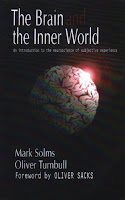
The Brain and the Inner World: An Introduction to the Neuroscience of Subjective Experience
This work is an eagerly awaited account of this momentous and ongoing revolution, elaborated for the general reader by two pioneers of the field. The book takes the nonspecialist reader on a guided tour through the exciting new discoveries, pointing out along the way how old psychodynamic concepts are being forged into a new scientific framework for understanding subjective experience - in health and disease.
A Basic Theory of Neuropsychoanalysis
This book introduces a theoretical framework for studying the mind. Specifically, an attempt is made to frame ideas from psychoanalysis and cognitive-social psychology so that they can be taken readily into a realm of neurobiology. Psychoanalytic Theory still represents a very comprehensive theory of the human mind. It includes cognitive, emotional and behavioral variables, plus the idea of unconscious mental operations. The 'pleasure principle and 'repetition compulsion' were Freud's most general concepts of mental functioning. These concepts are renovated to get them 'on the same page' with ideas from social cognition and neurobiology.
Subscribe to:
Posts (Atom)
![]() |
| Bartleby, the Scrivener: “I would prefer not to.” |