

Showing posts with label Bruno Bosteels. Show all posts
Showing posts with label Bruno Bosteels. Show all posts
Marx and Freud in Latin America

Lacan: The Silent Partners
Buy Lacan: The Silent Partners here. - Free delivery worldwide
A dazzling re-evaluation of Jacques Lacan, uncovering his hidden inspirations.
Jacques Lacan is the foremost psychoanalytic theorist after Freud. Revolutionising the study of social relations, his work has been a major influence on political theory, philosophy, literature and the arts, but his thought has so far been studied without a serious investigation of its foundations. Just what are the influences on his thinking, so crucial to its proper understanding?
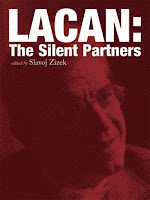 In Lacan: The Silent Partners Slavoj Žižek, the maverick theorist and pre-eminent Lacan scholar, has marshalled some of the greatest thinkers of our age in support of a dazzling re-evaluation of Lacan's work. Focussing on Lacan's 'silent partners', those who are the hidden inspiration to Lacanian theory, they discuss his work in relation to the Pre-Socratics, Diderot, Hegel, Nietzsche, Schelling, Hölderlin, Wagner, Turgenev, Kafka, Henry James and Artaud.
This major collection, including three essays by Žižek, marks a new era in the study of this unsettling thinker, breathing new life into his classic work.
With contributions by Alain Badiou, Bruno Bosteels, Miran Božovič, Lorenzo Chiesa, Joan Copjec, Mladen Dolar, Timothy C. Huson, Fredric Jameson, Adrian Johnston, Sigi Jöttkandt, Sylvia Ons, Robert Pfaller, and Alenka Zupančič
Hegel and the Infinite: Religion, Politics, and Dialectic
(Insurrections: Critical Studies in Religion, Politics, and Culture)
 Catherine Malabou, Antonio Negri, John D. Caputo, Bruno Bosteels, Mark C. Taylor, and Slavoj Zizek join seven others—including William Desmond, Katrin Pahl, Adrian Johnston, Edith Wyschogrod, and Thomas A. Lewis—to apply Hegel's thought to twenty-first-century philosophy, politics, and religion. Doing away with claims that the evolution of thought and history is at an end, these thinkers safeguard Hegel's innovations against irrelevance and, importantly, reset the distinction of secular and sacred.
These original contributions focus on Hegelian analysis and the transformative value of the philosopher's thought in relation to our current "turn to religion." Malabou develops Hegel's motif of confession in relation to forgiveness; Negri writes of Hegel's philosophy of right; Caputo reaffirms the radical theology made possible by Hegel; and Bosteels critiques fashionable readings of the philosopher and argues against the reducibility of his dialectic. Taylor reclaims Hegel's absolute as a process of infinite restlessness, and Zizek revisits the religious implications of Hegel's concept of letting go. Mirroring the philosopher's own trajectory, these essays progress dialectically through politics, theology, art, literature, philosophy, and science, traversing cutting-edge theoretical discourse and illuminating the ways in which Hegel inhabits them.
Subscribe to:
Posts (Atom)
 |
| Bartleby, the Scrivener: “I would prefer not to.” |

