Showing posts with label Dreams. Show all posts

The Fictions of Dreams: Dreams, Literature, and Writing


Buy The Fictions of Dreams here. - Free delivery worldwide

The Fictions of Dreams explores the close connection between the narrative nature of dreams and the narrative devices employed in literature and creative writing. The book is unique in its confluential approach, linking the fictions of dreams with literary fictions and case studies which illuminate the centrality of dream analysis in therapeutic work.

Dreams and literature are closely related. The dream’s essence lies in its narrative facility. Dreams are autobiographical fictions which tell the story of the dreamer’s life history, her insertion in transgenerational family themes, and her ethnic and cultural identity. In that sense dreams are psycho-social depositories and makers, not unlike what can be found in world literature: the recreation of interiority and historicity of a given time period.

The interconnected worlds of dreaming and fiction writing tend to employ the same narrative devices: the memorial mode (Patrick Modiano), multi-temporality (Gabriel Garcia Marquez), poeisis (Kafka, Ted Hughes, Colm Toibin), historical consciousness (Irene Némirowsky), and ‘infinite connectivity’ (Patrick White).

The poetry of dreams and world literature also share the exposition of human motivation, as can be seen in the complex interiority of dreams and fictional characters. Both dreams and literature bring to the fore that which is hidden but seeks expression, such as the conundrum of fear, the propensity for destructiveness, the search for love, the search for knowledge, the search for beauty, the ‘will to power’, and the search for the spiritual.

The theories employed are psychoanalysis, literary criticism, quantum physics, chaos theory, sleep research, the study of historical consciousness, theories of the ancient dreamers (Artemidorus, Aristotle), and theories of the social nature of dreaming. Case studies, actual dream fictions, will be used to illuminate the dream theories presented.


A Guide to the World of Dreams: An Integrative Approach to Dreamwork


Buy A Guide to the World of Dreams here. - Free delivery worldwide

In A Guide to the World of Dreams, Ole Vedfelt presents an in-depth look at dreams in psychotherapy, counselling and self-help, and offers an overview of current clinical knowledge and scientific research, including contemporary neuroscience. This book describes essential aspects of Jungian, psychoanalytic, existential, experiential and cognitive approaches to dreams and dreaming, and explores dreams in sleep laboratories, neuroscience and contemporary theories of dream cognition.

Vedfelt clearly and effectively describes ten core qualities of dreams, and delineates a resource-oriented step-by-step manual for dreamwork at varying levels of expertise. For each core quality, key learning outcomes are clarified and resource-oriented, creative and motivating exercises for practical dreamwork are spelled out, providing clear and manageable methods. A Guide to the World of Dreams also introduces a new cybernetic theory of dreams as intelligent, unconscious information processing, and integrates contemporary clinical research into this theory. The book even includes a wealth of engaging examples from the author’s lifelong practical experience with all levels and facets of dreamwork.

Vedfelt’s seminal work is essential reading for psychotherapists, psychologists, counsellors, and even psychiatrists, and could well be a fundamental textbook for courses at high schools, colleges, universities and even in adult-education classes. The book’s transparent method and real-life examples will inspire individuals all over the world who seek self-help or self-development – any reader will be captivated to discover how knowledge of dreams stimulates creativity in everyday life and even in professional life.

Buy A Guide to the World of Dreams here. - Free delivery worldwide

“The interpretation of dreams is the royal road to a knowledge of the unconscious activities of the mind.”

“The interpretation of dreams is the royal road to a knowledge of the unconscious activities of the mind.”
― Sigmund Freud, The Interpretation of Dreams (1900), from The Standard Edition of the Complete Psychological Works of Sigmund Freud, translated by James Strachey.


“At any rate the interpretation of dreams is the via regia to a knowledge of the unconscious in the psychic life.”
Alternate translation by Abraham Arden Brill, p. 483. Freud did use the Latin phrase via regia in the original as opposed to translating it into the German of the surrounding text.

"Royal road" or via regia is an allusion to a statement attributed to Euclid.


Freud's dream of Irma's injection

Irma’s Injection is the name given to the dream that Sigmund Freud dreamt on the night of July 23, 1895. Freud used his analysis of this historic dream to arrive at his theory that dreams are wish fulfillments. It is the dream with which he opens his seminal work The Interpretation of Dreams, and which forms the lynchpin of the analysis in that book.


Early in the morning of July 24, 1895, Freud, then on vacation at the Hôtel Bellevue, near Vienna, had a dream about one of his patients, whom he called Irma. The manifest content of the dream can be summarized as thus:

A large hall - numerous guests, whom we were receiving. - Among them was Irma. I at once took her to one side, as though to answer her letter and to reproach her for not having accepted my 'solution' yet. I said to her: 'If you still get pains, it's really only your fault.' She replies: 'If you only knew what pains I've got now in my throat and stomach and abdomen - it's choking me.' - I was alarmed and looked at her. She looked pale and puffy. I thought to myself that after all I must be missing some organic trouble. I took her to the window and looked down her throat, and she showed signs of recalcitrance, like women with artificial dentures. I thought to myself that there was really no need for her to do that. - She then opened her mouth properly and on the right I found a big white patch; at another place I saw extensive whitish grey scabs upon some remarkable curly structures which were evidently modelled on the turbinal bones of the nose. - I at once called in Dr M, and he repeated the examination and confirmed it .... Dr M looked quite different from usual; he was very pale, he walked with a limp and his chin was clean-shaven .... My friend Otto was now standing beside her as well, and my friend Leopold was percussing her through her bodice and saying: 'She has a dull area low down on the left.' He also indicated that a portion of the skin on her left shoulder was infiltrated. (I noticed this, just as he did, in spite of her dress.) .... M said: 'There's no doubt it's an infection, but no matter; dysentery will supervene and the toxin will be eliminated. .... We were directly aware, too, of the origin of the infection. Not long before, when she was feeling unwell, my friend Otto had given her an injection of a preparation of propyl, propyls .... propionic acid .... trimethylamin (and I saw before me the formula for this printed in heavy type) .... Injections of this sort ought not to be given so thoughtlessly .... And probably the syringe had not been clean.

― Sigmund Freud, The Interpretation of Dreams

  See also:


Torments of the Soul: Psychoanalytic Transformations in Dreaming and Narration


Buy Torments of the Soul here. - Free delivery worldwide

In Torments of the Soul, Antonino Ferro revisits and expands on a theme that has long been at the heart of his work: the study of dreams during sleep and in the waking state, and the psychoanalytic narrative. Following Bion, he focuses on the importance of what he sees as the task of contemporary psychoanalysis for generating, containing and transforming previously unmanageable emotions with a clinical psychoanalytic context.

Antonino Ferro explores the concepts of 'transformations in dreaming', the session as a dream, individuals transformed into characters, the interpretation of these characters, and readings of them as the functioning of a single mind or as an analytic field created by the meeting of two minds: the client's and the analyst's. Here, a new identity, the analytic field, is formed from the reverie of both participants, which makes it possible to work on complex, nonlinear phenomena in a radical way, creating a 'royal road' to the unconscious communication of the patient.

Torments of the Soul contains a plethora of clinical vignettes from the author's extensive psychoanalytic work with adults and children to illustrate the substantial theoretical progression he advocates here. Offering significant and important new interpretations of theories and ways of working with patients, this book will be essential reading for psychoanalysts, psychotherapists, psychologists, students of these fields and those interested in the human sciences.

W. D. Snodgrass, a poet's dreaming on the psychoanalyst's couch


W. D. Snodgrass is often credited with being one of the founding members of the "confessional" school of poetry, even though he dislikes the term confessional and does not regard his work as such. Nevertheless, his Pulitzer Prize-winning first collection, Heart's Needle, has had a tremendous impact on that particular facet of contemporary poetry.

William De Witt Snodgrass (January 5, 1926 – January 13, 2009) was an American poet who also wrote under the pseudonym S. S. Gardons.

See also


117 Years Of Freud's Interpretation Of Dreams

The Nightmare, by Henry Fuseli (1781).

Freud spent the summer of 1895 at manor Belle Vue near Grinzing in Austria, where he began the inception of The Interpretation of Dreams. In a 1900 letter to Wilhelm Fliess, he wrote in commemoration of the place:

"Do you suppose that some day a marble tablet will be placed on the house, inscribed with these words: 'In this house on July 24, 1895, the secret of dreams was revealed to Dr. Sigm. Freud'? At the moment I see little prospect of it." — Freud in a letter to Wilhelm Fliess, June 12, 1900

In 1963, Belle Vue manor was demolished, but today a memorial plate with just that inscription has been erected at the site by the Austrian Sigmund Freud Society.

Memorial plate in commemoration of the place where Freud began The Interpretation of Dreams, near Grinzing, Austria


The book introduces Freud's theory of the unconscious with respect to dream interpretation, and also first discusses what would later become the theory of the Oedipus complex. Freud revised the book at least eight times and, in the third edition, added an extensive section which treated dream symbolism very literally, following the influence of Wilhelm Stekel. Freud said of this work, "Insight such as this falls to one's lot but once in a lifetime."


The initial print run of the book was very low — it took many years to sell out the first 600 copies. However, the work gained popularity as Freud did, and seven more editions were printed in his lifetime.

Because the book is lengthy and complex, Freud also wrote an abridged version called On Dreams. The original text is widely considered one of Freud's most important works.


http://www.amazon.co.uk/gp/product/1402763883/ref=as_li_ss_tl?ie=UTF8&camp=1634&creative=19450&creativeASIN=1402763883&linkCode=as2&tag=freuquot-21

A Story from Lacan’s Practice


This is a wonderful story from Lacan's clinic as told by Suzanne Hommel, in analysis with Lacan in 1974. The excerpt is from Gérard Miller's film 'Rendez-vous chez Lacan'.

Watch full documentary online (Spanish subs)

No Consultório de Lacan / Rendez vous chez Lacan (2011)


For more info visit lacanonline.com

Dream Interpretation Ancient and Modern: Notes from the Seminar Given in 1936-1941


http://www.amazon.co.uk/gp/product/0691159459/ref=as_li_tl?ie=UTF8&camp=1634&creative=19450&creativeASIN=0691159459&linkCode=as2&tag=freuquot-21&linkId=MDECKIPYDYKYHRHO
From 1936 to 1941, C. G. Jung gave a four-part seminar series in Zurich on children’s dreams and the historical literature on dream interpretation. This book completes the two-part publication of this landmark seminar, presenting the sessions devoted to dream interpretation and its history. Here we witness Jung as both clinician and teacher: impatient and sometimes authoritarian but also witty, wise, and intellectually daring, a man who, though brilliant, could be vulnerable, uncertain, and humbled by life’s mysteries. These sessions open a window on Jungian dream interpretation in practice, as Jung examines a long dream series from the Renaissance physician Girolamo Cardano. They also provide the best example of group supervision by Jung the educator. Presented here in an inspired English translation commissioned by the Philemon Foundation, these sessions reveal Jung as an impassioned teacher in dialogue with his students as he developed and refined the discipline of analytical psychology.

An invaluable document of perhaps the most important psychologist of the twentieth century at work, this splendid book is the fullest representation of Jung’s interpretations of dream literatures, filling a critical gap in his collected works.


Children's Dreams: Notes from the Seminar Given in 1936-1940 (Jung Seminars)


http://www.amazon.co.uk/gp/product/0691148074/ref=as_li_tl?ie=UTF8&camp=1634&creative=19450&creativeASIN=0691148074&linkCode=as2&tag=freuquot-21&linkId=S5D6CFVTNVFUHLX7
In the 1930s C. G. Jung embarked upon a bold investigation into childhood dreams as remembered by adults to better understand their significance to the lives of the dreamers. Jung presented his findings in a four-year seminar series at the Swiss Federal Institute of Technology in Zurich. Children's Dreams marks their first publication in English, and fills a critical gap in Jung's collected works.

Here we witness Jung the clinician more vividly than ever before--and he is witty, impatient, sometimes authoritarian, always wise and intellectually daring, but also a teacher who, though brilliant, could be vulnerable, uncertain, and humbled by life's great mysteries. These seminars represent the most penetrating account of Jung's insights into children's dreams and the psychology of childhood. At the same time they offer the best example of group supervision by Jung, presenting his most detailed and thorough exposition of Jungian dream analysis and providing a picture of how he taught others to interpret dreams. Presented here in an inspired English translation commissioned by the Philemon Foundation, these seminars reveal Jung as an impassioned educator in dialogue with his students and developing the practice of analytical psychology.

An invaluable document of perhaps the most important psychologist of the twentieth century at work, this splendid volume is the fullest representation of Jung's views on the interpretation of children's dreams, and signals a new wave in the publication of Jung's collected works as well as a renaissance in contemporary Jung studies.


Dreams by C.G. Jung


http://www.amazon.co.uk/gp/product/0415267412/ref=as_li_tl?ie=UTF8&camp=1634&creative=19450&creativeASIN=0415267412&linkCode=as2&tag=freuquot-21&linkId=OX7C57QMK2X4RLEF
Author, psychiatrist and scholar, painter, world traveler, and above all visionary dreamer, Carl Jung was one of the great figures of the twentieth century. A comprehensive compilation of his work on dreams, this popular book is without parallel. Skilfully weaving a narrative that encompasses all of his major themes - mysticism, religion, culture and symbolism - Jung brings a wealth of allusion to the collection. He identifies such issues as the filmic quality of some dreams, and the differences between 'personal dreams' - dreams that exist on the individual level - and 'big dreams' - dreams that we all experience, that come from the collective unconscious. Dreams provides the perfect introduction to his concepts to those unfamiliar with Jung's work. Perfectly illuminating his user-friendly approach to life, Dreams is the ideal addition to any Jung collection.


The Rabbit Dreams of Freud's eccentric niece Martha


Under the pseudonym Tom Seidmann-Freud—often shortened to just "Tom"—Sigmund Freud's eccentric, cross-dressing niece Martha illustrated a series of wonderful children's books in the early twentieth century. She killed herself in 1930 (age 37 or 38), a year after her husband killed himself. This grim ending is not reflected in her dream-like, often whimsical work.


Tom Seidmann-Freud


Read more about Tom Seidmann-Freud and her books at this website devoted to her.


The Interpretation of Dreams: The Illustrated Edition

http://www.amazon.co.uk/gp/product/1402763883/ref=as_li_ss_tl?ie=UTF8&camp=1634&creative=19450&creativeASIN=1402763883&linkCode=as2&tag=freuquot-21

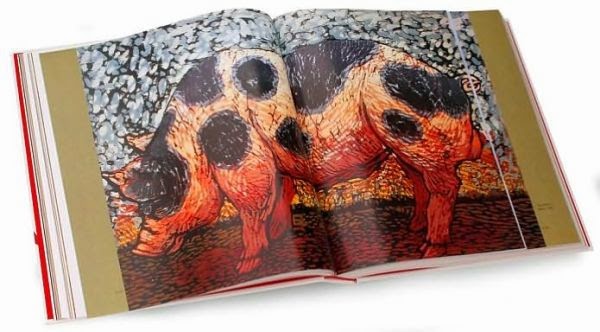
This is a magnificent version of Freud's masterwork, presented in a lavish illustrated style. It includes Freud's groundbreaking text plus an introduction and 16 essays by Jeffrey Moussaieff Masson. Exquisite art from Dali, Rousseau, Francis Bacon and many other Modernist and Surrealist artists appear throughout.

http://www.amazon.co.uk/gp/product/1402763883/ref=as_li_ss_tl?ie=UTF8&camp=1634&creative=19450&creativeASIN=1402763883&linkCode=as2&tag=freuquot-21

In addition to Freud's groundbreaking text the volume includes an introduction and 16 essays by Jeffrey Moussaieff Masson, the noted author and former projects director of the Sigmund Freud Archives. Relevant excerpts from such psychoanalytical writers as Carl Jung, Jacques Lacan and Karen Horney illuminate and expand on Freud's theories, and historical images and a detailed biography shine a light on Freud's life and times. Exquisite art from Dali, Rousseau, Francis Bacon and many other artists appear throughout and the book offers readers a unique multilayered experience: Masson's sidebars appear as booklets 'hidden' in the full-spread artwork, while stills from a 1906 film called "Dream of a Rarebit Fiend" are transformed into a 9" X 5" flipbook.


http://www.amazon.co.uk/gp/product/1402763883/ref=as_li_ss_tl?ie=UTF8&camp=1634&creative=19450&creativeASIN=1402763883&linkCode=as2&tag=freuquot-21


http://www.amazon.co.uk/gp/product/1402763883/ref=as_li_ss_tl?ie=UTF8&camp=1634&creative=19450&creativeASIN=1402763883&linkCode=as2&tag=freuquot-21


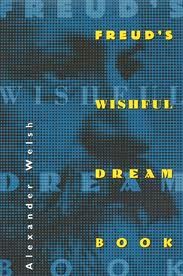
Freud's Wishful Dream Book


Buy Freud's Wishful Dream Book here.

http://www.amazon.com/gp/product/0691037183/ref=as_li_ss_tl?ie=UTF8&camp=1789&creative=390957&creativeASIN=0691037183&linkCode=as2&tag=permacmedia-20
Although it is customary to credit Freud's self-analysis, it may be more accurate, Alexander Welsh argues, to say that psychoanalysis began when The Interpretation of Dreams was published in the last weeks of the nineteenth century. Only by going public with his theory--that dreams manifest hidden wishes--did Freud establish a position to defend and embark upon a career. That position and career have been among the most influential in this century.

In August 1899, Freud wrote to Wilhelm Fliess of the dream book in terms reminiscent of Dante's Inferno. Beginning from a dark wood, this modern journey features "a concealed pass though which I lead the reader--my specimen dream with its peculiarities, details, indiscretions, bad jokes--and then suddenly the high ground and the view and the question, Which way do you wish to go now?" Physician that he is, Freud appoints himself guide rather than hero, yet the way "you" wish to go is very much his prescribed way.

In Welsh's book, readers are invited on Freud's journey, to pause at each concealed pass in his seminal work and ask where the guide is taking them and why. Along the way, Welsh shows how Freud's arbitrary turnings are themselves wishful, intended to persuade by pleasing the reader and author alike; that his interest in secrets and his self-proclaimed modest ambition are products of their time; and that the book may best be read as a romance or serial comedy. "Some of the humor throughout," Welsh notes, "can only be understood as a particular kind of fine performance." Welsh offers the first critical overview of the argument in Freud's masterpiece and of the author who presents himself as guide.


Free Ebook - The Interpretation of Dreams by Sigmund Freud

http://www.amazon.com/gp/product/067960166X/ref=as_li_ss_tl?ie=UTF8&camp=1789&creative=390957&creativeASIN=067960166X&linkCode=as2&tag=permacmedia-20
The book introduces Freud's theory of the unconscious with respect to dream interpretation, and also first discusses what would later become the theory of the Oedipus complex. Freud revised the book at least eight times and, in the third edition, added an extensive section which treated dream symbolism very literally, following the influence of Wilhelm Stekel. Freud said of this work, "Insight such as this falls to one's lot but once in a lifetime."

The initial print run of the book was very low — it took many years to sell out the first 600 copies. However, the work gained popularity as Freud did, and seven more editions were printed in his lifetime.

The text was translated from German into English by A. A. Brill, an American Freudian psychoanalyst, and later in an authorized translation by James Strachey, who was British. Because the book is very long and complex, Freud wrote an abridged version called On Dreams.


The Interpretation of Dreams

Sigmund Freud

“Flectere si nequeo superos, Acheronta movebo”

THIRD EDITION
TRANSLATED BY A. A. BRILL

NEW YORK: THE MACMILLAN COMPANY, 1913
NEW YORK: BARTLEBY.COM, 2010


I.The Scientific Literature on the Problems of the Dreams
II.Method of Dream Interpretation: The Analysis of a Sample Dream
III.The Dream Is the Fulfilment of a Wish
IV.Distortion in Dreams
V.The Material and Sources of Dreams
VI.The Dream-Work
VII.The Psychology of the Dream Activities
VIII.Literary Index


Free Ebook - Dream Psychology: Psychoanalysis for Beginners by Sigmund Freud

http://www.amazon.com/gp/product/1619491311/ref=as_li_ss_tl?ie=UTF8&camp=1789&creative=390957&creativeASIN=1619491311&linkCode=as2&tag=permacmedia-20
This classic work by the Father of Psychoanalysis, is essential reading for any serious student of psychology. Dr. Freud covers the hidden meanings within our dreams, especially repressed sexual desires, the purpose of our conscious and unconscious minds, and the importance of dreams to our wellbeing. Dream Psychology was the basis for his latter work and most of the analyzing of dreams for years to come.

Read Dream Psychology: Psychoanalysis for Beginners here:


Dream Psychology: Psychoanalysis for Beginners
Sigmund Freud
NEW YORK: THE JAMES A. McCANN COMPANY, 1921

I.Dreams Have a Meaning
II.The Dream Mechanism
III.Why the Dream Disguises the Desires
IV.Dream Analysis
V.Sex in Dreams
VI.The Wish in Dreams
VII.The Function of the Dream
VIII.The Primary and Secondary Process—Regression
IX.The Unconscious and Consciousness—Reality


Worldwide Shipping: 🖤 T-Shirts / Hoodies / Mugs / Stickers >>       I WOULD PREFER NOT TO.  
https://www.teepublic.com/t-shirt/1759107-i-would-prefer-not-to-bartleby-zizek
Bartleby, the Scrivener: “I would prefer not to.
https://www.teepublic.com/t-shirt/1759107-i-would-prefer-not-to-bartleby-zizek
Related Posts Plugin for WordPress, Blogger...