Showing posts with label Karl Abraham. Show all posts

Karl Abraham: The Birth of Object Relations Theory


Together with Ferenczi, Karl Abraham was perhaps Freud’s most creative and devoted disciple. In this book, after outlining the socio-cultural context of the day, Isabel Sanfeliu examines Abraham’s life as a student, his family environment and his first steps as a physician and psychoanalyst.

As a clinical doctor Abraham was calm and detached, and a good example of a stable and objective analyst. Despite his strong personality, his loyalty towards Freud never wavered. At the pioneering Psychoanalytic Institute which he founded and directed in Berlin, he established a series of professional standards which are still observed today. The present book is organised around an examination of Abraham's psychoanalytic work, according to his different fields of interest, before going on to consider his rigorously conducted clinical research.

Abrahams's findings regarding the positive role of aggression in the development of the baby constitutes one of his original theories, as does the establishment of boundaries with the onset of object love. Abraham was undoubtedly influenced by his experiences with psychotic and highly dysfunctional patients. Not only did he observe the discharge function of the mother, but also her structuring dimension. It is in this sense that Abraham can be regarded as the pioneer of object relations theory, much before this psychoanalytic concept was given its name.

See also:

Karl Abraham: Life and Work, a Biography


Karl Abraham: Life and Work, a Biography is the first complete biography of Karl Abraham (1877-1925), a close colleague and friend of Sigmund Freud and one of the most important pioneers of psychoanalysis.

Abraham was the first psychoanalyst in Germany, where he brought about a great flourishing of psychoanalysis. His clinical-theoretical contributions quickly became classics that have powerfully influenced the development of psychoanalytic theory. He was the first to develop a psychoanalytic theory of depression, several years before the publication of Freud’s 'Mourning and Melancholia'. Abraham was both supervisor and analyst to Melanie Klein, on whose theoretical work he had a profound influence.

In the 1920s Abraham was the most important analyst of the psychoanalytic movement after Freud. He was president of the International Psychoanalytical Association, president of the Berlin Psychoanalytic Society, and a member of the "secret committee". He was involved in a number of major conflicts of the early years of psychoanalysis, and after his death he was quite often blamed for them. As a consequence, Abraham, so highly valued during his life, was frequently reviled after his death.

See also


Karl Abraham: Life and Work, a Biography - 18 February 2016 at Freud Museum London

Karl Abraham: Life and Work, a Biography

Author's talk: Anna Bentinck van Schoonheten introduced by Professor Brett Kahr

http://www.amazon.co.uk/gp/product/178220184X/ref=as_li_tl?ie=UTF8&camp=1634&creative=19450&creativeASIN=178220184X&linkCode=as2&tag=freuquot-21
Karl Abraham: Life and Work, a Biography is the first complete biography of Karl Abraham (1877-1925), a close colleague and friend of Sigmund Freud and one of the most important pioneers of psychoanalysis. Join us for a drinks reception launching the publication, followed by a talk by the author, Anna Bentinck van Schoonheten introduced by Professor Brett Kahr.

Abraham was the first psychoanalyst in Germany, where he brought about a great flourishing of psychoanalysis. His clinical-theoretical contributions quickly became classics that have powerfully influenced the development of psychoanalytic theory. He was the first to develop a psychoanalytic theory of depression, several years before the publication of Freud’s 'Mourning and Melancholia'. Abraham was both supervisor and analyst to Melanie Klein, on whose theoretical work he had a profound influence.

In the 1920s Abraham was the most important analyst of the psychoanalytic movement after Freud. He was president of the International Psychoanalytical Association, president of the Berlin Psychoanalytic Society, and a member of the "secret committee". He was involved in a number of major conflicts of the early years of psychoanalysis, and after his death he was quite often blamed for them. As a consequence, Abraham, so highly valued during his life, was frequently reviled after his death.


Anna Bentinck van Schoonheten, PhD, is a psychoanalyst in private practice in Amsterdam. She is a member of the Dutch Psychoanalytic Group, the Dutch Psychoanalytic Society and the IPA, and President of the Board of the Dutch Journal of Psychoanalysis. She specializes in the early history of psychoanalysis, with a special focus on Freud and the secret committee. She has conducted extensive research on Karl Abraham and the role of the secret committee in the development of psychoanalytic theory.

Professor Brett Kahr has worked in the mental health field for over thirty-five years. He is currently Senior Clinical Research Fellow in Psychotherapy and Mental Health at the Centre for Child Mental Health in London, and Senior Fellow at the Tavistock Centre for Couple Relationships at the Tavistock Institute of Medical Psychology. He has worked in many branches of the psychotherapy profession as clinician, teacher, researcher, author, and broadcaster, having served previously as Resident Psychotherapist on B.B.C. Radio 2. Author of eight books including Life Lessons from Freud and, also, the best-selling Sex and the Psyche, he is also Series Editor of the “Forensic Psychotherapy Monograph Series” for Karnac Books and Series Co-Editor of the “History of Psychoanalysis Series”. He practices psychotherapy with individuals and with couples in Hampstead, North London, and he is a Trustee of the Freud Museum London and of Freud Museum Publications.

More info here.


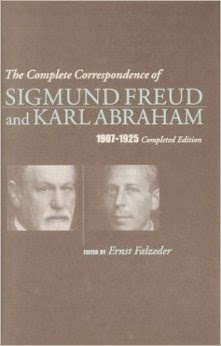
The Complete Correspondence of Sigmund Freud and Karl Abraham (1907-1925)


http://www.amazon.co.uk/gp/product/1855750511/ref=as_li_ss_tl?ie=UTF8&camp=1634&creative=19450&creativeASIN=1855750511&linkCode=as2&tag=freuquot-21
Karl Abraham was an important and influential early member of Freud's inner circle of trusted colleagues. As such, he played a significant part in the establishment of psychoanalysis as a recognised and respected discipline.

Buy The Complete Correspondence of Sigmund Freud and Karl Abraham here. - Free delivery worldwide

Sigmund Freud was born in 1856 in Moravia; from 1860 until Hitler's invasion of Austria in 1938 he lived in Vienna. He was then forced to seek asylum in London, where he died the following year. He began his career as a doctor, specialising in work on the anatomy and physiology of the nervous system. He was almost thirty when his interests first turned to psychology, and during ten years of clinical work in Vienna he developed the practice of what he called ""psychoanalysis"". This began simply as a method of treating neurotic patients by investigating their minds, but it quickly grew into an investigation of the workings of the mind in general, both ill or healthy. Freud demonstrated the normal development of the sexual instinct in childhood and, largely on the basis of an examination of dreams, arrived at his fundamental discovery of the unconscious forces that influence our everyday thoughts and actions. Freud's ideas have shaped not only many specialist disciplines, but have also influenced the entire intellectual climate of the last century.

See also:


Worldwide Shipping: 🖤 T-Shirts / Hoodies / Mugs / Stickers >>       I WOULD PREFER NOT TO.  
https://www.teepublic.com/t-shirt/1759107-i-would-prefer-not-to-bartleby-zizek
Bartleby, the Scrivener: “I would prefer not to.
https://www.teepublic.com/t-shirt/1759107-i-would-prefer-not-to-bartleby-zizek
Related Posts Plugin for WordPress, Blogger...