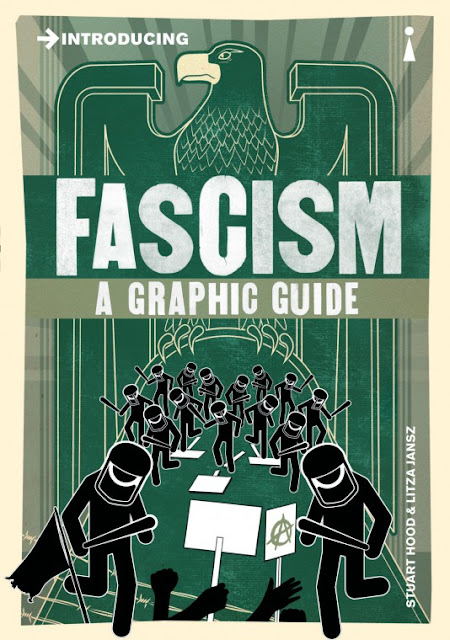
Drawing on his medical expereinces with men and women of various classes, races, nations, and religious beliefs, Reich refutes the still generally held notion that fascism is a specific characteristic of certain nationalities or a political party ideology that is imposed on innocent people by means of force or political manneuvers.
"Fascism on only the organized political expression of the structure of the average man's character. It is the basic emotional civilization and its mechanistic-mystical conception of life." ―Wilhelm Reich
Responsibility for the elimination of fascism thus results with the masses of average people who might otherwise support and champion it.
The Mass Psychology of Fascism - Quotes:
If, by being revolutionary, one means rational rebellion against intolerable social conditions, if, by being radical, one means "going to the root of things," the rational will to improve them, then fascism is never revolutionary. True, it may have the aspect of revolutionary emotions. But one would not call that physician revolutionary who proceeds against a disease with violent cursing but the other who quietly, courageously and conscientiously studies and fights the causes of the disease. Fascist rebelliousness always occurs where fear of the truth turns a revolutionary emotion into illusions.
- Preface to the Third Edition (August 1942)
In its pure form, fascism is the sum total of all irrational reactions of the average human character. To the narrow-minded sociologist who lacks the courage to recognize the enormous role played by the irrational in human history, the fascist race theory appears as nothing but an imperialistic interest or even a mere "prejudice." The violence and the ubiquity of these "race prejudices" show their origin from the irrational part of the human character. The race theory is not a creation of fascism. No: fascism is a creation of race hatred and its politically organized expression. Correspondingly, there is a German, Italian, Spanish, Anglo-Saxon, Jewish and Arabian fascism.
- Preface to the Third Edition (August 1942)
In the strictly Marxist sense, there is not even in Soviet Russia a state socialism but a state capitalism. According to Marx, the social condition "capitalism" does not consist in the existence of individual capitalists, but in the existence of the specific "capitalist mode of production", that is, in the production of exchange values instead of use values, in wage work of the masses and in the production of surplus value, which is appropriated by the state or the private owners, and not by the society of working people. In this strictly Marxist sense, the capitalistic system continues to exist in Russia. And it will continue to exist as long as the masses of people continue to lack responsibility and to crave authority.
- Preface to the Third Edition (August 1942)
The elimination of individual capitalists and the replacement of private capitalism by state capitalism in Russia has not in the least altered the typical helpless and authoritarian character structure of the masses of people.
- Preface to the Third Edition (August 1942)
It is obvious that the fascist mass pestilence, with its background of thousands of years, cannot be mastered with social measures corresponding to the past three hundred years.
The discovery of the natural biological work democracy in international human intercourse is the answer to fascism. This will be no less true even if not one of the living sex-economists, orgone biophysicists or work democrats should live to see its general functioning and its victory over the irrationalism in social life.
- Preface to the Third Edition (August 1942)
Revolutionary practice in any field of human existence develops by itself if one comprehends the contradictions in every new process; it consists in siding with those forces which act in the direction of progressive development. To be radical, according to Marx, means "going to the root of things." If one goes to the root of things, if one understands their contradictory character, the means of mastering the reaction become plain.
- Ch. 1 : Ideology As Material Power, Section 1 : The Divergence Of Ideology And Economic Situation
The suppression of natural sexual gratification leads to various kinds of substitute gratifications. Natural aggression, for example, becomes brutal sadism which then is an essential mass-psychological factor in imperialistic wars.
- Ch. 1 : Ideology As Material Power, Section 4 : The Social Function of Sexual Suppression
If the psychic energies of the average mass of people watching a football game or a musical comedy could be diverted into the rational channels of a freedom movement, they would be invincible.
- Ch. 1 : Ideology As Material Power, Section 4 : The Social Function of Sexual Suppression
Ch. 10 : Work Democracy
Natural work democracy is politically neither "left" nor "right." It embraces anyone who does vital work; for this reason, its orientation is only and alone forward. It has no inherent intention of being against ideologies, including political ideologies. On the other hand, if it is to function, it will be forced to take a firm stand, on a factual basis, against any ideology or political party which puts irrational obstacles in its path. Yet, basically, work democracy is not "against," as is the rule with politics, but "for"; for the formulation and solution of concrete tasks.
- Section 1 : Give Responsibility to Vitally Necessary Work!
What is new in work democracy is: that for the first time in the history of sociology, a possible future regulation of human society is derived not from ideologies or conditions that must be created, but from natural processes that have been present and have been developing from the very beginning. Work-democratic "politics" is distinguished by the fact that it rejects all politics and demagogism. Masses of working men and women will not be relieved of their social responsibility. They will be burdened with it. Work-democrats have no ambition to be political führers, nor will they ever be permitted to develop such an ambition...
- Section 1 : Give Responsibility to Vitally Necessary Work!
Work-democracy adds a decisive piece of knowledge to the scope of ideas related to freedom. The masses of people who work and bear the burden of social existence on their shoulders neither are conscious of their social responsibility nor are they capable of assuming the responsibility for their own freedom. This is the result of the century-long suppression of rational thinking, the natural functions of love, and scientific comprehension of the living. Everything related to the emotional plague in social life can be traced back to this incapacity and lack of consciousness. It is work-democracy's contention that, by its very nature, politics is and has to be unscientific, i.e., that it is an expression of human helplessness, poverty, and suppression.
- Section 1 : Give Responsibility to Vitally Necessary Work!
Only a work democracy can create the foundation of genuine freedom. Long experience in sociological disputes leads me to expect that a great many people will take offense at the disclosure of this miscalculation. It makes the highest demands on people's will to veracity; it puts a heavy burden on everyday living; it places all social responsibility on those who work, be it in the factory, in the office, on the farm, in the laboratory, or wherever.
- Section 2 : The Biological Miscalculation in the Human Struggle for Freedom
If "freedom" means, first of all, the responsibility of every individual for the rational determination of his own personal, professional and social existence, then there is no greater fear than that of the establishment of general freedom. Without a thoroughgoing solution of this problem there never will be a peace lasting longer than one or two generations. To solve this problem on a social scale, it will take more thinking, more honesty and decency, more conscientiousness, more economic, social and educational changes in social mass living than all the efforts made in previous and future wars and post-war reconstruction programs taken together.
- Section 2 : The Biological Miscalculation in the Human Struggle for Freedom
In the course of thousands of years of mechanical development, the mechanistic concept, from generation to generation, has anchored itself deeply in man's biological system. In so doing, it actually has altered human functioning in the sense of the machine-like. In the process of killing his genital function, man has become biologically rigid. He has armored himself against that which is natural and spontaneous within him, he has lost contact with the biological function of self-regulation and is filled with a strong fear of that which is alive and free.
- Section 2 : The Biological Miscalculation in the Human Struggle for Freedom
Work democracy does not wish to prevent or prohibit anything. Its only intention is the fulfilment of the biological life functions, of love, work and knowledge.
- Section 3 : Work Democracy versus Politics. The Natural Social Forces for the Mastery of the Emotional Plague.
The fact that political ideologies are tangible realities is not a proof of their vitally necessary character. The bubonic plague was an extraordinarily powerful social reality, but no one would have regarded it as vitally necessary.
- Section 3 : Work Democracy versus Politics. The Natural Social Forces for the Mastery of the Emotional Plague
MAN IS FUNDAMENTALLY AN ANIMAL. Animals, as distinct from man, are not machine-like, not sadistic; their societies, within the same species, are incomparably more peaceful than those of man. The basic question, then is: What has made the animal, man, degenerate into a machine?
When I say "animal," I do not mean anything bad, cruel or "base"; I am stating a biological fact. Man has developed the peculiar concept that he is not an animal at all, but, well — man; a creature which long since has shed that which is "bad," which is "animal." He demarcates himself in all possible ways from the bad animal and points, in proof of his "being better," to culture and civilization which distinguish him from the animal. He shows, in his whole behavior, his "theories of values," his moral philosophies, his "monkey trials" and such, that he does not want to be reminded of the fact that basically he is an animal, an animal, furthermore, which has much more in common with the "animal" than with that being which he asserts to be and dreams of being. The theory of the German Übermensch has this origin. Man shows by his maliciousness, his inability to live in peace with his kind, his wars, that what distinguishes him from the other animals is only his unbounded sadism and the mechanical trinity of the authoritarian concept of life, mechanistic science and the machine. If one looks at the results of civilization as they present themselves over long periods of time, one finds that these contentions of man are not only erroneous; more than that, they seem to be made expressly for the purpose of making man forget that he is an animal.
- Section 3 : Work Democracy versus Politics. The Natural Social Forces for the Mastery of the Emotional Plague
The cry for freedom is a sign of suppression. It will not cease to ring as long as man feels himself captive. As diverse as the cries for freedom may be, basically they all express one and the same thing: The intolerability of the rigidity of the organism and of the machine-like institutions which create a sharp conflict with the natural feelings for life. Not until there is a social order in which all cries for freedom subside will man have overcome his biological and social crippling, will he have attained genuine freedom. Not until man is willing to recognize his animal nature — in the good sense of the word — will he create genuine culture.
- Section 3 : Work Democracy versus Politics. The Natural Social Forces for the Mastery of the Emotional Plague
Under the influence of politicians, masses of people tend to ascribe the responsibility for wars to those who wield power at any given time. In World War I it was the munitions industrialists; in World War II it was the psychopathic generals who were said to be guilty. This is passing the buck. The responsibility for war falls solely upon the shoulders of these same masses of people, for they have all the necessary means to avert war in their own hands. In part by their apathy, in part by their passivity, and in part actively, these masses of people make possible the catastrophes under which they themselves suffer more than anybody else. To stress this guilt on the part of masses of people, to hold them solely responsible, means to take them seriously. On the other hand, to commiserate masses of people as victims, means to treat them as small, helpless children. The former is the attitude held by genuine freedom-fighters; the latter the attitude held by the power-thirsty politicians.
- Section 3 : Work Democracy versus Politics. The Natural Social Forces for the Mastery of the Emotional Plague
Rulers and generals muster their troops. Magnates muster the sums of money which give them power. The fascist dictators muster the irrational human reactions which make it possible for them to attain and maintain their power over the masses. The scientists muster knowledge and means of research. But, thus far, no organization fighting for freedom has ever mustered the biological arsenal where the weapons are to be found for the establishment and the maintenance of human freedom. All precision of our social existence notwithstanding, there is as yet no definition of the word freedom which would be in keeping with natural science. No word is more misused and misunderstood.
To define freedom is the same as to define sexual health. But nobody will openly admit this. The advocacy of personal and social freedom is connected with anxiety and guilt feelings. As if to be free were a sin or at least not quite as it should be. Sex-economy makes this guilt feeling comprehensible: freedom without sexual self-determination is in itself a contradiction. But to be sexual means — according to the prevailing human structure — to be sinful or guilty. There are very few people who experience sexual love without guilt feeling. "Free love" has acquired a degrading meaning: it lost the meaning given it by the old fighters for freedom. In films and in books, to be genital and to be criminal are presented as the same thing.
- Section 3 : Work Democracy versus Politics. The Natural Social Forces for the Mastery of the Emotional Plague
For a decade, the politics of the European dictators was unrivalled. In order to comprehend the essence of politics, one only has to remember that it was a Hitler who, for many years, was able to keep the world breathless. Hitler as a political genius was a magnificent unmasking of the essence of politics in general. With Hitler, politics reached the peak of its development. We know what were its fruits and what was the reaction of the world. In brief, I believe that the twentieth century, with its gigantic catastrophes, ushers in a new social era, an era free of politics. It remains to be seen what part politics will play in the eradication of the political emotional plague and what part the consciously organized functions of love, work and knowledge.
- Section 3 : Work Democracy versus Politics. The Natural Social Forces for the Mastery of the Emotional Plague.

See our selection of Reich's books
Books on Wilhelm Reich