Showing posts with label Psychiatry. Show all posts

Psychodynamic Diagnostic Manual, Second Edition: PDM-2


Now completely revised (over 90% new), this is the authoritative diagnostic manual grounded in psychodynamic clinical models and theories. Explicitly oriented toward case formulation and treatment planning, PDM-2 offers practitioners an empirically based, clinically useful alternative or supplement to DSM and ICD categorical diagnoses. Leading international authorities systematically address personality functioning and psychological problems of infancy, childhood, adolescence, adulthood, and old age, including clear conceptualizations and illustrative case examples. Purchasers get access to a companion website where they can find additional case illustrations and download and print five reproducible PDM-derived rating scales in a convenient 8 1/2" x 11" size.

New to This Edition:
  • Significant revisions to all chapters, reflecting a decade of clinical, empirical, and methodological advances.
  • Chapter with extended case illustrations, including complete PDM profiles.
  • Separate section on older adults (the first classification system with a geriatric section).
  • Extensive treatment of psychotic conditions and the psychotic level of personality organization.
  • Greater attention to issues of culture and diversity, and to both the clinician's and patient's subjectivity.
  • Chapter on recommended assessment instruments, plus reproducible/downloadable diagnostic tools.
  • In-depth comparisons to DSM-5 and ICD-10-CM throughout.

Sponsoring associations include the International Psychoanalytical Association, Division 39 of the American Psychological Association, the American Psychoanalytic Association, the International Association for Relational Psychoanalysis & Psychotherapy, the American Association for Psychoanalysis in Clinical Social Work, and five other organizations.


See also:


Outside the Asylum: A Memoir of War, Disaster and Humanitarian Psychiatry


Buy Outside the Asylum here. - Free delivery worldwide

What happens if the psychiatric hospital in which you have lived for ten years is bombed and all the staff run away? What is it like to be a twelve-year-old and see all your family killed in front of you? Is it true that almost everyone caught up in a disaster is likely to suffer from post-traumatic stress disorder? What can mental health professionals do to help? How does one stay neutral and impartial in the face of genocide? Why would a doctor support military intervention?


Outside the Asylum is Lynne Jones's personal exploration of humanitarian psychiatry and the changing world of international relief; a memoir of more than twenty-five years as a practising psychiatrist in war and disaster zones around the world. From her training in one of Britain's last asylums, to treating traumatised soldiers in Gorazde after the Bosnian war, helping families who lost everything in the earthquake in Haiti, and learning from traditional healers in Sierra Leone, Lynne has worked with extraordinary people in extraordinary situations. This is a book that shines a light on the world of humanitarian aid, and that shows us the courage and resilience of the people who have to live, work and love in some of the most frightening situations in the world.

 Buy Outside the Asylum here. - Free delivery worldwide

Psychiatric Diagnosis Revisited: From DSM to Clinical Case Formulation


This book explores the purpose of clinical psychological and psychiatric diagnosis, and provides a persuasive case for moving away from the traditional practice of psychiatric classification. It discusses the validity and reliability of classification-based approaches to clinical diagnosis, and frames them in their broader historical and societal context. The Diagnostic and Statistical Manual of Mental Disorders (DSM) is used across the world in research and a range of mental health settings; here, Stijn Vanheule argues that the diagnostic reliability of the DSM is overrated, built on a limited biomedical approach to mental disorders that neglects context, and ultimately breeds stigma. The book subsequently makes a passionate plea for a more detailed approach to the study of mental suffering by means of case formulation. Starting from literature on qualitative research the author makes clear how to guarantee the quality of clinical case formulations.

See also:

The current ruling ontology denies any possibility of a social causation of mental illness.

“The current ruling ontology denies any possibility of a social causation of mental illness. The chemico-biologization of mental illness is of course strictly commensurate with its depoliticization. Considering mental illness an individual chemico-biological problem has enormous benefits for capitalism. First, it reinforces Capital’s drive towards atomistic individualization (you are sick because of your brain chemistry). Second, it provides an enormously lucrative market in which multinational pharmaceutical companies can peddle their pharmaceuticals (we can cure you with our SSRls). It goes without saying that all mental illnesses are neurologically instantiated, but this says nothing about their causation. If it is true, for instance, that depression is constituted by low serotonin levels, what still needs to be explained is why particular individuals have low levels of serotonin. This requires a social and political explanation; and the task of repoliticizing mental illness is an urgent one if the left wants to challenge capitalist realism.”

― Mark Fisher, Capitalist Realism: Is There No Alternative? 


Sanity, Madness and the Family By R.D Laing, Aaron Esterson


Buy Sanity, Madness and the Family here. - Free delivery worldwide

In the late 1950s the psychiatrist R.D.Laing and psychoanalyst Aaron Esterson spent five years interviewing eleven families of female patients diagnosed as 'schizophrenic'. Sanity, Madness and the Family is the result of their work. Eleven vivid case studies, often dramatic and disturbing, reveal patterns of affection and fear, manipulation and indifference within the family. But it was the conclusions they drew from their research that caused such controversy: they suggest that some forms of mental disorder are only comprehensible within their social and family contexts; their symptoms the manifestations of people struggling to live in untenable situations.

Sanity, Madness and the Family was met with widespread hostility by the psychiatric profession on its first publication, where the prevailing view was to treat psychosis as a medical problem to be solved. Yet it has done a great deal to draw attention to the complex and contested nature of psychosis. Above all, Laing and Esterson thought that if you understood the patient's world their apparent madness would become socially intelligible.

This Routledge Classics edition includes a new Foreword by Hilary Mantel.

Trauma, Ethics and the Political Beyond PTSD: The Dislocations of the Real


This book deals with a series of problems associated with the contemporary psychiatric approach to trauma, encapsulated in the diagnostic category of PTSD, by means of a philosophical analysis inspired by the works of Jacques Lacan, Slavoj Žižek and Alain Badiou.

On Being Normal and Other Disorders: A Manual for Clinical Psychodiagnostics


The central argument of On Being Normal and Other Disorders is that psychic identity is acquired through one’s primary intersubjective relationships. Thus, the diagnosis of potential pathologies must also be founded on this relation. Given that the efficacy of all forms of treatment depends upon the therapeutic relation, a diagnostic of this sort has wide-ranging applications.

Paul Verhaeghe’s critical evaluation of the contemporary DSM-diagnostic shows that the lack of reference to an updated governing metapsychology impinges on the therapeutic value of the DSM categories. In response to this problem, the author sketches out the foundations of such a metapsychology by combining a Freudo-Lacanian approach with contemporary empirical research. Close attention is paid to the processes of identity acquisition to show how the self and the Other are not two separate entities. Rather, subject formation is seen as a process in which both the subject’s and the Other’s identity, as well as the relationship between them, comes into being.

By engaging this new theoretical approach in a constant dialogue with the findings of contemporary research, this book provides a compass for the practical applications of such a differential diagnostic. Post-modern categories of anxiety disorders, personality disorders, and post-traumatic stress disorders are approached both through the well-known neurotic, psychotic, and perverse structures, as well as through the less familiar distinction between an actual pathology and a psychopathology. These two outlooks, which involve the role of language and the subject’s relation to the Other, are spelled out to show their implications for treatment at every turn.

See also


Treating People with Psychosis in Institutions: A Psychoanalytic Perspective


This book brings together the histories of a number of psychoanalytically-informed hospitals, and provides a synthesis of the theoretical underpinnings in the institutional practice of each. Of particular interest is how psychoanalysts and psychoanalytically-trained staff working in institutions apply their theoretical understanding, and in what ways the psychoanalytic technique has been modified or adapted to the treatment of individual patients with psychosis and to the workings of an institution in general.

Here the institution is the subject of the case study. Institutions that are theoretically orientated to psychoanalysis were chosen and examined, taking into account their various approaches to the treatment. A number of institutional models that are informed by psychoanalysis offer a guide to the treatment and present a version of institutional practice that is different from the prevailing models in psychiatry. This has implications for health services in the current climate of mental health reform.

Psychoanalysis has its greatest efficacy in long-term treatments and has shown its suitability for patients diagnosed with psychosis when the method is adapted to the uniqueness of each person and is conducted by an experienced clinician. The treatment of psychosis cannot usually be conceived without considering some form of institutional care, although this does depend on the level of the individual’s psychopathology. This is because the majority of people with a psychotic illness, especially those with schizophrenia, will be exposed to inpatient, community or outpatient treatment, in one form or other, during the course of their lives.

Psychosis, Psychoanalysis and Psychiatry in Post War USA: On the Borderland of Madness


Covering the last four decades of the 20th century, this book explores the unwritten history of the struggles between psychoanalysis and psychiatry in postwar USA, inaugurated by the neosomatic revolution, which had profound consequences for the treatment of psychotic patients. Analyzing and synthesizing major developments in this critical and clinical field, Orna Ophir discusses how leading theories redefined what schizophrenia is and how to treat it, offering a fresh interpretation of the nature and challenges of the psychoanalytic profession. The book also considers the internal dynamics and conflicts within mental health organizations, their theoretical paradigms and therapeutic practices.

Opening a timely debate, considering both the continuing relevance and the inherent limitations of the psychoanalytic approach, the book demonstrates how psychoanalysts reinterpreted their professional identity by formalizing and disseminating knowledge among their fellow practitioners, while negotiating with neighboring professions in the medical fields, such as psychiatry, pharmacology and the burgeoning neurosciences. Chapters explore the ways in which psychoanalysts constructed – and also transgressed upon – the boundaries of their professional identity and practice as they sought to understand schizophrenia and treat its patients. The book argues that among the many relationships psychoanalysis sustained with psychiatry, some weakened their own social role as service providers, while others made the theory and practice of psychoanalysis a viable contender in the jurisdictional struggles between professions.

Psychosis, Psychoanalysis and Psychiatry in Postwar USA will appeal to researchers, academics, graduate students and advanced undergraduates who are interested in the history of psychoanalysis, psychiatry, the medical humanities and the history of science and ideas. It will also be of interest to clinicians, health care professionals and other practitioners.

Psychiatric Rehabilitation: A Psychoanalytic Approach to Recovery


Recovering from severe mental illness is one of the most terrifying human experiences in health care. Often conventional rehabilitation approaches focus on helping the patient with his or her symptoms and maximising the external world through supportive interventions. However, often little attention is paid to the internal world of the patient. This subjective experience of recovery is the focus of this book. It describes a particular psychoanalytic model that best captures this distressful state of mind and suggests particular processes that have to be put in place to ensure the patient gets the best opportunity to have his or her fears and hopes addressed. The book also addresses "real world" issues such as management, leadership and training, as well as highlighting key research findings from relevant studies. Outcome measures are suggested that could be adopted to measure the benefits of this particular approach. The chapters give many clinical, organisational and research descriptions from the real world of psychiatry and social care.

Frantz Fanon: A Biography


Comprehensive and eloquent account of Fanon’s personal, intellectual and political life.

http://www.amazon.co.uk/gp/product/1844677737/ref=as_li_tl?ie=UTF8&camp=1634&creative=19450&creativeASIN=1844677737&linkCode=as2&tag=freuquot-21
Born in Martinique, Frantz Fanon (1925–61) trained as a psychiatrist in Lyon before taking up a post in colonial Algeria. He had already experienced racism as a volunteer in the Free French Army, in which he saw combat at the end of the Second World War. In Algeria, Fanon came into contact with the Front de Libération Nationale, whose ruthless struggle for independence was met with exceptional violence from the French forces. He identified closely with the liberation movement, and his political sympathies eventually forced him out the country, whereupon he became a propagandist and ambassador for the FLN, as well as a seminal anticolonial theorist.

David Macey’s eloquent life of Fanon provides a comprehensive account of a complex individual’s personal, intellectual and political development. It is also a richly detailed depiction of postwar French culture. Fanon is revealed as a flawed and passionate humanist deeply committed to eradicating colonialism.

Now updated with new historical material, Frantz Fanon remains the definitive biography of a truly revolutionary thinker.

The Velvet Underground playing for the American Society of Clinical Psychiatrists in 1966

The Velvet Underground wreaked havoc at their first gig after hooking up with Warhol, playing "Heroin" with a film of a torture scene with a man tied to a chair. In front of the movie danced a real, whip-wielding guy, Gerard Malanga. The group's friend Barbara Rubin filmed the psychiatrists, at the same time confronting the 350-strong audience with embarrassing questions about their personal sexual behavior. "It was ridiculous, outrageous, painful," said Dr. Harry Weinstock in the New York Times. 'Everything that's new doesn't necessarily have meaning. It seemed like a whole prison ward had escaped.' "You want to do something for mental health?" asked another psychiatrist. "Kill the story."


John Cale, Welshman, and former member of seminal rock band the Velvet Underground was interviewed in the Guardian:
… what about the night Andy Warhol got the Velvet Underground to play a convention of psychiatrists at Delominco’s steak house? The psychiatrists were appalled. “That was revenge – Lou’s revenge,” Cale says, “and I was all for it.” As a teenager, Reed had been given electric shock treatment to “cure” him of homosexuality. “Lou and I were going to put out a record with his psychiatrist’s letter on one side and my arrest record* on the other,”


The Velvet Underground filmed on 16mm by Jonas Mekas at the Annual Dinner of the New York Society for Clinical Psychiatry, Delmonico's Hotel, New York City, January 13, 1966. Also featuring Edie Sedgewick, Gerard Malanga and Andy Warhol. Originally included in the film 'Scenes from the Life of Andy Warhol'.

Excerpt from the book Women’s Experimental Cinema:

On January 13 1966, Warhol was invited to be the evening’s entertainment at the NY society for Clinical Psychiatry’s forty thir- annual dinner, held at Delmonico’s Hotel. Bursting into the room with a camera, as the Velvet Underground acoustically tortured the guests and Gerard Malanga and Edie Sedgwick performed the ‘whip dance’ in the background, Rubin taunted the attending psychiatrists. Casting blinding lights in their faces, Rubin hurled derogatory questions at the esteemed members of the medical profession, including: ‘What does her vagina feel like? Is his penis big enough? Do you eat her out? As the horrified guests began to leave Rubin continued her interrogation: ‘Why are you getting embarrassed? You’re a psychiatrist; you’re not supposed to get embarrassed. The following day the NY Times reported on the event; their chosen headline, ‘Shock treatment for psychiatrists’, reveals the extent to which Rubin’s guerrilla tactics had inverted the sanctioned relationship between patient and doctor expert and amateur.

What is Madness? by Darian Leader


Buy What is Madness? here. - Free delivery worldwide

What is Madness? is Darian Leader's probing study of madness, sanity, and everything in between


http://www.amazon.co.uk/gp/product/0141047356/ref=as_li_tl?ie=UTF8&camp=1634&creative=19450&creativeASIN=0141047356&linkCode=as2&tag=freuquot-21
What separates the sane from the mad? How hard or easy is it to tell them apart? And what if the difference is really between being mad and going mad?

In this landmark work Darian Leader undermines common conceptions of madness. Through case studies like the apparently 'normal' Harold Shipman, he shows that madness rarely conforms to standard models. What is Madness? explores the idea of quiet madness - that at times many of us live interior lives that are far from sane but allow us to function normally and unthreateningly - he argues that we must seek a new way to assess, treat and deal with those suffering mental health problems.

What is Madness? is Darian Leader's radically insightful and masterfully convincing exploration of a painful, complex but endlessly fascinating area of humanity.

See also


His most recent books include: What is Madness?; The New Black: Mourning, Melancholia and Depression; Why Do Women Write More Letters Than They Post?; Promises Lovers Make When It Gets Late; Stealing the Mona Lisa: What Art Stops us from Seeing; Why Do People Get Ill?: Exploring the Mind-body Connection (with David Corfield); Strictly Bipolar; and Introducing Lacan: A Graphic Guide (with Judy Groves)

Madness in Civilization: A Cultural History of Insanity, from the Bible to Freud, from the Madhouse to Modern Medicine


Buy Madness in Civilization here. - Free delivery worldwide

The loss of reason, a sense of alienation from the commonsense world we all like to imagine we inhabit, the shattering emotional turmoil that seizes hold and won’t let go—these are some of the traits we associate with madness. Today, mental disturbance is most commonly viewed through a medical lens, but societies have also sought to make sense of it through religion or the supernatural, or by constructing psychological or social explanations in an effort to tame the demons of unreason. Madness in Civilization traces the long and complex history of this affliction and our attempts to treat it.


Beautifully illustrated throughout, Madness in Civilization takes readers from antiquity to today, painting a vivid and often harrowing portrait of the different ways that cultures around the world have interpreted and responded to the seemingly irrational, psychotic, and insane. From the Bible to Sigmund Freud, from exorcism to mesmerism, from Bedlam to Victorian asylums, from the theory of humors to modern pharmacology, the book explores the manifestations and meanings of madness, its challenges and consequences, and our varied responses to it. It also looks at how insanity has haunted the imaginations of artists and writers and describes the profound influence it has had on the arts, from drama, opera, and the novel to drawing, painting, and sculpture.


Written by one of the world’s preeminent historians of psychiatry, Madness in Civilization is a panoramic history of the human encounter with unreason.


See also

Madness And Civilization by Michel Foucault


What is Madness? by Darian Leader

Hildegard Peplau: Psychiatric Nurse of the Century


http://www.amazon.co.uk/gp/product/0826199933/ref=as_li_tl?ie=UTF8&camp=1634&creative=19450&creativeASIN=0826199933&linkCode=as2&tag=freuquot-21&linkId=Q7SC7S3WI5STCP2K
Hildegard Peplau's 50-year career in nursing left an indelible stamp on the profession of nursing, and on the lives of the mentally ill in this country. She wore many hats -- founder of modern psychiatric nursing, innovative educator, advocate for the mentally ill, proponent of advanced education for nurses, Executive Director and then President of the American Nurses Association, and prolific author. She raised her daughter as a single parent while pursuing an ambitious professional path. Her determined manner often aroused controversy which never deterred her commitment to advancing the nursing profession.

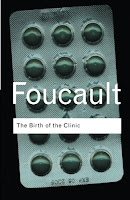
The Birth of the Clinic by Michel Foucault


http://www.amazon.co.uk/gp/product/0415307724/ref=as_li_tl?ie=UTF8&camp=1634&creative=19450&creativeASIN=0415307724&linkCode=as2&tag=freuquot-21&linkId=NZBDC4WB7FJA4BFX
In this remarkable book Michel Foucault, one of the most influential thinkers of recent times, calls us to look critically at specific historical events in order to uncover new layers of significance. In doing so, he challenges our assumptions not only about history, but also about the nature of language and reason, even of truth. The scope of such an undertaking is vast, but by means of his uniquely engaging narrative style, Foucault’s penetrating gaze is skilfully able to confront our own. After reading his words our perceptions are never quite the same again.


The Gift Of Therapy: An open letter to a new generation of therapists and their patients by Irvin D. Yalom


http://amzn.to/1ABI6E4
THE GIFT OF THERAPY is the culmination of master psychiatrist Dr Irvin Yalom's thirty-five years' work as a therapist, illustrating through real case studies how patients and therapists alike can get the most out of therapy. Presented as eighty-five 'tips' for 'beginner therapists', Yalom shares his own fresh approach and the insights he has gained while treating his patients. Personal, and sometimes provocative, Yalom makes some unorthodox suggestions, including: Let the patient matter to you; Acknowledge your errors; Create a new therapy for each patient; Make home visits; (Almost) never make decisions for a patient; and Freud was not always wrong.

This is an entertaining, informative and insightful read for both beginners and more experienced therapists, patients, students and everyone with an interest in the subject. 


http://freudquotes.blogspot.co.uk/2015/06/irvin-d-yalom-quotes_8.html

Madness and Civilization by Michel Foucault


Buy Madness and Civilization here.  - Free delivery worldwide

http://amzn.to/1BTmoj7
Perhaps the French philosopher's masterpiece, which is concerned with an extraordinary question: What does it mean to be mad?

Foucault's first major book, it is an examination of the evolving meaning of madness in European culture, law, politics, philosophy and medicine from the Middle Ages to the end of the eighteenth century, and a critique of historical method and the idea of history. It marks a turning in Foucault's thought away from phenomenology toward structuralism: though he uses the language of phenomenology to describe an evolving experience of "the other" as mad, he attributes this evolution to the influence of specific powerful social structures.


See also

Freud's Schreber Between Psychiatry and Psychoanalysis


Buy Freud's Schreber Between Psychiatry and Psychoanalysis here.

Thomas Dalzell investigates what was distinctive about the predisposition to psychosis which Freud posited in Daniel Paul Schreber, a presiding judge in Saxony's highest court.

He argues that Freud's Schreber text reversed the order of priority in late 19th century conceptions of the disposing causes of psychosis—the objective-biological and subjective-biographical—to privilege subjective disposition to psychosis, but without returning to the paradigms of early 19th century Romantic psychiatry and without obviating hereditary disposition.

http://www.amazon.com/gp/product/1855758830/ref=as_li_ss_tl?ie=UTF8&camp=1789&creative=390957&creativeASIN=1855758830&linkCode=as2&tag=permacmedia-20
The book takes the psychotic judge Daniel Paul Schreber as its reference point, but it is not a general treatment of Schreber, or of Freud's reading of the Schreber case. It focuses rather on what was new in Freud's thinking on the disposition to psychosis, what he learned from his psychiatrist contemporaries and what he did not, and whether or not psychoanalysts have fully received his aetiology. It situates Freud's Schreber text within the evolution of his thought on psychosis, and, as a new element, it highlights his isolating a developmental fixation at infantile narcissism as the decisive moment in his aetiological chain.


Worldwide Shipping: 🖤 T-Shirts / Hoodies / Mugs / Stickers >>       I WOULD PREFER NOT TO.  
https://www.teepublic.com/t-shirt/1759107-i-would-prefer-not-to-bartleby-zizek
Bartleby, the Scrivener: “I would prefer not to.”
https://www.teepublic.com/t-shirt/1759107-i-would-prefer-not-to-bartleby-zizek
Related Posts Plugin for WordPress, Blogger...