Showing posts with label Adam Phillips. Show all posts

In Writing by Adam Phillips


Buy In Writing by Adam Phillips here. - Free delivery worldwide

For Adam Phillips - as for Freud and many of his followers - poetry and poets have always held an essential place, as both precursors and unofficial collaborators in the psychoanalytic project. But the same has never held true in reverse. What, Phillips wonders, at the start of this deeply engaging book, has psychoanalysis meant for writers? And what can writing do for psychoanalysis?

Phillips explores these questions through an exhilarating series of encounters with - and vivid readings of - writers he has loved, from Byron and Barthes to Shakespeare and Sebald. And in the process he demonstrates, through his own unique style, how literature and psychoanalysis can speak to and of each other.
 
See also:

'Against Self-Criticism' by Adam Phillips 


Buy In Writing by Adam Phillips here. - Free delivery worldwide

Adam Phillips / SUPER-EGO

“There are only ever two or three things we endlessly accuse ourselves of, and they are all too familiar; a stuck record, as we say, but in both senses – the super-ego is reiterative. It is the stuck record of the past (‘something there badly not wrong’, Beckett’s line from Worstward Ho, is exactly what it must not say) and it insists on diminishing us. It is, in short, unimaginative; both about morality, and about ourselves. Were we to meet this figure socially, this accusatory character, this internal critic, this unrelenting fault-finder, we would think there was something wrong with him. He would just be boring and cruel. We might think that something terrible had happened to him, that he was living in the aftermath, in the fallout, of some catastrophe. And we would be right.”

― Adam Phillips, Unforbidden Pleasures

'Against Self-Criticism' _ Adam Phillips touches upon Freud, Hamlet and Lacan in his examination of the ways in which we hate ourselves.


Adam Phillips: Psychoanalysis: Is it Worth It? (RSA Interview)


Adam Phillips, one of Britain’s most renowned psychoanalysts and literary figures, joined RSA Chief Executive Matthew Taylor for a conversation about life, the universe, and everything (and maybe a little Freud as well).


Philosophers on Tinder

„365 Etudes For Celebrating Pleasure“ is the title of a multimedia project made by visual artist Kamran Behrouz. His work consists of daily drawings and text research regarding to philosophy, Art, psychoanalysis, political science, Pop culture etc.

From "Philosophers on Tinder":


“Philosophers on Tinder is a satiric series of illustrations reflecting on the notion of sexuality, desire and identity in relation to the idea of virtual reality.

The attempt is made to raise questions regarding to our desires through the lens of different philosophers and psychoanalysts.

Questions such as what Part of the the "Real" is really considered real for each individual? And what do we want from virtual reality or a Virtual platform (e.g. tinder) and how does the virtual resembling the process of Phantasy. And how does the virtual or phantasy forging our realities as humans of 21th century.”

One Of the outcomes of 365 etudes for celebrating pleasure is a book with the same title. It Will be publish on November/December 2016.


Adam Phillips: “The need not to know yourself”

PHILLIPS: Analysis should do two things that are linked together. It should be about the recovery of appetite, and the need not to know yourself. And these two things—

INTERVIEWER: The need not to know yourself?

PHILLIPS: The need not to know yourself. Symptoms are forms of self-knowledge. When you think, I’m agoraphobic, I’m a shy person, whatever it may be, these are forms of self-knowledge. What psychoanalysis, at its best, does is cure you of your self-knowledge. And of your wish to know yourself in that coherent, narrative way…

I was a child psychotherapist for most of my professional life. One of the things that is interesting about children is how much appetite they have. How much appetite they have—but also how conflicted they can be about their appetites. Anybody who’s got young children, or has had them, or was once a young child, will remember that children are incredibly picky about their food. They can go through periods where they will only have an orange peeled in a certain way. Or milk in a certain cup.

INTERVIEWER: And what does that mean?

PHILLIPS: Well, it means different things for different children. One of the things it means is there’s something very frightening about one’s appetite. So that one is trying to contain a voraciousness in a very specific, limiting, narrowed way. It’s as though, were the child not to have the milk in that cup, it would be a catastrophe. And the child is right. It would be a catastrophe, because that specific way, that habit, contains what is felt to be a very fearful appetite. An appetite is fearful because it connects you with the world in very unpredictable ways. Winnicott says somewhere that health is much more difficult to deal with than disease. And he’s right, I think, in the sense that everybody is dealing with how much of their own aliveness they can bear and how much they need to anesthetize themselves.

We all have self-cures for strong feeling. Then the self-cure becomes a problem, in the obvious sense that the problem of the alcoholic is not alcohol but sobriety. Drinking becomes a problem, but actually the problem is what’s being cured by the alcohol. By the time we’re adults, we’ve all become alcoholics. That’s to say, we’ve all evolved ways of deadening certain feelings and thoughts. One of the reasons we admire or like art, if we do, is that it reopens us in some sense—as Kafka wrote in a letter, art breaks the sea that’s frozen inside us. It reminds us of sensitivities that we might have lost at some cost.

Adam Phillips, The Art of Nonfiction No. 7
Interviewed by Paul Holdengräber


'Against Self-Criticism' _ Adam Phillips touches upon Freud, Hamlet and Lacan in his examination of the ways in which we hate ourselves.


On Kissing, Tickling and Being Bored: Psychoanalytic Essays on the Unexamined Life


In a style that is writerly and audacious, Adam Phillips takes up a variety of seemingly ordinary subjects under-investigated by psychoanalysis—kissing, worrying, risk, solitude, composure, even farting as it relates to worrying.

He argues that psychoanalysis began as a virtuoso improvisation within the science of medicine, but that virtuosity has given way to the dream of science that only the examined life is worth living. Phillips goes on to show how the drive to omniscience has been unfortunate both for psychoanalysis and for life. He reveals how much one’s psychic health depends on establishing a realm of life that successfully resists examination.

Adam Phillips on Psychoanalysis

“Psychoanalysis—as a form of conversation—is worth having only if it makes our lives more interesting, or funnier, or sadder, or more tormented, or whatever it is about ourselves that we value and want to promote; and especially if it helps us find new things about ourselves that we didn’t know we could value. New virtues are surprisingly rare.”

― Adam Phillips, On Kissing, Tickling and Being Bored: Psychoanalytic Essays on the Unexamined Life

Adam Phillips on one of Winnicott’s most radical idea

HOLDENGRÄBER: It seems natural that an interest in literature and in Winnicott should go hand in hand. In Winnicott’s essay “On the Capacity to Be Alone,” he writes that the goal for the child is to be alone in the presence of the mother. For a long time this has seemed to me the single best definition of reading.


PHILLIPS: That idea was one of Winnicott’s most radical, because what he was saying was that solitude was prior to the wish to transgress. That there’s something deeply important about the early experience of being in the presence of somebody without being impinged upon by their demands, and without them needing you to make a demand on them. And that this creates a space internally into which one can be absorbed. In order to be absorbed one has to feel sufficiently safe, as though there is some shield, or somebody guarding you against dangers such that you can “forget yourself ” and absorb yourself, in a book, say. Or, for the child, in a game. It must be one of the precursors of reading, I suppose. I think for Winnicott it would be the definition of a good relationship if, in the relationship, you would be free to be absorbed in something else.

― The Paris Review, Adam Phillips, The Art of Nonfiction No. 7

'Against Self-Criticism' by Adam Phillips

Adam Phillips, psychoanalyst and writer, reflects on self-hatred. The lecture was part of the London Review of Books Winter Lectures series 2015, held at the British Museum.

Phillips touches upon Freud, Hamlet and Lacan in his examination of the ways in which we hate ourselves.


Buy Unforbidden Pleasures here. - Free delivery worldwide

Read the lecture here: Against Self-Criticism
 
“We are never as good as we should be; and neither, it seems, are other people. A life without a so-called critical faculty would seem an idiocy: what are we, after all, but our powers of discrimination, our taste, the violence of our preferences? Self-criticism, and the self as critical, are essential to our sense, our picture, of our so-called selves. Nothing makes us more critical – more suspicious or appalled or even mildly amused – than the suggestion that we should drop all this relentless criticism, that we should be less impressed by it and start really loving ourselves. But the self-critical part of ourselves, the part that Freud calls the super-ego, has some striking deficiencies: it is remarkably narrow-minded; it has an unusually impoverished vocabulary; and it is, like all propagandists, relentlessly repetitive. It is cruelly intimidating – Lacan writes of ‘the obscene super-ego’ – and it never brings us any news about ourselves. There are only ever two or three things we endlessly accuse ourselves of, and they are all too familiar; a stuck record, as we say, but in both senses – the super-ego is reiterative. It is the stuck record of the past (‘something there badly not wrong’, Beckett’s line from Worstward Ho, is exactly what it must not say) and it insists on diminishing us. It is, in short, unimaginative; both about morality, and about ourselves. Were we to meet this figure socially, this accusatory character, this internal critic, this unrelenting fault-finder, we would think there was something wrong with him. He would just be boring and cruel. We might think that something terrible had happened to him, that he was living in the aftermath, in the fallout, of some catastrophe. And we would be right.”

“Against Self-Criticism” is also part of Phillips's new book Unforbidden Pleasures.

 Buy Unforbidden Pleasures here. - Free delivery worldwide

Unforbidden Pleasures by Adam Phillips


Buy Unforbidden Pleasures here. - Free delivery worldwide

Unforbidden Pleasures is the dazzling new book from Adam Phillips, author of Missing Out and Going Sane

Adam Phillips takes Oscar Wilde as a springboard for a deep dive into the meanings and importance of the Unforbidden, from the fall of our 'first parents' Adam and Eve to the work of the great twentieth-century psychoanalytic thinkers.

Unforbidden pleasures, he argues, are always the ones we tend not to think about, yet when you look into it, it is probable that we get as much pleasure, if not more, from them. And we may have underestimated just how restricted our restrictiveness, in thrall to the forbidden and its rules, may make us.


Adam Phillips' latest ambitious project explores the philosophical, psychological and social complexities that govern human desire and shape our reality.

On Kindness by Adam Phillips


http://amzn.to/1wxFYOw
What is kindness? Does it make us happier? And does it have a place in a selfish world?

Psychoanalyst Adam Phillips and historian Barbara Taylor present an elegant, thoughtful and concise analysis of kindness in history, in life and in the modern world. Suggesting that acts of kindness occur when we are at our most open and honest, they ask why it is that our faith in kindness has been shaken - and why we are all too ready to believe that antagonism has taken its place.


See also


Winnicott by Adam Phillips


Buy Winnicott here. - Free delivery worldwide

http://www.amazon.co.uk/gp/product/0141031506/ref=as_li_tl?ie=UTF8&camp=1634&creative=19450&creativeASIN=0141031506&linkCode=as2&tag=freuquot-21&linkId=FEVXR5VWPQJZM344
D.W. Winnicott’s remarkable books, including The Piggle, Home Is Where We Start From and The Child, Family and the Outside World are still read, valued and argued with over thirty years after his death. Adam Phillips's short book, now issued with a new preface, is an elegant, thoughtful attempt to get to grips with a writer, paediatrician and psychiatrist whose work with children and mothers (and the wider implications their relationship has for all of us) continues to be profoundly relevant and fascinating.


Selected Books by D.W. Winnicott


Selected Books on D.W. Winnicott

Adam Phillips - Quotes

“Sanity, as the project of keeping ourselves recognizably human, therefore has to limit the range of human experience. To keep faith with recognition we have to stay recognizable. Sanity, in other words, becomes a pressing preoccupation as soon as we recognize the importance of recognition. When we define ourselves by what we can recognize, by what we can comprehend- rather than, say, by what we can describe- we are continually under threat from what we are unwilling and/or unable to see. We are tyrannized by our blind spots, and by whatever it is about ourselves that we find unacceptable.”
― Adam Phillips, Going Sane: Maps of Happiness

“The wish to be understood may be our most vengeful demand, may be the way we hang on, as asults, to our grudge against our mothers; the way we never let our mothers off the hook for their not meeting our every need. Wanting to be understood, as adults, can be our most violent form of nostalgia.”
― Adam Phillips, Missing Out: In Praise of the Unlived Life

“Monogamy is a way of getting the versions of ourselves down to the minimum.”
― Adam Phillips, Monogamy

“The past influences everything and dictates nothing.”
― Adam Phillips, Darwin's Worms On Life Stories And Death Stories

“Greed is a way of avoiding making choices: if I have everything I don't have to choose what I want. And choosing what I want means giving up some pleasures for other pleasures.”
― Adam Phillips, On Balance

“To grow up is to discover what one is unequal to.”
― Adam Phillips, Equals

“If you want to be with somebody who gets you, you prefer collusion to desire, safety to excitement (sometimes good things to prefer but not always the things most wanted). The wish to be understood may be our most vengeful demand, may be the way we hang on, as adults, to the grudge against our mothers; the way we never let our mothers of the hook for their not meeting our every need. Wanting to be understood, as adults, can be, among many other things our most violent form of nostalgia.”
― Adam Phillips, Missing Out: In Praise of the Unlived Life

“Lovers, of course, are notoriously frantic epistemologists, second only to paranoiacs (and analysts) as readers of signs and wonders.”
― Adam Phillips

“Everybody is dealing with how much of their own aliveness they can bear and how much they need to anesthetize themselves.”
― Adam Phillips

“The only satisfactions available are the satisfactions of reality, which are themselves frustrating.”
― Adam Phillips, Missing Out: In Praise of the Unlived Life

“The big secret about Art is that no one wants it to be true.”
― Adam Phillips, On Balance

“There is nothing more terrorizing than the possibility that nothing is hidden. There is nothing more scandalous than a happy marriage”
― Adam Phillips

“The tickling narrative, unlike the sexual narrative, has no climax.

Is the tickling scene, at its most reassuring, not a unique representation of desire and, at its most unsettling, a paradigm of the perverse contract?

Does it not highlight, this delightful game, the impossibility of satisfaction and of reunion, with its continual reenactment of the irresistible attraction and the inevitable repulsion of the object, in which the final satisfaction is frustration?”
― Adam Phillips, On Kissing, Tickling, and Being Bored: Psychoanalytic Essays on the Unexamined

“Finding hate-objects may be every bit as essential as finding love-objects, but if one can tolerate some of one's badness -- meaning recognize it as yours -- then one can take some fear out of the world.”
― Adam Phillips, On Kissing, Tickling, and Being Bored: Psychoanalytic Essays on the Unexamined Life

“Tragic heroes are failed pragmatists. Their ends are unrealistic and their means are impractical.”
― Adam Phillips, Missing Out: In Praise of the Unlived Life

“Believing in religion is like believing that adulthood is the solution to childhood.”
― Adam Phillips, On Balance

“So there is something perhaps more difficult to conceive of, sometimes born of resignation and sometimes not- a life in which not getting it is the point and not the problem; in which the project is to learn how not to ride the bicycle, how not to understand the poem. Or to put it the other way round, this would be a life in which getting it – the will to get it, the ambition to get it – was the problem; in which wanting to be an accomplice didn’t take precedence over making up one’s mind.”
― Adam Phillips, Missing Out: In Praise of the Unlived Life

“Anger, then, is only for the engaged; for those with projects that matter.”
― Adam Phillips, The Beast in the Nursery: On Curiosity and Other Appetites

“Kindness—that is, the ability to bear the vulnerability of others, and therefore of oneself—has become a sign of weakness (except of course among saintly people, in whom it is a sign of their exceptionality).”
― Adam Phillips, On Kindness

“It is difficult to enjoy people for whom we have waited too long. And in this familiar situation, which evokes such intensities of feeling, we wait and we try to do something other than waiting, and we often get bored - the boredom of protest that is always a screen for rage.”
― Adam Phillips, On Kissing, Tickling, and Being Bored: Psychoanalytic Essays on the Unexamined Life

“In Freud’s story our possibilities for satisfaction depend upon our capacity for frustration; if we can’t let ourselves feel our frustration – and, surprisingly, this is a surprisingly difficult thing to do – we can’t get a sense of what it is we might be wanting, and missing, of what might really give us pleasure.”
― Adam Phillips, Missing Out: In Praise of the Unlived Life

“Writers as diverse as Wordsworth and Freud, as Blake and Dickens have all hypothesized that the turbulence and intensity we feel as young children are what ultimately give us our life force as adults. Without this first madness, without being able to sustain this emotional lifeline to our childhoods--to our most passionate selves-- our lives can being to feel futile”
― Adam Phillips

“Indeed psychoanalysis makes sense only as part of the larger cultural conversation in the arts that became known as modernism. Vienna, where Freud lived for virtually his entire life, was the eye of the storm of this modernism; and was the birthplace of the linguistic philosophy that came to dominate the twentieth century.”
― Adam Phillips, Becoming Freud

Missing Out: In Praise of the Unlived Life by Adam Phillips


Missing Out is a meditation on reality and opportunity by Adam Phillips.

We all have two lives - the life we live and the life of our fantasies. But it is the life unlived - the person we have failed to be - that can trouble and even haunt us. In Missing Out acclaimed psychoanalyst Adam Phillips delves into the gap between who we are and who we are not, to discover whether not getting what we want may be the unlikely key to the fully lived life.

Adam Phillips is a psychoanalyst and the author of several previous books, all widely acclaimed, including On Kissing, Tickling and Being Bored, Going Sane and Side Effects. His most recent book is On Kindness, which was co-written with historian Barbara Taylor.


The Penguin Freud Library - 15 Beautifully Designed Book Covers

Psychoanalysis is in essence a cure through love.
― Sigmund Freud, Letter to Carl Jung (1906)
 
A selection of classic Freud texts, in new translations, under the general editorship of Adam Phillips.

http://www.amazon.co.uk/gp/product/0141184043/ref=as_li_tl?ie=UTF8&camp=1634&creative=19450&creativeASIN=0141184043&linkCode=as2&tag=freuquot-21&linkId=ELFROQ3VKFFT7TC5

An Outline of Psychoanalysis

No discovery has done more to shape modernity than Freud’s theory of the unconscious and the part it plays in determining the course of our conscious lives. In psychoanalysis, Freud created a therapeutic tool by which the deepest anguish and desires of the psyche could be revealed.

Yet this vital and rewarding field has remained a mystery to many, and the widespread use of its terminology in everyday life can serve only to confuse matters further. New Introductory Lectures (1932) and An Outline of Psychoanalysis (1938) take us back to Freud’s own account of his theories, and his wish to be the most lucid and inspiring advocate of psychoanalysis.


Buy An Outline of Psychoanalysis here. - Free delivery worldwide


http://www.amazon.co.uk/gp/product/0141184051/ref=as_li_tl?ie=UTF8&camp=1634&creative=19450&creativeASIN=0141184051&linkCode=as2&tag=freuquot-21&linkId=CI7IG4X6IHRF2YOR

Beyond the Pleasure Principle and Other Writings

In Freud’s view we are driven by the desire for pleasure, as well as by the desire to avoid pain. But the pursuit of pleasure has never been a simple thing. Pleasure can be a form of fear, a form of memory and a way of avoiding reality. Above all, as these essays show with remarkable eloquence, pleasure is a way in which we repeat ourselves.

The essays collected in this volume explore, in Freud's uniquely subtle and accessible style, the puzzles of pleasure and morality and the enigmas of human development.

On the Introduction of Narcissism/Remembering, Repeating and Working Through/Beyond the Pleasure Principle/The Ego and the Id/Inhibition, Symptom and Fear


http://www.amazon.co.uk/gp/product/0141018992/ref=as_li_tl?ie=UTF8&camp=1634&creative=19450&creativeASIN=0141018992&linkCode=as2&tag=freuquot-21&linkId=ML5VQOWPB53AEDJV

Civilisation and Its Discontents

In what remains one of his most seminal papers, Freud considers the incompatibility of civilisation and individual happiness, and the tensions between the claims of society and the individual. We all know that living in civilised groups means sacrificing a degree of personal interest, but couldn't you argue that it in fact creates the conditions for our happiness? Freud explores the arguments and counter-arguments surrounding this proposition, focusing on what he perceives to be one of society's greatest dangers; 'civilised' sexual morality. After all, doesn't repression of sexuality deeply affect people and compromise their chances of happiness?


http://www.amazon.co.uk/gp/product/0141182415/ref=as_li_tl?ie=UTF8&camp=1634&creative=19450&creativeASIN=0141182415&linkCode=as2&tag=freuquot-21&linkId=VTC4PXI2FKYRUUQL

Mass Psychology and Other Writings

Freud's religious unbeliefs are too easily dismissed as the standard scientific rationalism of the twentieth-century intellectual, yet he scorned the high-minded humanism of his contemporaries. In "Mass Psychology and Analysis of the 'I'" he explores the notion of 'mass-psychology' - his findings would prove all too prophetic in the years that followed. Writings such as "A Religious Experience" and "The Future of an Illusion" continue earlier work on the essential savagery of the civilized mind, and "Moses the Man" and "Monotheistic Religion" excavates the roots of religion and racism, which he concludes are inextricably intertwined. This remarkable collection reveals Freud not only at his most radically pessimistic, but also at his most personally courageous - engaging with his own adherences, his own antecedents, his own identity.


http://www.amazon.co.uk/gp/product/0141183799/ref=as_li_tl?ie=UTF8&camp=1634&creative=19450&creativeASIN=0141183799&linkCode=as2&tag=freuquot-21&linkId=X2VLLO4DXDH5LZGW

On Murder, Mourning and Melancholia

These works were written against a background of war and racism. Freud sought the sources of conflict in the deepest memories of humankind, finding clear continuities between our 'primitive' past and 'civilized' modernity. In Totem and Taboo he explores institutions of tribal life, tracing analogies between the rites of hunter-gatherers and the obsessions of urban-dwellers, while Mourning and Melancholia sees a similarly self-destructive savagery underlying individual life in the modern age, which issues at times in self-harm and suicide. And Freud's extraordinary letter to Einstein, Why War? - rejecting what he saw as the physicist's naïve pacifism - sums up his unsparing view of history in a few profoundly pessimistic, yet grimly persuasive pages.


http://www.amazon.co.uk/gp/product/0141184825/ref=as_li_tl?ie=UTF8&camp=1634&creative=19450&creativeASIN=0141184825&linkCode=as2&tag=freuquot-21&linkId=56T7ASDQSUSBC4LW

Studies in Hysteria

The tormenting of the body by the troubled mind, hysteria is among the most pervasive of human disorders - yet at the same time it is the most elusive. Freud's recognition that hysteria stemmed from traumas in the patient's past transformed the way we think about sexuality. Studies in Hysteria is one of the founding texts of psychoanalysis, revolutionizing our understanding of love, desire and the human psyche.


Buy Studies in Hysteria here. - Free delivery worldwide


http://www.amazon.co.uk/gp/product/0141183802/ref=as_li_tl?ie=UTF8&camp=1634&creative=19450&creativeASIN=0141183802&linkCode=as2&tag=freuquot-21&linkId=WLMOYQU5ZZUZVE2U

The 'Wolfman' and Other Cases

This collection offers a fantastic opportunity to see Freud in a fresh light. This endlessly beguiling, suggestive, thought-provoking writer can be appreciated nowhere more vividly than in "The Case Histories": "Little Hans", "The Rat Man", "The Wolf Man" and "Some Character Types Met within Psychoanalytic Work".

Contents: Analysis of a phobia in a five-year-old boy ("Little Hans"): introduction; case history and analysis; epicrisis; postscript to the analysis of Little Hans. Some remarks on a case of obsessive-compulsive neurosis (the "Ratman"): case history; theoretical remarks. From the history of an infantile neurosis (the "Wolfman"): preliminary remarks; survey of the patient's milieu and medical history; seduction and its immediate consequences; the dream and the primal scene; some matters for discussion; obsessive-compulsive neurosis; anal eroticism and the castration complex; supplementary material from earliest childhood - solution; recapitulations and problems. Some character types encountered in psychoanalytic work: exceptions; those who founder on success; criminals who act out of a consciousness of guilt.

Buy The 'Wolfman' and Other Cases here. - Free delivery worldwide


http://www.amazon.co.uk/gp/product/0141185546/ref=as_li_tl?ie=UTF8&camp=1634&creative=19450&creativeASIN=0141185546&linkCode=as2&tag=freuquot-21&linkId=UTN543BXJC7S5GFJ

The Joke and its Relation to the Unconscious

Building on the crucial insight that jokes use many of the same mechanisms he had already discovered in dreams, Freud developed one of the richest and most comprehensive theories of humor that has ever been produced. Jokes, he argues, provide immense pleasure by allowing us to express many of our deepest sexual, aggressive and cynical thoughts and feelings which would otherwise remain repressed. In elaborating this central thesis, he brings together a dazzling set of puns, anecdotes, snappy one-liners, spoonerisms and beloved stories of Jewish beggars and marriage-brokers. Many remain highly amusing, while others throw a vivid light on the lost world of early twentieth-century Vienna.


http://www.amazon.co.uk/gp/product/0141187433/ref=as_li_tl?ie=UTF8&camp=1634&creative=19450&creativeASIN=0141187433&linkCode=as2&tag=freuquot-21&linkId=O7QZB6PUP2FPDYRS

The Penguin Freud Reader

Here are the essential ideas of psychoanalytic theory, including Freud's explanations of such concepts as the Id, Ego and Super-Ego, the Death Instinct and Pleasure Principle, along with classic case studies like that of the Wolf Man.

Adam Phillips's marvellous selection provides an ideal overview of Freud's thought in all its extraordinary ambition and variety. Psychoanalysis may be known as the 'talking cure', yet it is also and profoundly, a way of reading. Here we can see Freud's writings as readings and listenings, deciphering the secrets of the mind, finding words for desires that have never found expression. Much more than this, however, The Penguin Freud Reader presents a compelling reading of life as we experience it today, and a way in to the work of one of the most haunting writers of the modern age.

Buy The Penguin Freud Reader here. - Free delivery worldwide


http://www.amazon.co.uk/gp/product/0141186038/ref=as_li_tl?ie=UTF8&camp=1634&creative=19450&creativeASIN=0141186038&linkCode=as2&tag=freuquot-21&linkId=OGGGQT4HZGEX2MGZ

The Psychology of Love

This volume brings together Freud's main contributions to the psychology of love. His illuminating discussions of the ways in which sexuality is always psychosexuality - that there is no sexuality without fantasy, conscious or unconscious - have changed the ways we think about erotic life. In these papers Freud develops his now famous theories about the sexuality of childhood and the transgressive nature of human desire.

In the famous case study of the eighteen-year-old 'Dora', we see Freud at work, both putting into practice and testing his sexual theories that were to change the modern world.

A collection of Freud's major texts on love, human relations and loss, including: "The Taboo on Virginity"; "On Female Sexuality"; "A Child is Being Beaten"; "Three Essays on the Theory of Sexuality" and the case history "Dora".


Buy The Psychology of Love here. - Free delivery worldwide


http://www.amazon.co.uk/gp/product/0141184035/ref=as_li_tl?ie=UTF8&camp=1634&creative=19450&creativeASIN=0141184035&linkCode=as2&tag=freuquot-21&linkId=4HO6PM2Z55HLXQP4

The Psychopathology of Everyday Life

This collection of writings is famous for giving us the phrase 'Freudian slip'. It also builds up a strong social history of Vienna and the middle-class social milieu of Freud and his patients. Through a series of case histories, some no longer than a few lines long, Freud explores how it is that normal people make slips of speech, writing, reading and remembering in their everyday life, and reveals what it is that they betray about the existence of a sub-text or subliminal motive to our conscious actions. As he explains, most of these slips tend of be of a relatively anodyne nature, but some are a little more sinister, particularly those where pride or thwarted love are concerned...


http://www.amazon.co.uk/gp/product/0141183810/ref=as_li_tl?ie=UTF8&camp=1634&creative=19450&creativeASIN=0141183810&linkCode=as2&tag=freuquot-21&linkId=2MYFFXPXSCZJU7KH

The Schreber Case

The Schreber Case is distinctive from the other case histories in that it's based on the memoirs of a conjectural patient. Schreber was a judge and doctor of law who lived according to a strict set of principles. His nervous illness first manifested itself as hypochondria and insomnia - which he put down to his excessive workload - but gradually deteriorated into pathological delusion. Believing himself to be dead and rotting, Schreber attempted suicide, and then went on to experience bizarre delusional epsiodes whereby he belived he was being turned into a woman. The course of this extraordinary illness is analysed by Freud in his search for a root cause - could it have been caused by homesexual impulses that Schreber tried to repress?

Buy The Schreber Case here. - Free delivery worldwide


http://www.amazon.co.uk/gp/product/0141182377/ref=as_li_tl?ie=UTF8&camp=1634&creative=19450&creativeASIN=0141182377&linkCode=as2&tag=freuquot-21&linkId=IVSC552QXFE7UD5I

The Uncanny

Freud was fascinated by the mysteries of creativity and the imagination. The major pieces collected here explore the vivid but seemingly trivial childhood memories that often screen far more uncomfortable desires; the links between literature and daydreaming - and our intensely mixed feelings about things we experience as uncanny.

Leonardo da Vinci fascinated Freud primarily because he was keen to know why his personality was so incomprehensible to his contemporaries. In this probing biographical essay he deconstructs both da Vinci's character and the nature of his genius. As ever, many of his exploratory avenues lead to the subject's sexuality - why did da Vinci depict the naked human body the way hedid? What of his tendency to surround himself with handsome young boys that he took on as his pupils? Intriguing, thought-provoking and often contentious, this volume contains some of Freud's best writing.


Buy The Uncanny here. - Free delivery worldwide


http://www.amazon.co.uk/gp/product/0141183888/ref=as_li_tl?ie=UTF8&camp=1634&creative=19450&creativeASIN=0141183888&linkCode=as2&tag=freuquot-21&linkId=MPSWKV4Y4AFZA5MO

The Unconscious

One of Freud's central achievements was to demonstrate how unacceptable thoughts and feelings are repressed into the unconscious, from where they continue to exert a decisive influence over our lives.

This volume contains a key statement about evidence for the unconscious, and how it works, as well as major essays on all the fundamentals of mental functioning. Freud explores how we are torn between the pleasure principle and the reality principle, how we often find ways both to express and to deny what we most fear, and why certain men need fetishes for their sexual satisfaction. His study of our most basic drives, and how they are transformed, brilliantly illuminates the nature of sadism, masochism, exhibitionism and voyeurism.

Buy The Unconscious here. - Free delivery worldwide


http://www.amazon.co.uk/gp/product/0141182423/ref=as_li_tl?ie=UTF8&camp=1634&creative=19450&creativeASIN=0141182423&linkCode=as2&tag=freuquot-21&linkId=FTXBV3OSIN3OJ7SR

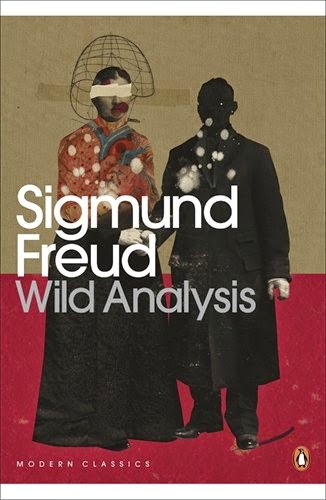
Wild Analysis

'Psychoanalytic treatment utilised the patient's capacity to love and desire as a means to an end. The stuff of romance became the stuff of cure. When Freud is writing about technique in psychoanalysis - and these papers [in Wild Analysis] represent his most significant contributions to the subject over three decades of work - it is important to remember that he is talking about what a couple, an analyst and a so-called patient, can do in a room together. For better or worse.' Adam Phillips

Buy Wild Analysis here. - Free delivery worldwide

•


Sigmund Freud was born in 1856 in Moravia; from 1860 until Hitler's invasion of Austria in 1938 he lived in Vienna. He was then forced to seek asylum in London, where he died the following year. He began his career as a doctor, specialising in work on the anatomy and physiology of the nervous system. He was almost thirty when his interests first turned to psychology, and during ten years of clinical work in Vienna he developed the practice of what he called ""psychoanalysis"". This began simply as a method of treating neurotic patients by investigating their minds, but it quickly grew into an investigation of the workings of the mind in general, both ill or healthy. Freud demonstrated the normal development of the sexual instinct in childhood and, largely on the basis of an examination of dreams, arrived at his fundamental discovery of the unconscious forces that influence our everyday thoughts and actions. Freud's ideas have shaped not only many specialist disciplines, but have also influenced the entire intellectual climate of the last century.

Adam Phillips is a psychoanalyst and a visiting professor in the English Department at the University of York. He is the author of several well-known volumes, all widely acclaimed, including On Kissing, Tickling and Being Bored, Going Sane, Side Effects and recently On Kindness, co-written with historian Barbara Taylor, On Balance, Missing Out and One Way and Another.


Summer Reading List - 5 New Books & 5 Classics in Psychoanalysis

enrich your mental pool with our summer picks


Published in 2014:


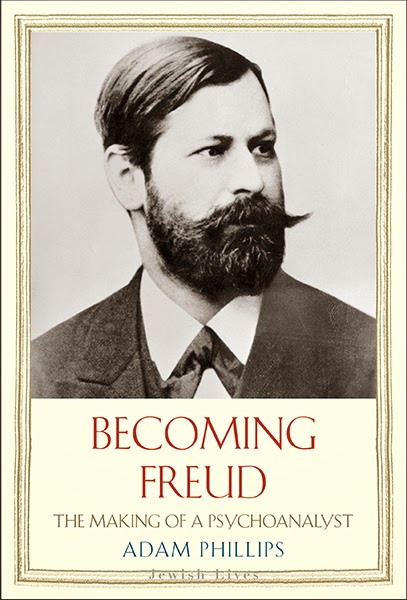
1. Becoming Freud: The Making of a Psychoanalyst

http://www.amazon.co.uk/gp/product/0300158661/ref=as_li_ss_tl?ie=UTF8&camp=1634&creative=19450&creativeASIN=0300158661&linkCode=as2&tag=freuquot-21

In this biography, Adam Phillips, whom the New Yorker calls “Britain’s foremost psychoanalytical writer,” emphasizes the largely and inevitably undocumented story of Freud’s earliest years as the oldest—and favored—son of Jewish immigrants from Eastern Europe and suggests that the psychoanalysis Freud invented was, among many other things, a psychology of the immigrant—increasingly, of course, everybody’s status in the modern world.


2. Lacan: In Spite Of Everything

http://www.amazon.co.uk/gp/product/1781681627/ref=as_li_ss_tl?ie=UTF8&camp=1634&creative=19450&creativeASIN=1781681627&linkCode=as2&tag=freuquot-21

“An extraordinary book about the most flamboyant French neo-Freudian of the twentieth century.” The Times

Jacques Lacan continues to be subject to the most extravagant interpretations. Angelic to some, he is demonic to others. To recall Lacan's career, now that the heroic age of psychoanalysis is over, is to remember an intellectual and literary adventure that occupies a founding place in our modernity. Lacan went against the current of many of the hopes aroused by 1968, but embraced their paradoxes, and his language games and wordplay resonate today as so many injunctions to replace rampant individualism with a heightened social consciousness.

Widely recognized as the leading authority on Lacan, Élisabeth Roudinesco revisits his life and work: what it was – and what it remains.


3. Wisdom From The Couch: Knowing and Growing Yourself from the Inside Out

http://amzn.to/1kvZ4dE

In this intelligent yet user-friendly book, psychoanalyst Jennifer Kunst raises some key questions that are on the minds of all those who are seeking a more satisfying, meaningful life: How can it be that perfectly intelligent people do such obviously counterproductive things so much of the time? Why do we do the things we know we shouldn't do, and why do we fail to do the things we know we should do? The simple answer to these questions is that the unconscious mind greatly influences all that we do. If we come to understand ourselves at a deeper unconscious level, we have a chance to make changes in our lives that have the potential to last.

Written by an experienced psychoanalyst with a knack for describing complex ideas in a lively and easy to comprehend way, Wisdom from the Couch will change the way you think about your internal and external life.

Ebook Preview/Excerpts ~ Wisdom From The Couch


4. Zizek's Jokes: (Did You Hear the One About Hegel and Negation?)

http://www.amazon.co.uk/gp/product/0262026716/ref=as_li_ss_tl?ie=UTF8&camp=1634&creative=19450&creativeASIN=0262026716&linkCode=as2&tag=freuquot-21

The good news is that this book offers an entertaining but enlightening compilation of Zizekisms. Unlike any other book by Slavoj Zizek, this compact arrangement of jokes culled from his writings provides an index to certain philosophical, political, and sexual themes that preoccupy him. "Zižek's Jokes" contains the set-ups and punch lines -- as well as the offenses and insults -- that Zizek is famous for, all in less than 200 pages.


So what's the bad news? There is no bad news. There's just the inimitable Slavoj Zižek, disguised as an impossibly erudite, politically incorrect uncle, beginning a sentence, "There is an old Jewish joke, loved by Derrida..."


5. Dictionary of Untranslatables: A Philosophical Lexicon

http://www.amazon.co.uk/gp/product/0691138702/ref=as_li_ss_tl?ie=UTF8&camp=1634&creative=19450&creativeASIN=0691138702&linkCode=as2&tag=freuquot-21

This is an encyclopedic dictionary of close to 400 important philosophical, literary, and political terms and concepts that defy easy--or any--translation from one language and culture to another. Drawn from more than a dozen languages, terms such as Dasein (German), pravda (Russian), saudade (Portuguese), and stato (Italian) are thoroughly examined in all their cross-linguistic and cross-cultural complexities. Spanning the classical, medieval, early modern, modern, and contemporary periods, these are terms that influence thinking across the humanities. 
Ebook Preview/Excerpts ~  Dictionary of Untranslatables


http://www.amazon.co.uk/gp/product/0691138702/ref=as_li_ss_tl?ie=UTF8&camp=1634&creative=19450&creativeASIN=0691138702&linkCode=as2&tag=freuquot-21


Published in the Last Century:


6. Deviant Love

http://www.amazon.co.uk/gp/product/0141032863/ref=as_li_ss_tl?ie=UTF8&camp=1634&creative=19450&creativeASIN=0141032863&linkCode=as2&tag=freuquot-21

Sigmund Freud, the founder of modern psychoanalysis, remade our view of the human mind by exploring the unconscious forces that drive us. This collection of his groundbreaking writings on the psychology of love examines the nature of desire, transgression, fantasy and erotic taboo.
Ebook Preview/Excerpts ~ Deviant Love


7. The Uses of Enchantment: The Meaning and Importance of Fairy Tales

http://www.amazon.co.uk/gp/product/0140137270/ref=as_li_ss_tl?ie=UTF8&camp=1634&creative=19450&creativeASIN=0140137270&linkCode=as2&tag=freuquot-21

Bruno Bettelheim was one of the great child psychologists of the twentieth century and perhaps none of his books has been more influential than this revelatory study of fairy tales and their universal importance in understanding childhood development.

Analyzing a wide range of traditional stories, from the tales of Sindbad to “The Three Little Pigs,” “Hansel and Gretel,” and “The Sleeping Beauty,” Bettelheim shows how the fantastical, sometimes cruel, but always deeply significant narrative strands of the classic fairy tales can aid in our greatest human task, that of finding meaning for one’s life.


8. Neurosis and Human Growth: The Struggle Towards Self-Realization 

http://www.amazon.co.uk/gp/product/0393307751/ref=as_li_ss_tl?ie=UTF8&camp=1634&creative=19450&creativeASIN=0393307751&linkCode=as2&tag=freuquot-21

In Neurosis and Human Growth, Dr. Horney discusses the neurotic process as a special form of the human development, the antithesis of healthy growth. She unfolds the different stages of this situation, describing neurotic claims, the tyranny or inner dictates and the neurotic's solutions for relieving the tensions of conflict in such emotional attitudes as domination, self-effacement, dependency, or resignation. Throughout, she outlines with penetrating insight the forces that work for and against the person's realization of his or her potentialities.
Ebook Preview/Excerpts ~ Neurosis and Human Growth


9. Eros and Civilization: A Philosophical Inquiry into Freud

http://www.amazon.co.uk/gp/product/0415186633/ref=as_li_ss_tl?ie=UTF8&camp=1634&creative=19450&creativeASIN=0415186633&linkCode=as2&tag=freuquot-21

In this classic work, Herbert Marcuse takes as his starting point Freud's statement that civilization is based on the permanent subjugation of the human instincts, his reconstruction of the prehistory of mankind - to an interpretation of the basic trends of western civilization, stressing the philosophical and sociological implications.
Ebook Preview/Excerpts ~ Eros and Civilization


10. To Have or To Be?

http://www.amazon.co.uk/gp/product/178093680X/ref=as_li_ss_tl?ie=UTF8&camp=1634&creative=19450&creativeASIN=178093680X&linkCode=as2&tag=freuquot-21

To Have Or to Be? is one of the seminal books of the second half of the 20th century. Nothing less than a manifesto for a new social and psychological revolution to save our threatened planet, this book is a summary of the penetrating thought of Eric Fromm. His thesis is that two modes of existence struggle for the spirit of humankind: the having mode, which concentrates on material possessions, power, and aggression, and is the basis of the universal evils of greed, envy, and violence; and the being mode, which is based on love, the pleasure of sharing, and in productive activity. To Have Or to Be? is a brilliant program for socioeconomic change.


+ bonus summer movie:

http://www.amazon.co.uk/gp/product/B00EKFI1AW/ref=as_li_ss_tl?ie=UTF8&camp=1634&creative=19450&creativeASIN=B00EKFI1AW&linkCode=as2&tag=freuquot-21


We are responsible for our dreams. This is the ultimate lesson of psychoanalysis--and fiction cinema.

Philosopher Slavoj Žižek and filmmaker Sophie Fiennes use their interpretation of moving pictures to present a compelling cinematic journey into the heart of ideology--the dreams that shape our collective beliefs and practices.


•


See also our


&


•


Here you can download Freud's major works for FREE:


http://freudquotes.blogspot.co.uk/p/free-ebooks.html


Worldwide Shipping: 🖤 T-Shirts / Hoodies / Mugs / Stickers >>       I WOULD PREFER NOT TO.  
https://www.teepublic.com/t-shirt/1759107-i-would-prefer-not-to-bartleby-zizek
Bartleby, the Scrivener: “I would prefer not to.”
https://www.teepublic.com/t-shirt/1759107-i-would-prefer-not-to-bartleby-zizek
Related Posts Plugin for WordPress, Blogger...