Showing posts with label Buddhism. Show all posts

Nothing: Three Inquiries in Buddhism


http://www.amazon.co.uk/gp/product/022623326X/ref=as_li_tl?ie=UTF8&camp=1634&creative=19450&creativeASIN=022623326X&linkCode=as2&tag=freuquot-21
Though contemporary European philosophy and critical theory have long had a robust engagement with Christianity, there has been no similar engagement with Buddhism—a surprising lack, given Buddhism’s global reach and obvious affinities with much of Continental philosophy. This volume fills that gap, focusing on “nothing”—essential to Buddhism, of course, but also a key concept in critical theory from Hegel and Marx through deconstruction, queer theory, and contemporary speculative philosophy. Through an elaboration of emptiness in both critical and Buddhist traditions; an examination of the problem of praxis in Buddhism, Marxism, and psychoanalysis; and an explication of a “Buddhaphobia” that is rooted in modern anxieties about nothingness, Nothing opens up new spaces in which the radical cores of Buddhism and critical theory are renewed and revealed.
 
Excerpt from Introduction

So much nothing, so little time. This is a book made of nothings: with a smile and a quizzical frown, let us talk about nothing. Ours is a moment replete with theoretical and philosophical nothings: Alain Badiou with his zero, Slavoj Žižek with his Less than Nothing, and nihilist forms of speculative realism (Ray Brassier, Nihil Unbound) to name but a few. In this book, the reader will encounter all kinds of nothing. There are the epistemological gaps between Buddhism and critical theory—for instance, their misalignments and misunderstandings. Then there are gaps and voids that might be ontological: gaps between and within things themselves, within what the many forms of Buddhism and theory take to be reality: nothingness, gap, no-thing, emptiness, annihilation; event, revolution, void. There are indeed cracks and spaces within the very concepts of nothing and nothingness that pervade Buddhism, theory, and Western philosophical appropriations of Buddhism more generally.

Beyond and behind all these, we hope that Nothing: Three Inquiries in Buddhism will engage the void between Buddhism and critical theory—precisely by opening up these nothings, gaps, and zeroes. The purpose of this introduction is to outline the contours of the nothings that make up this book.

See also


Freud and the Buddha: The Couch and the Cushion


Buy Freud and the Buddha here. - Free delivery worldwide

http://www.amazon.co.uk/gp/product/1782201475/ref=as_li_tl?ie=UTF8&camp=1634&creative=19450&creativeASIN=1782201475&linkCode=as2&tag=freuquot-21
This book investigates what psychoanalysis and Buddhism can learn from each other, and offers chapters by a Buddhist scholar, a psychiatrist-author, and a number of leading psychoanalysts. It begins with a discussion of the basic understanding of both psychoanalysis and Buddhism, viewed not as a religion but as a psychology and a philosophy with ethical principles.

The focus of the book rests on the commonality between the psychoanalyst’s neutrality as he listens to his freely associating patient, and the Buddhist monk’s non-judgmental attention to his mind. The psychoanalytic concepts of free association, the unconscious, transference and countertransference are compared to the implications of the Buddhist principles of impermanence, non-clinging (non-attachment), the hard-to-grasp concept of the "not-self", and the practice of meditation.


The differences between the role of the analyst and that of the Buddhist teacher of meditation are explored, and the important difference between the analyst’s emphasis on insight and thinking is compared to the Buddhist attention to awareness and experience. Mention is made of the authors’ implicit recognition of the dissolution of the mind-body split and the relevance of neuroscientific discoveries of the increasingly important role of the right brain in thinking is noted.

The book concludes with a discussion of the controversies about free association, words, and understanding, in both psychoanalysis and Buddhism.

Buy Freud and the Buddha here. - Free delivery worldwide

Introducing Buddha: A Graphic Guide


http://www.amazon.co.uk/gp/product/1848310110/ref=as_li_tl?ie=UTF8&camp=1634&creative=19450&creativeASIN=1848310110&linkCode=as2&tag=freuquot-21&linkId=ZLGW7AGE62FXPIIP
“Introducing Buddha” describes the life and teachings of the Buddha, but it also shows that enlightenment is a matter of experiencing the truth individually and by inspiration which is passed from teacher to student. Superbly illustrated by Borin Van Loon, the book illuminates this process through a rich legacy of stories and explains the practices of meditation, Taoism and Zen. It goes on to describe the role of Buddhism in modern Asia and its growing influence on Western thought.


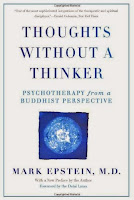
Thoughts Without A Thinker: Psychotherapy from a Buddhist Perspective


http://www.amazon.co.uk/gp/product/0715627112/ref=as_li_tl?ie=UTF8&camp=1634&creative=19450&creativeASIN=0715627112&linkCode=as2&tag=freuquot-21&linkId=HZTIC4E2EXWPMHS2
This text discusses how Eastern spirituality can enhance Western psychology. As patients and therapists find themselves reaching for new solutions to their problems, the traditional disctinctions between matters of the mind and matters of the spirit are increasingly being questioned. This book is written by a traditionally trained psychotherapist who has immersed himself in the Buddhist tradition. Drawing on his own experiences as patient, meditator and therapist, the author argues that the contemplative traditions of the East help patients go beyond merely recognizing their problems to healing them, and that such an approach is not at odds with the psychodynamic method. The book begins by focusing on the Buddhist perspective. Dispelling misconceptions common even among those already practising meditative techniques, this section presents the Buddha's psychological teachings in the language of Western psychodynamics. It then goes on to explain the meditative practices of bare attention, concentration, mindfulness, and analytical inquiry, and shows how they speak to issues at the forefront of psychological concern. Finally, the book uses Freud's treatise of psychotherapy - "Remembering, repeating and working-through" - as a template to show how the Buddha's teaching can complement, inform and energize the practice of psychotherapy.

Psychotherapy without the Self: A Buddhist Perspective


http://www.amazon.co.uk/gp/product/0300143133/ref=as_li_tl?ie=UTF8&camp=1634&creative=19450&creativeASIN=0300143133&linkCode=as2&tag=freuquot-21&linkId=CI5J2QU3C32UFPKJ
Immersed in Buddhist psychology prior to studying Western psychiatry, Dr. Mark Epstein first viewed Western therapeutic approaches through the lens of the East. This posed something of a challenge. Although both systems promise liberation through self-awareness, the central tenet of Buddha's wisdom is the notion of no-self, while the central focus of Western psychotherapy is the self. This book, which includes writings from the past twenty-five years, wrestles with the complex relationship between Buddhism and psychotherapy and offers nuanced reflections on therapy, meditation, and psychological and spiritual development. A best-selling author and popular speaker, Epstein has long been at the forefront of the effort to introduce Buddhist psychology to the West. His unique background enables him to serve as a bridge between the two traditions, which he has found to be more compatible than at first thought. Engaging with the teachings of the Buddha as well as those of Freud and Winnicott, he offers a compelling look at desire, anger, and insight and helps reinterpret the Buddha's Four Noble Truths and central concepts such as egolessness and emptiness in the psychoanalytic language of our time.

Going on Being: The Foundation of Buddhist Thought


http://www.amazon.co.uk/gp/product/1458783685/ref=as_li_tl?ie=UTF8&camp=1634&creative=19450&creativeASIN=1458783685&linkCode=as2&tag=freuquot-21&linkId=GN3GCKRSMJFRR3WH
Before he began training as a psychiatrist, Mark Epstein immersed himself in Buddhism through influential teachers such as Ram Dass, Joseph Goldstein, and Jack Kornfield. Buddhism's positive outlook and the meditative principle of living in the moment profoundly influenced his study and practice of psychotherapy. Going on Being is an intimate chronicle of Epstein's formative years as well as a practical guide to how a Buddhist understanding of psychological problems can help anyone change for the better. Epstein gives readers a deeply personal look into his life, thoughts, fears, and hopes, while detailing the influences that have shaped his worldview. Inspiring in its honesty and humility, Going on Being is a compassionate, brilliant look at how uniting the worlds of psyche and spirit can lead to a new way of seeing reality.

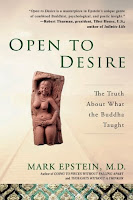
Open to Desire: The Truth About What the Buddha Taught


http://www.amazon.co.uk/gp/product/1592401856/ref=as_li_tl?ie=UTF8&camp=1634&creative=19450&creativeASIN=1592401856&linkCode=as2&tag=freuquot-21&linkId=34YDVV5DLXT3BDDK
It is common in both Buddhism and Freudian psychoanalysis to treat desire as if it is the root of all suffering and problems but psychiatrist Mark Epstein believes this to be a grave misunderstanding. In his controversial defence of desire he makes clear that it is the key to deepening intimacy with each other our world and ourselves. Proposing that spiritual attainment does not have to be detached from intimacy or eroticism OPEN TO DESIRE begins with an exploration of the state of dissatisfaction that causes us to cling to irrational habits. Dr. Epstein helps readers overcome their own fears of desire so that they can more readily bridge the gap between self and other cope with feelings of incompletion and get past the perception of others as objects. Freed from clinging and shame desire's spiritual potential can then be opened up.

The Trauma of Everyday Life by Mark Epstein


http://amzn.to/1F52rW8
Trauma does not just happen to a few unlucky people; it is the bedrock of our psychology. Death and illness touch us all, but even the everyday sufferings of loneliness and fear are traumatic. In The Trauma of Everyday Life renowned psychiatrist and author of Thoughts Without a Thinker Mark Epstein uncovers the transformational potential of trauma, revealing how it can be used for the mind's own development. Epstein finds throughout that trauma, if it doesn't destroy us, wakes us up to both our minds' own capacity and to the suffering of others. It makes us more human, caring and wise. It can be our greatest teacher, our freedom itself, and it is available to all of us.

Western psychology teaches that if we understand the cause of trauma, we might move past it while many drawn to Eastern practices see meditation as a means of rising above, or distancing themselves from, their most difficult emotions. Both, Epstein argues, fail to recognize that trauma is an indivisible part of life and can be used as a tool for growth and an ever deeper understanding of change. When we regard trauma with this perspective, understanding that suffering is universal and without logic, our pain connects us to the world on a more fundamental level. Guided by the Buddha's life as a profound example of the power of trauma, Epstein's also closely examines his own experience and that of his psychiatric patients to help us all understand that the way out of pain is through it.


Mixing Minds: The Power of Relationship in Psychoanalysis and Buddhism


“We cannot find ourselves, or be ourselves, alone.”—from Mixing Minds

http://www.amazon.co.uk/gp/product/0861716167/ref=as_li_tl?ie=UTF8&camp=1634&creative=19450&creativeASIN=0861716167&linkCode=as2&tag=freuquot-21
Mixing Minds explores the interpersonal relationships between psychoanalysts and their patients, and Buddhist teachers and their students. Through the author’s own personal journey in both traditions, she sheds light on how these contrasting approaches to wellness affect our most intimate relationships. These dynamic relationships provide us with keen insight into the emotional ups and downs of our lives—from fear and anxiety to love, compassion, and equanimity. Mixing Minds delves into the most intimate of relationships and shows us how these relationships are the key to the realization of our true selves.

The Signifier Pointing at the Moon: Psychoanalysis and Zen Buddhism


http://www.amazon.co.uk/gp/product/1855754762/ref=as_li_tl?ie=UTF8&camp=1634&creative=19450&creativeASIN=1855754762&linkCode=as2&tag=freuquot-21
Within the context of a careful review of the psychology of religion and prior non-Lacanian literature on the subject, Raul Moncayo builds a bridge between Lacanian psychoanalysis and Zen Buddhism that steers clear of reducing one to the other or creating a simplistic synthesis between the two. Instead, by making a purposeful 'One-mistake' of 'unknown knowing', this book remains consistent with the analytic unconscious and continues in the splendid tradition of Bodhidharma who did not know 'Who' he was and told Emperor Wu that there was no merit in building temples for Buddhism. Both traditions converge on the teaching that 'true subject is no ego', or on the realisation that a new subject requires the symbolic death or deconstruction of imaginary ego-identifications. Although Lacanian psychoanalysis is known for its focus on language and Zen is considered a form of transmission outside the scriptures, Zen is not without words while Lacanian psychoanalysis stresses the senseless letter of the Real or of a jouissance written on and with the body. 'The Signifier Pointing at the Moon' proposes that the truths of desire do not conflict with the teaching of emptiness because a desire for emptiness, or the emptiness at the root of desire, regenerates rather than annihilates desire.

See also


Psychoanalysis and Buddhism: An Unfolding Dialogue


http://www.amazon.co.uk/gp/product/0861713427/ref=as_li_tl?ie=UTF8&camp=1634&creative=19450&creativeASIN=0861713427&linkCode=as2&tag=freuquot-21
"What a wonderful book! Jeremy Safran has assembled an absolutely stellar group of writers and has himself contributed an illuminating introduction. The essays are riveting and the book is the rare edited collection with real thematic unity. If you think you might have an interest in the intersection of psychoanalysis and Buddhism, this is the place to start. If you already know you're interested, once you look at the table of contents you'll find (at least I did) that you want to let Psychoanalysis and Buddhism displace whatever you were going to read next."--Donnel B. Stern, PhD, author of Unformulated Experience and editor of Contemporary Psychoanalysis

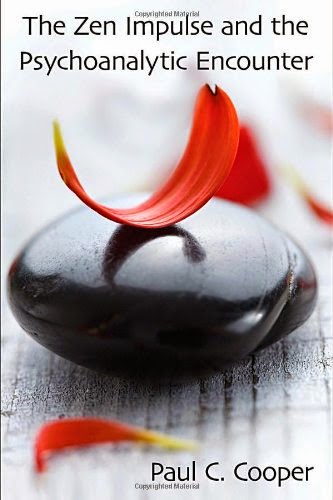
The Zen Impulse and the Psychoanalytic Encounter


Although psychoanalysis and Zen Buddhism derive from theoretical and philosophical assumptions worlds apart, both experientially-based traditions share at their heart a desire for the understanding, development, and growth of the human experience. Paul Cooper utilizes detailed clinical vignettes to contextualize the implications of Zen Buddhism in the therapeutic setting to demonstrate how its practices and beliefs inform, relate to, and enhance transformative psychoanalytic practice.

http://www.amazon.co.uk/gp/product/0415997658/ref=as_li_tl?ie=UTF8&camp=1634&creative=19450&creativeASIN=0415997658&linkCode=as2&tag=freuquot-21
The basic concepts of Zen, such as the identity of the relative and the absolute and the foundational principles of emptiness and dependent-arising, are given special attention as they relate to the psychoanalytic concepts of the unconscious and its processes, transference and countertransference, formulations of self, and more. In addition, through an analysis of apophasis, a unique style of discourse that serves as a basic structure for mystical languages, he provides insight into the structure of the seemingly irrational Zen koan in order to demonstrate its function as a pedagogical and psychological tool.

Though mindful of their differences, Cooper’s intent throughout is to illustrate how the practices of both Zen and psychoanalysis become internalized by the individual who engages in them and can, in turn, inform one another in mutually beneficial ways in an effort to comprehend the ramifications of an individual or collective expanding vision.
 

Psychoanalysis and Zen Buddhism by Erich Fromm


A master of psychoanalysis and social philosophy explores Zen Buddhism

In 1957, social philosopher and psychoanalyst Erich Fromm invited Daisetz T. Suzuki, the most famous Zen Buddhist master in the Western world, to a seminar at his new home in Cuernavaca, Mexico. Their discussion was one of the highlights of Fromm’s life, and the paper Fromm presented (and later expanded into a book) was a watershed work. Fromm demonstrates his mastery of the philosophy and practice of Zen, perfectly articulating how Zen tenets fit into the ideas of psychoanalysis. In this text, he creates new perspectives on both systems of thought.


Contemporary Psychoanalysis and Eastern Thought


http://www.amazon.co.uk/gp/product/0791415783/ref=as_li_tl?ie=UTF8&camp=1634&creative=19450&creativeASIN=0791415783&linkCode=as2&tag=freuquot-21
This book explores the convergence of psychoanalysis and Asian thought. It explores key theoretical issues. What role does paradox play in psychological transformations? How can the oriental emphasis on attaining "no-self" be reconciled with the western emphasis on achieving an integrated self? The book also inquires into pragmatic questions concerning the nature of psychological change and the practice of psychotherapy. The Taoist I Ching is explored as a framework for understanding the therapeutic process. Principles from martial arts philosophy and strategy are applied to clinical work.

Combining theoretical analyses, case studies, empirical data, literary references, and anecdotes, this book is intended for researchers as well as clinicians, and beginning students as well as scholars.

"Suler provides the most extensive treatment of correspondences between Western psychology and Eastern disciplines that I have yet seen, at the same time noting important differences and ways in which the two bodies of thought and practice can usefully complement each other." -- Richard Coan, University of Arizona

Buddhist and Freudian Psychology


http://www.amazon.co.uk/gp/product/0980502217/ref=as_li_tl?ie=UTF8&camp=1634&creative=19450&creativeASIN=0980502217&linkCode=as2&tag=freuquot-21
This book presents comparative perspectives on the nature of mind, motivation, conflict, anxiety and suffering, as well as the therapeutic management of these problems, in both the writings of Sigmund Freud and the discourses of the Buddha. The nature of the instinct of sexuality, ego instinct and the death instinct in Freud are compared to parallel concepts in Buddhism. This fourth edition has been revised and updated and looks at the emerging dialogue between Buddhism and psychotherapy. It includes new chapters on the nature of the unconscious, the therapeutic basis of early Buddhist psychology, and the Freudian search for the ideal therapeutic model.

Worldwide Shipping: 🖤 T-Shirts / Hoodies / Mugs / Stickers >>       I WOULD PREFER NOT TO.  
https://www.teepublic.com/t-shirt/1759107-i-would-prefer-not-to-bartleby-zizek
Bartleby, the Scrivener: “I would prefer not to.”
https://www.teepublic.com/t-shirt/1759107-i-would-prefer-not-to-bartleby-zizek
Related Posts Plugin for WordPress, Blogger...