Showing posts with label Culture. Show all posts

Little Madnesses: Winnicott, Transitional Phenomena and Cultural Experience


Buy Little Madnesses here. - Free delivery worldwide

Little madnesses are our most deeply felt enthusiasms,investments and attachments in the sphere of culture. The term was coined by the child psychoanalyst Donald Winnicott,whose work on transitional phenomena grew out of his naming of the transitional object,and extended into preliminary explorations of the crucial role played by cultural experience in a life that feels satisfying. Here, in original chapters,writers, artists,scholars and experts develop and revitalize cultural theory by exploring the idea of transitional phenomena and its potential to extend and deepen our understanding of cultural experience in mental and social life. Exploring cult films, computer use,installation art,trips to the cinema,museums and galleries,and the agony and ecstasy of making art, they focus on the importance of space, place,and boundaries in cultural experience;on how we can negotiate the use of media,as well as cultural identity;and consider the aesthetic and creative aspects of cultural experience.

Selected Books by D.W. Winnicott


Selected Books on D.W. Winnicott

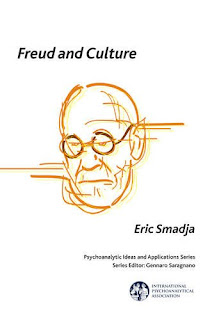
Freud and Culture


Buy Freud and Culture here. - Free delivery worldwide

http://www.amazon.co.uk/gp/product/1782202080/ref=as_li_tl?ie=UTF8&camp=1634&creative=19450&creativeASIN=1782202080&linkCode=as2&tag=freuquot-21
In this book Eric Smadja explores the representations of society and culture that Freud developed in the course of his work. Distinct from contemporary sociological and anthropological conceptions, they led to his construction of a personal socio-anthropology that was virulently criticised by the social sciences. But what exactly is meant here by 'culture' and 'society'? Do we mean Freud's own Viennese society or Western, 'civilised' society in general?

In addition, Freud was interested in historical and 'primitive' societies from the evolutionist perspective of the British anthropologists of his time. This book considers the interrelationship between these different societies and cultures, and raises many questions. What constitutes a culture? What are its essential traits, its functions, its relationships with society, with nature, and with other aspects of 'reality' or of the 'external world'? How did Freud construct the idea of culture? What roles does culture play in the development of the individual, in the construction and functioning of his or her psyche? This book offers some answers and presents the Freudian central notion of Kulturarbeit, which is constructed from a strictly Freudian perspective.

Buy Freud and Culture here. - Free delivery worldwide

From Psycho-Analysis to Culture-Analysis: A Within-Culture Psychotherapy


This book confronts the barriers that face the cross-cultural application of western psychotherapy. It puts forward an argument for applying culture analysis, in which the therapist analyses the inconsistencies within the client's culture, before applying psychoanalysis, in which the analyst analyses the intra-psychic conflicts.


Skin, Culture and Psychoanalysis


http://www.amazon.co.uk/gp/product/023036506X/ref=as_li_tl?ie=UTF8&camp=1634&creative=19450&creativeASIN=023036506X&linkCode=as2&tag=freuquot-21
Skin, Culture and Psychoanalysis queries the intersection of cultural and psychical meanings of skin in the contemporary moment as skin responds to new (and old) pressures and articulations. A variety of topics are herein addressed including the symbolic dominance of white skin, racialization, tattooing, cosmetic surgery, fabric skins, skin eruptions, second skins, the skin in self-harm, and skin as a site of psychic repair. The authors engage an array of objects and approaches from the clinical domain, literary fiction, television, film, video art, photography, fashion design, and poetry. In doing so, they highlight the situation of skin as a socially and culturally mediated exterior simultaneously negotiated at the interior or psychical level. This collection locates skin at the centre of inquiry, rather than as a jumping-off point from which to explore 'deeper' or 'thicker' issues, which tends to happen when skin is treated synecdochically as a stand-in for the body itself. Here, skin is a cultural object, and a psychical object, in its own right.

See also:


Fashion and Psychoanalysis: Styling the Self


Buy Fashion and Psychoanalysis here. - Free delivery worldwide

http://www.amazon.co.uk/gp/product/1780760043/ref=as_li_tl?ie=UTF8&camp=1634&creative=19450&creativeASIN=1780760043&linkCode=as2&tag=freuquot-21
In this innovative new book, Alison Bancroft re-examines significant moments in twentieth century fashion history through the focal lens of psychoanalytic theory. Her discussion centres on studies of fashion photography, haute couture, queer dressing, and fashion/art in an attempt to shed new light on these key issues. According to Bancroft, problems of subjectivity are played out through fashion, in the public arena, and not just in the dark, unknowable unconscious mind. The question of what can be said, and what can only be experienced, and how these two issues may be reconciled, become questions that fashion addresses on an almost daily basis. By interpreting fashion within a psychoanalytic frame, Bancroft illustrates how fashion articulates some of the essential, and sometimes frightening, truths about the body, femininity and the self.

Is fashion, like the sinthome, a blurring of language and corporeality, the collapse of the Symbolic into feminine logic, the apex of aesthetic self-invention?

Perversion and Modern Japan: Psychoanalysis, Literature, Culture


Buy Perversion and Modern Japan here.

http://www.amazon.co.uk/gp/product/0415691435/ref=as_li_tl?ie=UTF8&camp=1634&creative=19450&creativeASIN=0415691435&linkCode=as2&tag=freuquot-21
How did nerves and neuroses take the place of ghosts and spirits in Meiji Japan? How does Natsume Soseki’s canonical novel Kokoro pervert the Freudian teleology of sexual development? What do we make of Jacques Lacan’s infamous claim that because of the nature of their language the Japanese people were unanalyzable? And how are we to understand the re-awakening of collective memory occasioned by the sudden appearance of a Japanese Imperial soldier stumbling out of the jungle in Guam in 1972?

In addressing these and other questions, the essays collected here theorize the relation of unconscious fantasy and perversion to discourses of nation, identity, and history in Japan. Against a tradition that claims that Freud’s method, as a Western discourse, makes a bad ‘fit’with Japan, this volume argues that psychoanalytic reading offers valuable insights into the ways in which ‘Japan’ itself continues to function as a psychic object.

By reading a variety of cultural productions as symptomatic elaborations of unconscious and symbolic processes rather than as indexes to cultural truths, the authors combat the truisms of modernization theory and the seductive pull of culturalism. This volume also offers a much needed psychoanalytic alternative to the area studies convention that reads narratives of all sorts as "windows" offering insights into a fetishized Japanese culture. As such, it will be of huge interest to students and scholars of Japanese literature, history, culture, and psychoanalysis more generally.

Berlin Psychoanalytic: Psychoanalysis and Culture in Weimar Republic Germany


One hundred years after the Berlin Psychoanalytic Institute was established, this book recovers the cultural and intellectual history connected to this vibrant organization and places it alongside the London Bloomsbury group, the Paris Surrealist circle, and the Viennese fin-de-siecle as a crucial chapter in the history of modernism. Taking us from World War I Berlin to the Third Reich and beyond to 1940s Palestine and 1950s New York - and to the influential work of the Frankfurt School - Veronika Fuechtner traces the network of artists and psychoanalysts that began in Germany and continued in exile. Connecting movements, forms, and themes such as Dada, multi-perspectivity, and the urban experience with the theory and practice of psychoanalysis, she illuminates themes distinctive to the Berlin psychoanalytic context such as war trauma, masculinity and femininity, race and anti-Semitism, and the cultural avant-garde. In particular, she explores the lives and works of Alfred Doblin, Max Eitingon, Georg Groddeck, Karen Horney, Richard Huelsenbeck, Count Hermann von Keyserling, Ernst Simmel, and Arnold Zweig.

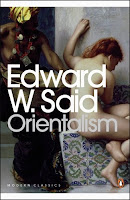
Orientalism by Edward W. Said


For generations now, Edward W. Said's Orientalism has defined our understanding of colonialism and empire, and this Penguin Modern Classics edition contains a preface written by Said shortly before his death in 2003.

http://www.amazon.co.uk/gp/product/0141187425/ref=as_li_tl?ie=UTF8&camp=1634&creative=19450&creativeASIN=0141187425&linkCode=as2&tag=freuquot-21
In this highly-acclaimed work, Edward Said surveys the history and nature of Western attitudes towards the East, considering orientalism as a powerful European ideological creation - a way for writers, philosophers and colonial administrators to deal with the 'otherness' of eastern culture, customs and beliefs. He traces this view through the writings of Homer, Nerval and Flaubert, Disraeli and Kipling, whose imaginative depictions have greatly contributed to the West's romantic and exotic picture of the Orient. Drawing on his own experiences as an Arab Palestinian living in the West, Said examines how these ideas can be a reflection of European imperialism and racism.

Edward W. Said (1935-2003) was a Palestinian-American cultural critic and author, born in Jerusalem and educated in Egypt and the United States. His other books include The Question of Palestine, Culture and Imperialism and Out of Place: A Memoir.
 

Colonial Fantasies: Towards a Feminist Reading of Orientalism


http://www.amazon.co.uk/gp/product/0521626587/ref=as_li_tl?ie=UTF8&camp=1634&creative=19450&creativeASIN=0521626587&linkCode=as2&tag=freuquot-21
In this 1998 book, Meyda Yegenoglu investigates the intersection between post-colonial and feminist criticism, focusing on the Western fascination with the veiled women of the Orient. She examines the veil as a site of fantasy and of nationalist ideologies and discourses of gender identity, analyzing travel literature, anthropological and literary texts to reveal the hegemonic, colonial identity of the desire to penetrate the veiled surface of 'otherness'. Representations of cultural difference and sexual difference are shown to be inextricably linked, and the figure of the Oriental woman to have functioned as the veiled interior of Western identity.

Shrink: A Cultural History of Psychoanalysis in America


"Psychology has stepped down from the university chair into the marketplace" was how the New York Times put it in 1926. Another commentator in 1929 was more biting. Psychoanalysis, he said, had over a generation, "converted the human scene into a neurotic." Freud first used the word around 1895, and by the 1920s psychoanalysis was a phenomenon to be reckoned with in the United States. How it gained such purchase, taking hold in virtually every aspect of American culture, is the story Lawrence R. Samuel tells in Shrink, the first comprehensive popular history of psychoanalysis in America. Arriving on the scene at around the same time as the modern idea of the self, psychoanalysis has both shaped and reflected the ascent of individualism in American society. Samuel traces its path from the theories of Freud and Jung to the innermost reaches of our current me-based, narcissistic culture. Along the way he shows how the arbiters of culture, high and low, from public intellectuals, novelists, and filmmakers to Good Housekeeping and the Cosmo girl, mediated or embraced psychoanalysis (or some version of it), until it could be legitimately viewed as an integral feature of American consciousness.


After Freud Left: A Century of Psychoanalysis in America


Buy After Freud Left here. - Free delivery worldwide

http://www.amazon.com/gp/product/0226081370/ref=as_li_ss_tl?ie=UTF8&camp=1789&creative=390957&creativeASIN=0226081370&linkCode=as2&tag=permacmedia-20
From August 29 to September 21, 1909, Sigmund Freud visited the United States, where he gave five lectures at Clark University in Worcester, Massachusetts. This volume brings together a stunning gallery of leading historians of psychoanalysis and of American culture to consider the broad history of psychoanalysis in America and to reflect on what has happened to Freud’s legacy in the United States in the century since his visit.

There has been a flood of recent scholarship on Freud’s life and on the European and world history of psychoanalysis, but historians have produced relatively little on the proliferation of psychoanalytic thinking in the United States, where Freud’s work had monumental intellectual and social impact. The essays in After Freud Left provide readers with insights and perspectives to help them understand the uniqueness of Americans’ psychoanalytic thinking, as well as the forms in which the legacy of Freud remains active in the United States in the twenty-first century. After Freud Left will be essential reading for anyone interested in twentieth-century American history, general intellectual and cultural history, and psychology and psychiatry.


A photo posted by Freud Quotes (@freud.quotes) on

Buy After Freud Left here. - Free delivery worldwide

Freud and American Sociology


Buy Freud and American Sociology here.

http://www.amazon.com/gp/product/0745625053/ref=as_li_ss_tl?ie=UTF8&camp=1789&creative=390957&creativeASIN=0745625053&linkCode=as2&tag=permacmedia-20
Although Freud’s impact on social science – and indeed 20th century social thought – has been extraordinary, his impact on American sociology has been left relatively unexplored. This ground-breaking book aims to fill this knowledge gap. By examining the work of pioneers such as G.H.Mead, Cooley, Parsons and Goffman, as well as a range of key contemporary thinkers, it provides an accurate history of the role Freud and psychoanalysis played in the development of American social theory. Despite the often reluctant, and frequently resistant, nature of this encounter, the book also draws attention to the abiding potential of fusing psychoanalytic and sociological thinking.

Freud and American Sociology represents an original and compelling contribution to scholarly debate. At the same time, the clarity with which Manning develops his comprehensive account means that the book is also highly suitable for adoption on a range of upper-level undergraduate and graduate courses, including sociology, social theory, social psychology, and related disciiplines.

Philip Manning is Professor of Sociology at Cleveland State University

Speculations After Freud: Psychoanalysis, Philosophy and Culture


Buy Speculations After Freud here.

http://www.amazon.com/gp/product/0415076560/ref=as_li_ss_tl?ie=UTF8&camp=1789&creative=390957&creativeASIN=0415076560&linkCode=as2&tag=permacmedia-20
Psychoanalysis has transformed our culture. We constantly use and refer to ideas from psychoanalysis, often unconsciously. Psychology, philosophy, politics, sociology, women's studies, anthropology, literary studies, cultural studies, and other disciplines have been permeated by the competing schools of psychoanalysis. But what of psychoanalysis itself? Where is it going one hundred years after Freud's own speculations took shape? Does it still have a role to play in cultural debate, or should it perhaps be abandoned?

Speculations After Freud confronts the dilemmas of contemporary psychoanalysis by bringing together some of the most influential and best known writers on psychoanalysis, philosophy and culture. The advocates and critics of psychoanalysis, both institutional and theoretical, critically appraise the powerful role psychoanalytic speculation plays in all areas of culture.

Curiosity and Method: Ten Years of Cabinet Magazine


Since its launch in late 2000, Cabinet magazine has become a touchstone for a certain approach to understanding culture, one that shuns orthodox distinctions--high/low, serious/humorous, professional/amateur--in favor of a commitment to the idea that all objects, practices and discourses can, if read against the grain, teach us something important about the world. Its hybrid sensibility merges the visually engaging style of an arts periodical, the exuberance of a fanzine and the in-depth exploration of a scholarly journal to create a sourcebook of ideas for an international audience of readers, from artists and designers to scientists, philosophers and historians. Using essays, interviews and artist projects to present a variety of topics in language accessible to the non-specialist, Cabinet has aimed to encourage a new culture of curiosity. This anthology brings together some of the most interesting successes, and a few instructive failures, published in the first 40 issues of Cabinet, virtually all of which are sold out, along with essays specially commissioned for the volume.

http://www.amazon.co.uk/gp/product/1932698566/ref=as_li_tl?ie=UTF8&camp=1634&creative=19450&creativeASIN=1932698566&linkCode=as2&tag=freuquot-21&linkId=3J4MEIWZLJT64SST


A succinct statement on curiosity by Michel Foucault that sums up Cabinet's mission better than we can

Curiosity is a new vice that has been stigmatized in turn by Christianity, by philosophy, and even by a certain conception of science. Curiosity, futility. The word, however, pleases me. To me it suggests something altogether different: it evokes "concern"; it evokes the care one takes for what exists and could exist; a readiness to find strange and singular what surrounds us; a certain relentlessness to break up our familiarities and to regard otherwise the same things; a fervor to grasp what is happening and what passes; a casualness in regard to the traditional hierarchies of the important and the essential.

I dream of a new age of curiosity. We have the technical means for it; the desire is there; the things to be known are infinite; the people who can employ themselves at this task exist. Why do we suffer? From too little: from channels that are too narrow, skimpy, quasi-monopolistic, insufficient. There is no point in adopting a protectionist attitude, to prevent "bad" information from invading and suffocating the "good." Rather, we must multiply the paths and the possibilities of coming and goings.

Michel Foucault, "The Masked Philosopher"

http://www.amazon.co.uk/gp/product/1932698566/ref=as_li_tl?ie=UTF8&camp=1634&creative=19450&creativeASIN=1932698566&linkCode=as2&tag=freuquot-21&linkId=3J4MEIWZLJT64SST

It includes contributions by more than a hundred writers and artists, including Jonathan Ames, Alain Badiou, Daniel Birnbaum, Matthew Buckingham, D. Graham Burnett, Paul Collins, Simon Critchley, Lorraine Daston, Mark Dery, Brian Dillon, Jeff Dolven, Spencer Finch, Joshua Foer, Leon Golub, Douglas Gordon, Anthony Grafton, Joseph Grigely, Shelley Jackson, Denis Johnson, Wayne Koestenbaum, Jonathan Lethem, Josiah McElheny, Helen Mirra, Albert Mobilio, Alexander Nagel, Francine Prose, Matthew Ritchie, Daniel Rosenberg, Luc Sante, Christopher Turner, Tom Vanderbilt, Marina Warner, Slavoj Zizek and many others.

See also

Freud's Theory of Culture: Eros, Loss, and Politics


http://www.amazon.com/gp/product/0742522628/ref=as_li_ss_tl?ie=UTF8&camp=1789&creative=390957&creativeASIN=0742522628&linkCode=as2&tag=permacmedia-20
Freud's Theory of Culture: Eros, Loss, and Politics takes a fresh look at Sigmund Freud, countering his prevalent image as a thinker who pessimistically renounces the possibility of social, political, and cultural change. Abraham Drassinower contends that what is generally mistaken as Freud's pessimism is, on the contrary, the very standpoint from which Freud envisions an alternative to the cultural 'malaise' described in his works. As Drassinower argues that Freud's attentiveness to loss and death is part of a critical effort to envision alternatives to things as they are, he ably demonstrates that Freud deserves greater stature as a participant in the Western tradition of political philosophy.

Abraham Drassinower is assistant professor in the faculty of law at the University of Toronto.
Worldwide Shipping: 🖤 T-Shirts / Hoodies / Mugs / Stickers >>       I WOULD PREFER NOT TO.  
https://www.teepublic.com/t-shirt/1759107-i-would-prefer-not-to-bartleby-zizek
Bartleby, the Scrivener: “I would prefer not to.”
https://www.teepublic.com/t-shirt/1759107-i-would-prefer-not-to-bartleby-zizek
Related Posts Plugin for WordPress, Blogger...