This classic work by psychologist and social philosopher Eric Fromm builds upon his previous popular book "To Have or to Be". The Art of Being teaches us to avoid the tantalizing illusions of our consumer-driven world by learning to function as a whole person from a state of inner completeness or being. The transition from an identity of having to being creates a state of enlightened psychological and spiritual happiness. Fromm observes that the modern person is less a self-reflective being than a composite of data promoted by the mass media, and he encourages us to pursue true self-awareness beyond simple political, ideological, and religious cliches. By learning to be centered in the self, the individual is less swayed by the endless pressures and dissatisfactions of the culture of consumerism.

Showing posts with label Audiobooks. Show all posts
Showing posts with label Audiobooks. Show all posts
Free Audiobook: The Art Of Being by Erich Fromm
This classic work by psychologist and social philosopher Eric Fromm builds upon his previous popular book "To Have or to Be". The Art of Being teaches us to avoid the tantalizing illusions of our consumer-driven world by learning to function as a whole person from a state of inner completeness or being. The transition from an identity of having to being creates a state of enlightened psychological and spiritual happiness. Fromm observes that the modern person is less a self-reflective being than a composite of data promoted by the mass media, and he encourages us to pursue true self-awareness beyond simple political, ideological, and religious cliches. By learning to be centered in the self, the individual is less swayed by the endless pressures and dissatisfactions of the culture of consumerism.

Free Audiobook - The Interpretation of Dreams by Sigmund Freud
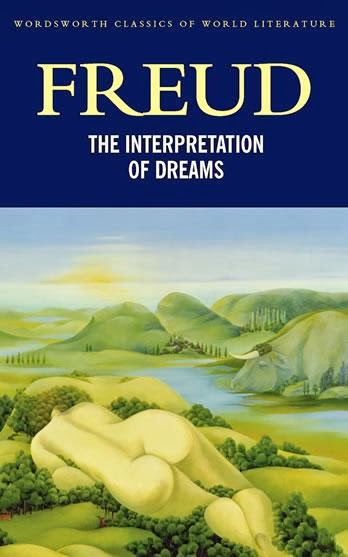
Running Time: 23:29:25
Zip file size: 661MB
The Interpretation of Dreams
Sigmund Freud
Translated by A. A. Brill (1911)
- Preface to the Third, Second, and First Editions
- Chapter I: The Scientific Literature Dealing with the Problems of Dreams
- A. The Relation of Dreams to Waking Life
- B. The Material of Dreams -- Memory in Dreams
- C. The Stimuli and Sources of Dreams
- 1. External Sensory Stimuli
- 2. Internal (Subjective) Sensory Excitations
- 3. Internal Organic Somatic Stimuli
- 4. Psychical Sources of Stimulation
- D. Why Dreams are Forgotten after Waking
- E. The Distinguishing Psychological Characteristics of Dreams
- F. The Moral Sense in Dreams
- G. Theories of Dreaming and its Function
- H. The Relations between Dreams and Mental Diseases
- Chapter II: The Method of Interpreting Dreams: An Analysis of a Specimen Dream
- Chapter III: The Dream as Wish-Fulfilment
- Chapter IV: Distortion in Dreams
- Chapter V. The Material and Sources of Dreams
- A. Recent and Indifferent Materials in Dreams
- B. Infantile Material as a Source of Dreams
- C. The Somatic Sources of Dreams
- D. Typical Dreams
- 1. Embarrassing Dreams of Being Naked
- 2. Dreams of the Death of Persons of Whom the Dreamer is Fond
- 3. Other Typical Dreams
- 4. Examination Dreams
- Chapter VI: The Dream-Work
- A. The Work of Condensation
- B. The Work of Displacement
- C. The Means of Representation in Dreams
- D. Considerations of Representability
- E. Representation by Symbols in Dreams -- Some Further Typical Dreams
- F. Some Examples -- Calculations and Speeches in Dreams
- G. Absurd Dreams -- Intellectual Activity in Dreams
- H. Affects in Dreams
- I. Secondary Revision
- Chapter VII: The Psychology of the Dream-Processes
- A. The Forgetting of Dreams
- B. Regression
- C. Wish-Fulfillment
- D. Arousal by Dreams -- The Function of Dreams -- Anxiety Dreams
- E. The Primary and Secondary Processes -- Repression
- F. The Unconscious and Consciousness -- Reality
- Bibliography
Free Audiobook - Reflections on War and Death by Sigmund Freud

When this travesty of civilisation, this infallible state that has regimented and dragooned its citizens into obedience, goes to war, Freud is pained but not surprised that it makes free use of every injustice, of every act of violence that would dishonour the individual, that it employs not only permissible cunning but conscious lies and intentional deception against the enemy, that it absolves itself from guarantees and treaties by which it was bound to other states and makes unabashed confession of its greed and aspiration to power.
For conscience, the idea of right and wrong, in the Freudian sense, is not the inexorable judge that teachers of ethics say it is: it has its origin in nothing but "social fear," and whereas in times of peace the state forbids the individual to do wrong, not because it wishes to do away with wrongdoing but because it wishes to monopolise it, like salt or tobacco, it suspends its reproach in times of war. The suppression of evil desires also ceases, and men, finding the moral ties loosened between large human units, commit acts of cruelty, treachery, deception and brutality the very possibility of which would have been considered incompatible with their degree of culture. (Summary by J.C. Grey, from The Bookman: A Review of Books and Life, v.47: Mar-Aug 1918. First sentence edited for clarity.)
Running Time: 1:15:28
Zip file size: 36.2MB
Reflections on War and Death
Sigmund Freud
Authorized English Translation By DR. A. A. BRILL and ALFRED B. KUTTNER
MOFFAT, YARD AND COMPANY NEW YORK 1918
I The Disappointments of War
II Our Attitude Towards Death
Free Audiobook - Totem and Taboo by Sigmund Freud

Géza Róheim considered Totem and Taboo one of the great landmarks in the history of anthropology, comparable only to Edward Burnett Tylor's Primitive Culture and Sir James George Frazer's The Golden Bough. René Girard comments that, "Contemporary criticism is almost unanimous in finding unacceptable the theories set forth in Totem and Taboo," and that, "Everyone seems intent on covering Totem and Taboo with obloquy and condemning it to oblivion." Girard views the work differently, noting that Freud's concept of collective murder is close to the themes of his own work.
(Introduction by Wikipedia)
Running Time: 1:15:28
Zip file size: 36.2MB
Totem and Taboo
Resemblances Between the Mental Lives of Savages and Neurotics
Sigmund Freud
1919
I The Savage’s Dread of Incest
II Taboo and the Ambivalence of Emotions
III Animism, Magic and the Omnipotence of Thought
IV The Infantile Recurrence of Totemism
Free Audiobook - Dream Psychology: Psychoanalysis for Beginners by Sigmund Freud
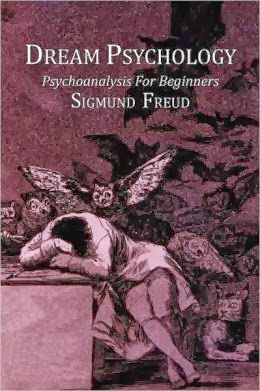
The publishers of the present book deserve credit for presenting to the reading public the gist of Freud's psychology in the master's own words, and in a form which shall neither discourage beginners, nor appear too elementary to those who are more advanced in psychoanalytic study. - Dream psychology is the key to Freud's works and to all modern psychology. With a simple, compact manual such as Dream Psychology there shall be no longer any excuse for ignorance of the most revolutionary psychological system of modern times. (From the book introduction, by Andre Tridon)
Running Time: 6:04:02
Zip file size: 174.8MB
Dream Psychology: Psychoanalysis for Beginners
Sigmund Freud
NEW YORK: THE JAMES A. McCANN COMPANY, 1921
I. The Scientific Literature on the Problems of the Dreams
II. Method of Dream Interpretation: The Analysis of a Sample Dream
III. The Dream Is the Fulfilment of a Wish
IV. Distortion in Dreams
V. The Material and Sources of Dreams
VI. The Dream-Work
VII. The Psychology of the Dream Activities
VIII. Literary Index
Free Audiobook - Psychopathology of Everyday Life by Sigmund Freud

This led to a study of the faulty actions of everyday life and later to the publication of the Psychopathology of Everyday Life, a book which passed through four editions in Germany and is considered the author's most popular work. With great ingenuity and penetration the author throws much light on the complex problems of human behavior, and clearly demonstrates that the hitherto considered impassable gap between normal and abnormal mental states is more apparent than real.
This translation is made of the fourth German edition, and while the original text was strictly followed, linguistic difficulties often made it necessary to modify or substitute some of the author's cases by examples comprehensible to the English-speaking reader. (Introduction to the translation by A. A. Brill)
Running Time: 7:15:22
Zip file size: 208.3MB
Psychopathology of Everyday Life
Sigmund Freud (1901)
Translation by A. A. Brill (1914)
Originally published in London by T. Fisher Unwin.
Introduction
Chapter 1. Forgetting of Proper Names
Chapter 2. Forgetting of Foreign Words
Chapter 3. Forgetting of Names and Order of Words
Chapter 4. Childhood and Concealing Memories
Chapter 5. Mistakes in Speech
Chapter 6. Mistakes in Reading and Writing
Chapter 7. Forgetting of Impressions and Resolutions
Chapter 8. Erroneously Carried-out Actions
Chapter 9. Symptomatic and Chance Actions
Chapter 10. Errors
Chapter 11. Combined Faulty Acts
Chapter 12. Determinism, Chance, and Superstitious Beliefs
Subscribe to:
Posts (Atom)
 |
| Bartleby, the Scrivener: “I would prefer not to.” |

