Showing posts with label Karen Horney. Show all posts

Mothers of Psychoanalysis: Helene Deutsch, Karen Horney, Anna Freud, Melanie Klein

This book tells the story of that revolution through biographical portraits of four pioneering figures in the early institutions of psychoanalysis: Helene Deutsch, Karen Horney, Anna Freud, and Melanie Klein.

http://www.amazon.co.uk/gp/product/0393309428/ref=as_li_tl?ie=UTF8&camp=1634&creative=19450&creativeASIN=0393309428&linkCode=as2&tag=freuquot-21

“In lucid, uncluttered prose, Janet Sayers presents the reader with a fresh viewing of the lives and times of four extraordinary women pioneer analysts. Sayers recounts how they were able to shift the theoretic balance of the day to include the creative evolution of their thinking. This book is of value not only for the novice, but certainly for many others who can learn from these excellent, abridged biographies.” —Dr. Helene DeRosis


Karen Horney, a Leading Psychoanalyst and Founder of Feminist Psychology

Karen Horney was a pioneering theorist in personality, psychoanalysis, and her critique of some of Sigmund Freud's views led to the founding of feminist psychology.


Karen Horney was born in Blankenese, Germany, on September 16, 1885. As a teenager, she suffered her first episode of depression, a challenge she faced several times throughout her life. She attended medical school and began studying psychoanalysis. Horney moved to the United States in the 1930s and wrote two influential and controversial works, The Neurotic Personality of Our Time and New Ways in Psychoanalysis, which deviated sharply from Sigmund Freud's work.

The term feminist psychology was originally coined by Karen Horney.

In her book, Feminine Psychology, which is a collection of articles Horney wrote on the subject from 1922–1937, she addresses previously held beliefs about women, relationships, and the effect of society on female psychology. Horney developed this form of psychology specifically in response to Sigmund Freud’s theory of “penis envy”.


A photo posted by Freud Quotes (@freud.quotes) on


Horney died on December 4, 1952, in New York City. The Karen Horney Foundation was established in New York, followed by the Karen Horney Clinic in 1955. Prominent in her own time, Horney has remained influential among psychiatric professionals and therapists, as well as scholars of gender and feminism, over the decades since her death.

Psychoanalyst Karen Horney, New York, 1946 by Lotte Jacobi


Books by Karen Horney​


Books on Karen Horney​


See also


Karen Horney: Pioneer Of Feminine Psychology


http://www.amazon.co.uk/gp/product/0791080250/ref=as_li_tl?ie=UTF8&camp=1634&creative=19450&creativeASIN=0791080250&linkCode=as2&tag=freuquot-21
One of the earliest practitioners of psychoanalysis to question the theories and practice of Sigmund Freud, Horney emigrated to the United States from Germany in 1932 and became a beloved teacher, magnetic lecturer, and controversial theorist in psychoanalytical circles.


Karen Horney and Character Disorder: A Guide for the Modern Practitioner


Who is Karen Horney and why are her psychoanalytic ideas so important in today's world of once-per-week dynamic psychotherapy?

http://www.amazon.co.uk/gp/product/0826129951/ref=as_li_tl?ie=UTF8&camp=1634&creative=19450&creativeASIN=0826129951&linkCode=as2&tag=freuquot-21Horney was one of the first analysts to challenge basic Freudian assertions such as the psychoanalytic account of female development. She had a revolutionary focus on present-oriented treatment, and a powerfully-optimistic attitude toward patient growth and change. This book: introduces, defines, and illustrates the major tenets of Horney's theory and technique discusses Horney's means of fostering an optimistic attitude that strengthens therapy between therapist and the patient demonstrates the special suitablity and the effectiveness of Horney's ideas as they are applied to character disorder and to today's most frequent form of treatment: once-per-week session psychotherapy presents criticisms of Horney's ideas Dr. Irving Solomon prepares practitioners to conduct Horneyan therapy and successfully treat character disorder, the most common dysfunction of our time. Dr. Solomon presents, in a concise and organized fashion, Karen Horney's ideas regarding character psychopathology, accompanied by many illustrative vignettes for practical application. Today's clinician will find that Horney's orientation provides a means of conducting brief treatment that is also meaningfully deep. This book will be of interest to mental health professionals, as well as to lay individuals who seek knowledge of the self, since it realistically, vividly, and authoritatively touches on a multitude of common, easily recognized character trends that destructively complicate our well-being.

New Ways in Psychoanalysis by Karen Horney


http://www.amazon.co.uk/gp/product/0393312305/ref=as_li_tl?ie=UTF8&camp=1634&creative=19450&creativeASIN=0393312305&linkCode=as2&tag=freuquot-21
In this influential book, Karen Horney describes the ways that neuroses function as a peculiar struggle for life under adverse conditions-and how psychotherapy can help people free themselves from maladaptive ideas and behaviors. Using examples from her practice and writing in clear, accessible prose, she illuminates psychological processes with insight and empathy.

Our Inner Conflicts: A Constructive Theory of Neurosis by Karen Horney


http://www.amazon.co.uk/gp/product/0393309401/ref=as_li_tl?ie=UTF8&camp=1634&creative=19450&creativeASIN=0393309401&linkCode=as2&tag=freuquot-21
Unlike Freud, Horney does not regard neurosis as rooted in instinct. In her words, her theory is constructive because "it allows us for the first time to tackle and resolve neurotic hopelessness...Neurotic conflicts cannot be resolved by rational decision...But [they] can be resolved by changing the conditions within the personality that brought them into being."


Self-Analysis by Karen Horney


http://www.amazon.co.uk/gp/product/0415758130/ref=as_li_tl?ie=UTF8&camp=1634&creative=19450&creativeASIN=0415758130&linkCode=as2&tag=freuquot-21
Karen Horney discusses the driving forces in the neuroses, the different stages of psychoanalytic understanding, the patient's and the analyst's share in the psychoanalytic process, occasional and systematic self-analysis, and the realistic expectations of undertaking self-analysis.


Individualism and Moral Character: Karen Horney's Depth Psychology


http://www.amazon.co.uk/gp/product/1412853818/ref=as_li_tl?ie=UTF8&camp=1634&creative=19450&creativeASIN=1412853818&linkCode=as2&tag=freuquot-21
There are hundreds of different systems of psychotherapy today, ranging from the traditional "talking cure" to symbolic "re-birthing" and primal scream. The landscape is littered with serious social science, pop psychology, esoteric doctrine, and pure charlatanism. One of the obvious dangers of so many choices is that the best therapies may be lost in a profusion of competing schools and traditions. To some extent, this has been the fate of the school of psychotherapy developed by Karen Horney. Since her death in 1952, Horney's work has received insufficient attention, in part because criticism of Freud's thought may have tainted attitudes toward psychotherapy in general. Jeff Mitchell argues that Karen Horney's school of psychoanalysis constitutes a highly innovative moral psychology. He interprets her approach to the treatment of personality or character disorders as a form of moral education. Drawing on research in the social sciences, particularly anthropology, sociology, and psychology, Mitchell argues that Horney's reworking of Freud's thinking preserves and builds upon what was truly insightful in his work, and eliminates the most dubious elements. Her thinking acknowledges that today individuals achieve their own identities rather than accepting what was ascribed to them by birth. This makes Karen Horney's theories especially relevant, both for psychotherapy as well as to thought about human affairs in general.

Neurosis and Human Growth: The Struggle Towards Self-Realization


http://www.amazon.co.uk/gp/product/0393307751/ref=as_li_tl?ie=UTF8&camp=1634&creative=19450&creativeASIN=0393307751&linkCode=as2&tag=freuquot-21&linkId=I7FQC2CEXMFFC6KW
Karen Horney was born in Hamburg, Germany, in 1885 and studied at the University of Berlin, receiving her medical degree in 1913. From 1914 to 1918 she studied psychiatry at Berlin-Lankwitz, Germany, and from 1918 to 1932 taught at the Berlin Psychoanalytic Institute. She participated in many international congresses, among them the historic discussion of lay analysis, chaired by Sigmund Freud. Dr. Horney came to the United States in 1932 and for two years was Associate Director of the Psychoanalytic Institute, Chicago. In 1934 she came to New York and was a member of the teaching staff of the New York Psychoanalytic Institute until 1941, when she became one of the founders of the Association for the Advancement of Psychoanalysis and the American Institute for Psychoanalysis.

In Neurosis and Human Growth, Dr. Horney discusses the neurotic process as a special form of the human development, the antithesis of healthy growth. She unfolds the different stages of this situation, describing neurotic claims, the tyranny or inner dictates and the neurotic's solutions for relieving the tensions of conflict in such emotional attitudes as domination, self-effacement, dependency, or resignation. Throughout, she outlines with penetrating insight the forces that work for and against the person's realization of his or her potentialities. This 40th Anniversary Edition includes a new preface by Stephanie Steinfeld, Ph.D., and Jeffrey Rubin, M.D., of the American Institute for Psychoanalysis.

The Neurotic Personality of Our Time


http://www.amazon.co.uk/gp/product/0393310973/ref=as_li_tl?ie=UTF8&camp=1634&creative=19450&creativeASIN=0393310973&linkCode=as2&tag=freuquot-21
One of the most original psychoanalysts after Freud, Karen Horeny pioneered such now-familiar concepts as alienation, self-realization, and the idealized image, and she brought to psychoanalysis a new understanding of the importance of culture and environment.

In this book, Karen Horney explores the basic structure of neuroses in the context of their cultural assumptions. Her topics range from the neurotic need for affection, to guilt feelings and the quest for power, prestige and possession. Horney maintains that the conflicts found in neurotic persons in a given culture correspond to to the ways of life characteristic of that culture. She writes for example, " It is only under definite cultural conditions that we find domineering or self- sacrificing mothers, and it is also only because of these existing conditions that such an experience will have an influence on later life."

A photo posted by Freud Quotes (@freud.quotes) on

Summer Reading List - 5 New Books & 5 Classics in Psychoanalysis

enrich your mental pool with our summer picks


Published in 2014:


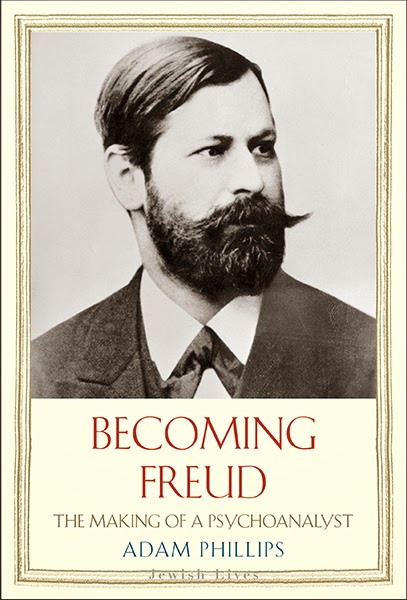
1. Becoming Freud: The Making of a Psychoanalyst

http://www.amazon.co.uk/gp/product/0300158661/ref=as_li_ss_tl?ie=UTF8&camp=1634&creative=19450&creativeASIN=0300158661&linkCode=as2&tag=freuquot-21

In this biography, Adam Phillips, whom the New Yorker calls “Britain’s foremost psychoanalytical writer,” emphasizes the largely and inevitably undocumented story of Freud’s earliest years as the oldest—and favored—son of Jewish immigrants from Eastern Europe and suggests that the psychoanalysis Freud invented was, among many other things, a psychology of the immigrant—increasingly, of course, everybody’s status in the modern world.


2. Lacan: In Spite Of Everything

http://www.amazon.co.uk/gp/product/1781681627/ref=as_li_ss_tl?ie=UTF8&camp=1634&creative=19450&creativeASIN=1781681627&linkCode=as2&tag=freuquot-21

“An extraordinary book about the most flamboyant French neo-Freudian of the twentieth century.” The Times

Jacques Lacan continues to be subject to the most extravagant interpretations. Angelic to some, he is demonic to others. To recall Lacan's career, now that the heroic age of psychoanalysis is over, is to remember an intellectual and literary adventure that occupies a founding place in our modernity. Lacan went against the current of many of the hopes aroused by 1968, but embraced their paradoxes, and his language games and wordplay resonate today as so many injunctions to replace rampant individualism with a heightened social consciousness.

Widely recognized as the leading authority on Lacan, Élisabeth Roudinesco revisits his life and work: what it was – and what it remains.


3. Wisdom From The Couch: Knowing and Growing Yourself from the Inside Out

http://amzn.to/1kvZ4dE

In this intelligent yet user-friendly book, psychoanalyst Jennifer Kunst raises some key questions that are on the minds of all those who are seeking a more satisfying, meaningful life: How can it be that perfectly intelligent people do such obviously counterproductive things so much of the time? Why do we do the things we know we shouldn't do, and why do we fail to do the things we know we should do? The simple answer to these questions is that the unconscious mind greatly influences all that we do. If we come to understand ourselves at a deeper unconscious level, we have a chance to make changes in our lives that have the potential to last.

Written by an experienced psychoanalyst with a knack for describing complex ideas in a lively and easy to comprehend way, Wisdom from the Couch will change the way you think about your internal and external life.

Ebook Preview/Excerpts ~ Wisdom From The Couch


4. Zizek's Jokes: (Did You Hear the One About Hegel and Negation?)

http://www.amazon.co.uk/gp/product/0262026716/ref=as_li_ss_tl?ie=UTF8&camp=1634&creative=19450&creativeASIN=0262026716&linkCode=as2&tag=freuquot-21

The good news is that this book offers an entertaining but enlightening compilation of Zizekisms. Unlike any other book by Slavoj Zizek, this compact arrangement of jokes culled from his writings provides an index to certain philosophical, political, and sexual themes that preoccupy him. "Zižek's Jokes" contains the set-ups and punch lines -- as well as the offenses and insults -- that Zizek is famous for, all in less than 200 pages.


So what's the bad news? There is no bad news. There's just the inimitable Slavoj Zižek, disguised as an impossibly erudite, politically incorrect uncle, beginning a sentence, "There is an old Jewish joke, loved by Derrida..."


5. Dictionary of Untranslatables: A Philosophical Lexicon

http://www.amazon.co.uk/gp/product/0691138702/ref=as_li_ss_tl?ie=UTF8&camp=1634&creative=19450&creativeASIN=0691138702&linkCode=as2&tag=freuquot-21

This is an encyclopedic dictionary of close to 400 important philosophical, literary, and political terms and concepts that defy easy--or any--translation from one language and culture to another. Drawn from more than a dozen languages, terms such as Dasein (German), pravda (Russian), saudade (Portuguese), and stato (Italian) are thoroughly examined in all their cross-linguistic and cross-cultural complexities. Spanning the classical, medieval, early modern, modern, and contemporary periods, these are terms that influence thinking across the humanities. 
Ebook Preview/Excerpts ~  Dictionary of Untranslatables


http://www.amazon.co.uk/gp/product/0691138702/ref=as_li_ss_tl?ie=UTF8&camp=1634&creative=19450&creativeASIN=0691138702&linkCode=as2&tag=freuquot-21


Published in the Last Century:


6. Deviant Love

http://www.amazon.co.uk/gp/product/0141032863/ref=as_li_ss_tl?ie=UTF8&camp=1634&creative=19450&creativeASIN=0141032863&linkCode=as2&tag=freuquot-21

Sigmund Freud, the founder of modern psychoanalysis, remade our view of the human mind by exploring the unconscious forces that drive us. This collection of his groundbreaking writings on the psychology of love examines the nature of desire, transgression, fantasy and erotic taboo.
Ebook Preview/Excerpts ~ Deviant Love


7. The Uses of Enchantment: The Meaning and Importance of Fairy Tales

http://www.amazon.co.uk/gp/product/0140137270/ref=as_li_ss_tl?ie=UTF8&camp=1634&creative=19450&creativeASIN=0140137270&linkCode=as2&tag=freuquot-21

Bruno Bettelheim was one of the great child psychologists of the twentieth century and perhaps none of his books has been more influential than this revelatory study of fairy tales and their universal importance in understanding childhood development.

Analyzing a wide range of traditional stories, from the tales of Sindbad to “The Three Little Pigs,” “Hansel and Gretel,” and “The Sleeping Beauty,” Bettelheim shows how the fantastical, sometimes cruel, but always deeply significant narrative strands of the classic fairy tales can aid in our greatest human task, that of finding meaning for one’s life.


8. Neurosis and Human Growth: The Struggle Towards Self-Realization 

http://www.amazon.co.uk/gp/product/0393307751/ref=as_li_ss_tl?ie=UTF8&camp=1634&creative=19450&creativeASIN=0393307751&linkCode=as2&tag=freuquot-21

In Neurosis and Human Growth, Dr. Horney discusses the neurotic process as a special form of the human development, the antithesis of healthy growth. She unfolds the different stages of this situation, describing neurotic claims, the tyranny or inner dictates and the neurotic's solutions for relieving the tensions of conflict in such emotional attitudes as domination, self-effacement, dependency, or resignation. Throughout, she outlines with penetrating insight the forces that work for and against the person's realization of his or her potentialities.
Ebook Preview/Excerpts ~ Neurosis and Human Growth


9. Eros and Civilization: A Philosophical Inquiry into Freud

http://www.amazon.co.uk/gp/product/0415186633/ref=as_li_ss_tl?ie=UTF8&camp=1634&creative=19450&creativeASIN=0415186633&linkCode=as2&tag=freuquot-21

In this classic work, Herbert Marcuse takes as his starting point Freud's statement that civilization is based on the permanent subjugation of the human instincts, his reconstruction of the prehistory of mankind - to an interpretation of the basic trends of western civilization, stressing the philosophical and sociological implications.
Ebook Preview/Excerpts ~ Eros and Civilization


10. To Have or To Be?

http://www.amazon.co.uk/gp/product/178093680X/ref=as_li_ss_tl?ie=UTF8&camp=1634&creative=19450&creativeASIN=178093680X&linkCode=as2&tag=freuquot-21

To Have Or to Be? is one of the seminal books of the second half of the 20th century. Nothing less than a manifesto for a new social and psychological revolution to save our threatened planet, this book is a summary of the penetrating thought of Eric Fromm. His thesis is that two modes of existence struggle for the spirit of humankind: the having mode, which concentrates on material possessions, power, and aggression, and is the basis of the universal evils of greed, envy, and violence; and the being mode, which is based on love, the pleasure of sharing, and in productive activity. To Have Or to Be? is a brilliant program for socioeconomic change.


+ bonus summer movie:

http://www.amazon.co.uk/gp/product/B00EKFI1AW/ref=as_li_ss_tl?ie=UTF8&camp=1634&creative=19450&creativeASIN=B00EKFI1AW&linkCode=as2&tag=freuquot-21


We are responsible for our dreams. This is the ultimate lesson of psychoanalysis--and fiction cinema.

Philosopher Slavoj Žižek and filmmaker Sophie Fiennes use their interpretation of moving pictures to present a compelling cinematic journey into the heart of ideology--the dreams that shape our collective beliefs and practices.


•


See also our


&


•


Here you can download Freud's major works for FREE:


http://freudquotes.blogspot.co.uk/p/free-ebooks.html


The Interpretation of Dreams: The Illustrated Edition

http://www.amazon.co.uk/gp/product/1402763883/ref=as_li_ss_tl?ie=UTF8&camp=1634&creative=19450&creativeASIN=1402763883&linkCode=as2&tag=freuquot-21

This is a magnificent version of Freud's masterwork, presented in a lavish illustrated style. It includes Freud's groundbreaking text plus an introduction and 16 essays by Jeffrey Moussaieff Masson. Exquisite art from Dali, Rousseau, Francis Bacon and many other Modernist and Surrealist artists appear throughout.

http://www.amazon.co.uk/gp/product/1402763883/ref=as_li_ss_tl?ie=UTF8&camp=1634&creative=19450&creativeASIN=1402763883&linkCode=as2&tag=freuquot-21

In addition to Freud's groundbreaking text the volume includes an introduction and 16 essays by Jeffrey Moussaieff Masson, the noted author and former projects director of the Sigmund Freud Archives. Relevant excerpts from such psychoanalytical writers as Carl Jung, Jacques Lacan and Karen Horney illuminate and expand on Freud's theories, and historical images and a detailed biography shine a light on Freud's life and times. Exquisite art from Dali, Rousseau, Francis Bacon and many other artists appear throughout and the book offers readers a unique multilayered experience: Masson's sidebars appear as booklets 'hidden' in the full-spread artwork, while stills from a 1906 film called "Dream of a Rarebit Fiend" are transformed into a 9" X 5" flipbook.


http://www.amazon.co.uk/gp/product/1402763883/ref=as_li_ss_tl?ie=UTF8&camp=1634&creative=19450&creativeASIN=1402763883&linkCode=as2&tag=freuquot-21


http://www.amazon.co.uk/gp/product/1402763883/ref=as_li_ss_tl?ie=UTF8&camp=1634&creative=19450&creativeASIN=1402763883&linkCode=as2&tag=freuquot-21


Karen Horney - Quotes

“If you want to be proud of yourself, then do things in which you can take pride”
― Karen Horney, Neurosis and Human Growth: The Struggle Towards Self-Realization

“To find a mountain path all by oneself gives a greater feeling of strength than to take a path that is shown.”
― Karen Horney, Self-Analysis

“A perfectly normal person is rare in our civilization.”
― Karen Horney

“Rationalization may be defined as self-deception by reasoning.”
― Karen Horney

“Concern should drive us into action, not into a depression.”
― Karen Horney

“No one … can entirely step out of his time, that despite his keenness of vision his thinking is in many ways bound to be influenced by the mentality of his time”
― Karen Horney

“Člověk může sám sebe oklamat, že druhého miluje například i přesto, že ho potřebuje pouze pro slepý obdiv, jenž od něj získává. V takových případech však člověk pravděpodobně druhého náhle odstrčí, nebo se dokonce obrátí proti němu, jakmile ten druhý začne být kritický, a tudíž přestane plnit svou funkci obdivovatele, pro niž byl milován.”
― Karen Horney, The Neurotic Personality Of Our Time
Worldwide Shipping: 🖤 T-Shirts / Hoodies / Mugs / Stickers >>       I WOULD PREFER NOT TO.  
https://www.teepublic.com/t-shirt/1759107-i-would-prefer-not-to-bartleby-zizek
Bartleby, the Scrivener: “I would prefer not to.”
https://www.teepublic.com/t-shirt/1759107-i-would-prefer-not-to-bartleby-zizek
Related Posts Plugin for WordPress, Blogger...