Showing posts with label Literary Criticism. Show all posts

Joyce and Lacan: Reading, Writing, and Psychoanalysis


What happens when the intellectual giant of twentieth-century literature, James Joyce, is made an object of consideration and cause of desire by the intellectual giant of modern psychoanalysis, Jacques Lacan?

This is what Joyce and Lacan explores, in the three closely interrelated areas of reading, writing, and psychoanalysis, by delving into Joyce’s own relationship with psychoanalysis in his lifetime. The book concentrates primarily on his last text, Finnegans Wake, the notorious difficulty of which arises from its challenging the intellect itself, and our own processes of reading. As well as the centrality of the Wake, concepts of Joycean ontology, sanity, singularity, and sexuality are excavated from sustained analysis of his earliest writings onward.

To be ‘post-Joycean’, as Lacan describes it, means then to be in the wake not only of Joyce, but also of Lacan’s interventions on the Irish writer made in the mid-70s. It was this encounter that gave rise to concepts that have gained currency in today’s psychoanalytic theory and practice, and importance in wider critical contexts. The notions of the sinthome, lalangue, and Lacan’s use of topology and knot theory are explored within, as well as new theories being launched.

The book will be of interest to psychoanalysts, literary theorists, and students and teachers of literature, theory, or the works of Joyce and Lacan.

Freud's Theory and Its Use in Literary and Cultural Studies: An Introduction


Few figures have had as much influence on Western thought as Sigmund Freud. His ideas permeate our culture to such a degree that an understanding of them is indispensable. Yet many otherwise well-informed students in the humanities labor under misconceptions about Freudian theory. There are countless introductions to Freudian psychoanalysis but, surprisingly, none that combine a genuinely accessible account of Freud's ideas with an introduction to their use in literary and cultural studies, as this book does.

Written specifically for use by advanced undergraduate and graduate students in courses dealing with literary and cultural criticism, it is also of interest to the general reader. The first part of the book explains Freud's key ideas and refutes many popular misconceptions, using examples throughout.

The assumption underlying this account is that Freud offers not simply a model of the mind, but an analysis of the relation between the individual and society.

The second part addresses the implications of Freudian psychoanalysis for the study of literature and culture, again using plentiful examples. Existing books focus either on Freudian psychoanalysis in general or on psychoanalytic literary or cultural criticism; the latter tend to be abstract and theoretical in nature. None of them are suitable for readers who are interested in psychoanalysis as a tool for literary and cultural criticism but have no firm knowledge of Freud's ideas. Freud's Theory and Its Use in Literary and Cultural Studies fills this gap. Henk de Berg is Professor of German at the University of Sheffield, UK.

The Cambridge Introduction to Literature and Psychoanalysis


This volume is an introduction to the relationship between psychoanalysis and literature. Jean-Michel Rabaté takes Sigmund Freud as his point of departure, studying in detail Freud's integration of literature in the training of psychoanalysts and how literature provided crucial terms for his myriad theories, such as the Oedipus complex. Rabaté subsequently surveys other theoreticians such as Wilfred Bion, Marie Bonaparte, Carl Jung, Jacques Lacan, and Slavoj Žižek.


This Introduction is organized thematically, examining in detail important terms like deferred action, fantasy, hysteria, paranoia, sublimation, the uncanny, trauma, and perversion. Using examples from Miguel de Cervantes and William Shakespeare to Sophie Calle and Yann Martel, Rabaté demonstrates that the psychoanalytic approach to literature, despite its erstwhile controversy, has recently reemerged as a dynamic method of interpretation.

Contents

1. Freud's theater of the unconscious: Oedipus, Hamlet, and 'Hamlet'; 2. Literature and fantasy: towards a grammar of the subject; 3. From the uncanny to the unhomely; 4. Psychoanalysis and the paranoid critique of pure literature; 5. The literary phallus, from Poe to Gide; 6. A thing of beauty is a Freud for ever: Joyce with Jung and Freud, Lacan, and Borges; 7. From the history of perversion to the trauma of history.


The Cambridge Companion to Critical Theory


http://www.amazon.co.uk/gp/product/0521016894/ref=as_li_tl?ie=UTF8&camp=1634&creative=19450&creativeASIN=0521016894&linkCode=as2&tag=freuquot-21
Critical Theory constitutes one of the major intellectual traditions of the twentieth century, and is centrally important for philosophy, political theory, aesthetics and theory of art, the study of modern European literatures and music, the history of ideas, sociology, psychology, and cultural studies. In this volume an international team of distinguished contributors examines the major figures in Critical Theory, including Horkheimer, Adorno, Marcuse, Benjamin, and Habermas, as well as lesser known but important thinkers such as Pollock and Neumann. The volume surveys the shared philosophical concerns that have given impetus to Critical Theory throughout its history, while at the same time showing the diversity among its proponents that contributes so much to its richness as a philosophical school. The result is an illuminating overview of the entire history of Critical Theory in the twentieth century, an examination of its central conceptual concerns, and an in-depth discussion of its future prospects.

See also

Social Theory Since Freud: Traversing Social Imaginaries


http://www.amazon.co.uk/gp/product/0415271630/ref=as_li_tl?ie=UTF8&camp=1634&creative=19450&creativeASIN=0415271630&linkCode=as2&tag=freuquot-21
In this compelling book, Anthony Elliott traces the rise of psychoanalysis from the Frankfurt School to postmodernism. Examining how pathbreaking theorists such as Adorno, Marcuse, Lacan and Lyotard have deployed psychoanalysis to politicise issues such as desire, sexuality, repression and identity, Elliott assesses the gains and losses arising from this appropriation of psychoanalysis in social theory and cultural studies.

Moving from the impact of the Culture Wars and recent Freud-bashing to contemporary debates in social theory, feminism and postmodernism, Elliott argues for a new alliance between sociological and psychoanalytic perspectives.

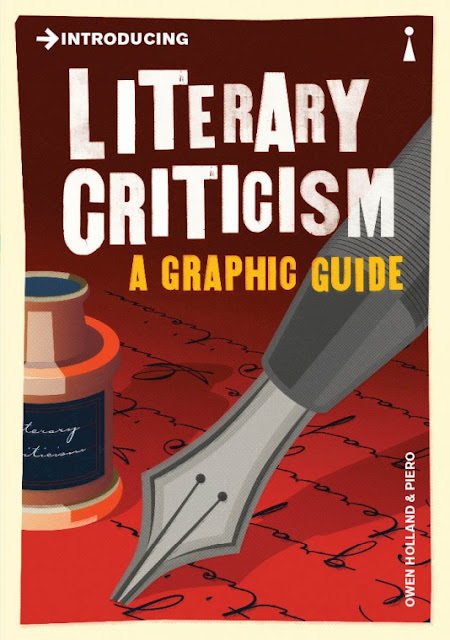
Introducing Literary Criticism: A Graphic Guide

http://www.amazon.co.uk/gp/product/1848319045/ref=as_li_tl?ie=UTF8&camp=1634&creative=19450&creativeASIN=1848319045&linkCode=as2&tag=freuquot-21&linkId=PL4WRR6FQT7UK56H


From Plato to Virginia Woolf, Structuralism to Practical Criticism, Introducing Literary Criticism charts the history and development of literary criticism into a rich and complex discipline.

Tackling disputes over the value and meaning of literature, and exploring theoretical and practical approaches, this unique illustrated guide will help readers of all levels to get more out of their reading.
Worldwide Shipping: 🖤 T-Shirts / Hoodies / Mugs / Stickers >>       I WOULD PREFER NOT TO.  
https://www.teepublic.com/t-shirt/1759107-i-would-prefer-not-to-bartleby-zizek
Bartleby, the Scrivener: “I would prefer not to.”
https://www.teepublic.com/t-shirt/1759107-i-would-prefer-not-to-bartleby-zizek
Related Posts Plugin for WordPress, Blogger...