Showing posts with label Anthropology. Show all posts
We Are All Cannibals: And Other Essays by Claude Lévi-Strauss
On Christmas Eve 1951, Santa Claus was hanged and then publicly burned outside of the Cathedral of Dijon in France. That same decade, ethnologists began to study the indigenous cultures of central New Guinea, and found men and women affectionately consuming the flesh of the ones they loved. "Everyone calls what is not their own custom barbarism," said Montaigne. In these essays, Claude Lévi-Strauss shows us behavior that is bizarre, shocking, and even revolting to outsiders but consistent with a people's culture and context.
These essays relate meat eating to cannibalism, female circumcision to medically assisted reproduction, and mythic thought to scientific thought. They explore practices of incest and patriarchy, nature worship versus man-made material obsessions, the perceived threat of art in various cultures, and the innovations and limitations of secular thought. Lévi-Strauss measures the short distance between "complex" and "primitive" societies and finds a shared madness in the ways we enact myth, ritual, and custom. Yet he also locates a pure and persistent ethics that connects the center of Western civilization to far-flung societies and forces a reckoning with outmoded ideas of morality and reason.
The Collected Papers of Roger Money-Kyrle
Thirty-five papers from a variety of technical and intellectual journals trace fifty years of distinguished service to psychoanalysis, sociology, politics and anthropology.
Subject of Anthropology: Gender, Symbolism and Psychoanalysis
Buy The Subject of Anthropology here. - Free delivery worldwide
This new book draws on anthropology, feminism and psychoanalysis to develop an original and provocative theory of gender and of how we become sexed beings. Written not just for professional scholars and for students but for anyone with a serious interest in how gender and sexuality are conceptualised, experienced and imagined.
Anthropology and Psychoanalysis: An Encounter Through Culture
In Anthropology and Psychoanalysis the contributors, both practising anthropologists and psychoanalysts, explore in detail the interface between the two disciplines and locate this within the history of both anthropology and psychoanalysis. In particular, they deal with the distinctive reactions of British, French and American anthropology to psychoanalysis and the way in which the present fracturing of each of these national traditions and their post-modern turn has led to a new willingness to investigate the relationships between the disciplines and the role of the unconscious in cultural life. They also address important issues of methodology, and present a critical discussion of the concept of culture and the academic specialisation of knowledge.
Anthropology and Psychoanalysis will be invaluable reading to all anthropologists and psychoanalysts.
The Vicissitudes of Totemism: One Hundred Years After Totem and Taboo
Buy The Vicissitudes of Totemism here. - Free delivery worldwide
After being the subject of many studies up until 1914, totemism seemed to disappear from the literature. The publication of Freud's work Totem and Taboo was initially greeted with silence, and subsequently with critical and hostile reactions. C. Lévi-Strauss was one of the few to devote a book to totemism but considered it as an illusion, although a number of prominent members of the English school of Social Anthropology contested this view, describing the direction adumbrated by Freud's enquiry as 'highly pertinent'.
Totemism appears in Freud's work as a way of dealing with one of the canonical forms of human destructiveness, namely parricide. Why did eminent men find it impossible to utilise Freud's book and those studies that followed it in the interwar period?
The mass murders in Nazi Germany and Stalinist Russia, however different they may have been, both generated a profound sense of horror that made their consequences largely unrepresentable for Europeans for more than thirty years. Did this delay, and the attitudes of the following generations towards authority, result from an unconscious logic of 'resistance' aimed at re-establishing refusals that did not take place at the time? The Western world seems to have forgotten the strength of the mixed family ties of tribes, casts, and religions that are in fact at work in the psychic life of a great number of men and women in the world.
Buy The Vicissitudes of Totemism here. - Free delivery worldwide
A Non-Oedipal Psychoanalysis? A Clinical Anthropology of Hysteria in the Work of Freud and Lacan
The different psychopathologic syndromes show in an exaggerated and caricatural manner the basic structures of human existence. These structures not only characterize psychopathology, but they also determine the highest forms of culture. This is the credo of Freud's anthropology. This anthropology implies that humans are beings of the in-between. The human being is essentially tied up between pathology and culture, and there is no ‘normal position' that can be defined in a theoretically convincing manner. The authors of this book call this Freudian anthropology a patho-analysis of existence or a clinical anthropology. This anthropology gives a new meaning to the Nietzschean dictum that the human being is a ‘sick animal'. Freud, and later Lacan, first developed this anthropological insight in relation to hysteria (in its relation to literature).
This patho-analytic perspective progressively disappears in Freud's texts after 1905. This book reveals the crucial moments of that development. In doing so, it becomes clear not only that Freud introduced the Oedipus complex much later than is usually assumed, but also that the theory of the Oedipus complex is irreconcilable with the project of a clinical anthropology.
The authors not only examine the philosophical meaning of this thesis in the work of Freud. They also examine its avatars in the texts of Jacques Lacan and show how this project of a patho-analysis of existence inevitably obliges us to formulate a non-oedipal psychoanalytic anthropology.
Introducing Levi-Strauss: A Graphic Guide
Introducing Lévi-Strauss is a guide to the work of the great French anthropologist Claude Lévi-Strauss (1908–2009). The book brilliantly traces the development and influence of Lévi-Strauss’ thought, from his early work on the function of the incest taboo to initiate an exchange of women between groups, to his identification of a timeless “wild” or “primitive” mode of thinking – a pensée sauvage – behind the processes of human culture.
Accessibly written by Boris Wiseman and beautifully illustrated by Judy Groves, Introducing Lévi-Strauss also explores the major contribution that Lévi-Strauss made to contemporary aesthetic history – his work on American-Indian mythology provides a key insight into the way in which art itself comes into being.
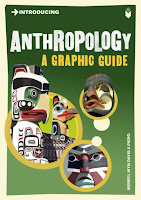
Introducing Anthropology: A Graphic Guide
Anthropology originated as the study of ‘primitive’ cultures. But the notion of ‘primitive’ exposes presumptions of ‘civilized’ superiority and the right of the West to speak for ‘less evolved’ others. With the fall of Empire, anthropology became suspect and was torn by dissension from within. Did anthropology serve as a ‘handmaiden to colonialism’? Is it a ‘science’ created by racism to prove racism? Can it aid communication between cultures, or does it reinforce our differences? “Introducing Anthropology” is a fascinating account of an uncertain human science seeking to transcend its unsavoury history. It traces the evolution of anthropology from its genesis in Ancient Greece to its varied forms in contemporary times. Anthropology’s key concepts and methods are explained, and we are presented with such big-name anthropologists as Franz Boas, Bronislaw Malinowski, E.E. Evans-Pritchard, Margaret Mead and Claude Levi-Strauss. The new varieties of self-critical and postmodern anthropologies are examined, and the leading question – of the impact of anthropology on non-Western cultures – is given centre-stage. “Introducing Anthropology” is lucid in its arguments, its good humour supported by apt and witty illustrations. This book offers a highly accessible invitation into anthropology.
Subscribe to:
Posts (Atom)
![]() |
| Bartleby, the Scrivener: “I would prefer not to.” |