Four classes on Wednesdays, May 4, 11, 18, and 25, 2016
Introduction to Psychoanalytic Techniqueis part of GCAS America and is meant for the interested researcher who would like to expand their knowledge of psychoanalysis from one of the foremost experts in the field. This course is not accredited.
Description:
An introduction to psychoanalytic technique will be conducted in seminar format through in-depth discussion of assigned writings by Freud.
The class will become familiar with the basic technical approach to conducting psychoanalysis conceptualized by Freud.
Course Prerequisites:
While some background in psychotherapy practice would be useful, it is not necessary. Familiarity with basic psychoanalytic concepts would also be helpful.
Required Books and Materials:
“Recommendations to physicians practicing psycho-analysis” (1912) in The Standard Edition, 12: 109-120.
“On beginning the treatment (further recommendations on the technique of psycho-analysis I)” (1913) in SE, 12: 121-144.
“Remembering, repeating and working-through (further recommendations on the technique of psycho-analysis II)” (1914) in SE, 12: 145-156.
Schedule:
Four classes on Wednesdays, May 4, 11, 18, and 25, from 1:30-3 PM EST
Freud began his career as a promising neurologist, but found the neurological science of his day was not advanced enough to answer his questions. Although he believed that attempts to bring together neurology and psychoanalysis would be premature at his time, he always admired biology, thinking of it as of “a land of unlimited possibilities”, and he had no doubt that a fruitful conjunction of neurology and psychoanalysis will be possible in the future.
In this course we will explore recent attempts to bring together neuroscience, psychoanalysis and philosophy, relying widely on works of the most prominent contemporary thinker in this field, Catherine Malabou. The course will focus on four key concepts: plasticity, cerebrality, trauma and wonder.
Brief course description: In this course we will explore contemporary attempts to bridge psychoanalysis, neuroscience and philosophy, relying widely on Catherine Malabou’s works.
The course will focus on four key concepts: plasticity, cerebrality, trauma and wonder.
Structure of the course: The course will consist of 5 lectures.
Attendance of Catherine Malabou’s guest talk will be counted as in-class time for students of this course, although it can be attended separately.
Students will learn to understand language of neuroscience and psychoanalysis, and find out about some of the points of their conjunction.
Course Prerequisites:
Although this is a graduate level course, advanced undergraduate students are also welcome.
Some basic knowledge in psychoanalysis is desirable but not required.
Sign-up and take an intensive GCAS on-line (open and distant) course with a rising star in theoretical psychoanalysis.
Summarizing ideas of Deleuze, Foucault formulates a call to “pervert a good sense”. In this course we will put into practice the philosophy of Deleuze and Foucault by perverting habitual concept of child – an important part of a good sense.
According to Deleuze’s and Foucault’s line of thought, good sense is a mode of thinking opposed to the philosophical mode of thinking: one treats the language as set of fixed meanings; the other – as a plastic material. To transfer the concept of child from it’s original mode of functioning into the mode of philosophy (to make it a part of philosophical analysis) means to pervert it.
We will investigate the history of how the modern concept of child emerged; we will trace how the image of child has already been processed in philosophical and psychoanalytic discourse (in Freud, Nietzsche, Lyotard and Avital Ronell); and we will engage into philosophical mode of thinking ourselves, thus, learning to pervert common sense and create philosophy.
Course Outcomes:
There is not much point in learning something without practicing it. In this course we will not study philosophy but rather learn to do philosophy. We do not need anything special to practice doing philosophy, only those concepts that we use in our everyday life, for example, the concept of child. Philosophy is not a vital skill, but it transforms radically the everyday life of those who have mastered the art of it.
Course Prerequisites:
Although this is a graduate course, advanced undergraduate students are also welcome.
Required Books and Materials:
Michel Foucault, “Theatrum philosophicum”
Judith L. Poxon and Charles J. Stivale, “Sense, Series” (In: Gilles Deleuze: Key Concepts) (Optional)
Friedrich Nietzsche, Thus Spoke Zarathustra (extracts)
Sigmund Freud, Three Essays on the Theory of Sexuality, section II and III;
Bronislaw Malinowski, “The Formation of a Complex” (Optional)
Philippe Aries, Centuries of Childhood (chapter “From Immodesty to Innocence”
Henry Jenkins “Childhood Innocence and Other Modern Myths” (Optional)
Jean-François Lyotard, “Emma: between Philosophy and Psychoanalysis”
Avital Ronell, “The Shock of Puberty” (Optional)
Instructor Policies and Requirements:
To complete the course participants will be required to:
attend minimum 3 lectures;
produce online blog on a related topic (300 -1000 words);
write a term paper on a related topic (2000- 4000 words).
Prof. Reshe’s Bio:
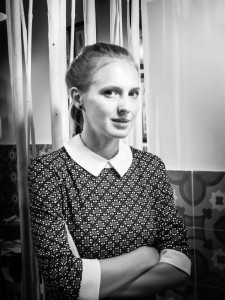
Drawing from philosophy, psychoanalysis, neuroscience and art, her multi-disciplinary approach is focused on issues of cultural posthumanism. Articulating the non-human, the trans-subjective and the modifiable, her critique disputes traditional ways of life. Her research interests include evolution of language and culture, education, childhood studies, gender and sexuality. Julie publishes regularly in both mainstream magazines and refereed academic journals. She holds an M.A. degree in Philosophy from the Taras Shevchenko National University of Kyiv. Julie also studied cultural theory in National University of Kiev-Mohyla Academy. She received her Ph.D. in Philosophy and Psychoanalysis in Slovenia, where she studied under the supervision of Alenka Zupančič in Scientific Research Centre of the Slovenian Academy of Sciences and Arts. She lives in Eastern Europe and in Cyprus with her partner and daughter.